
Brand teardownsSkincare & beauty
One founder.
34K likes a post.
A $1B exit.
Rhode is what happens when the founder is the marketing department. Hailey Bieber turned her own face into a $212M brand in three years — then sold it to e.l.f. for up to a billion dollars, barely running ads. Here’s the teardown.
Start reading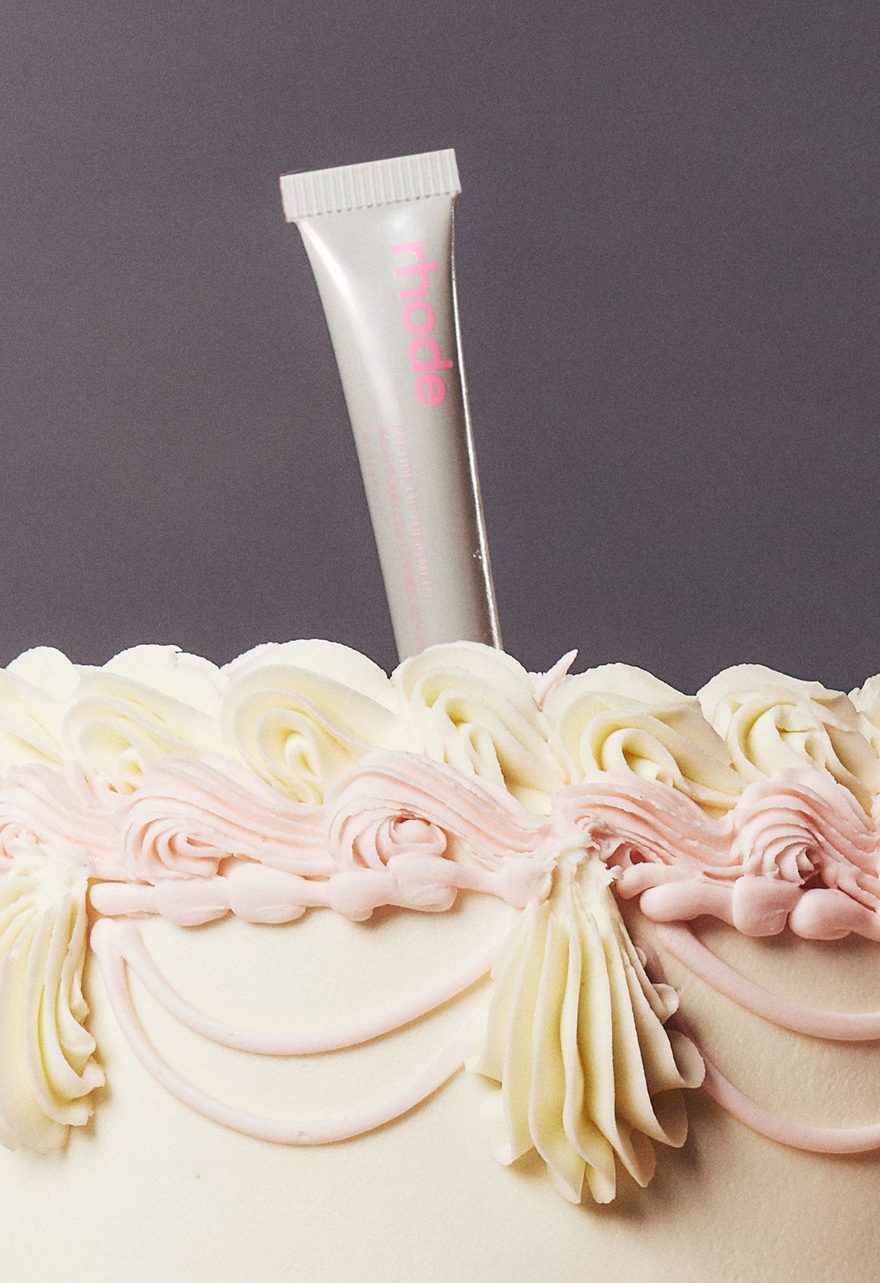
- e.l.f. acquisition
- $1B
- Net sales, 12 mo
- $212M
- Avg likes / post
- 34,451
- Launch to exit
- 3 yrs
- Hero lip tint
- $20
- Core products
- ~12
The idea
A brand with a dozen products and almost no ad budget just sold for a billion dollars. That’s the first thing that should stop you about Rhode.
Most brands buy attention. Rhode already had it — because the founder walked in with 50 million followers and the willingness to point them at a $20 lip tint. What follows is the full teardown of founder-led gravity: how one face replaces a media plan, and what you can actually copy if you’re not Hailey Bieber.
By the end you’ll have the seven plays behind $212M in net sales in three years and a $1B exit — each with a “steal this” you can run tomorrow.
She didn’t buy an audience. She already was one.
Rhode launched in 2022 as the beauty brand of Hailey Bieber — model, tabloid fixture, and owner of one of the most-watched faces on the internet. Where a normal brand spends years and millions manufacturing awareness, Rhode started with it. The product line stayed tiny and the aesthetic stayed ruthless: minimal packaging, a “glazed donut skin” vocabulary, price points anyone could reach.
Three years later it did $212M in net sales and sold to e.l.f. Beauty for up to $1 billion, with a Sephora rollout on deck. The whole machine runs on one principle:
“When the founder is the channel, the ad budget is optional.”The Rhode operating principle
The receipts — organic gravity, measured
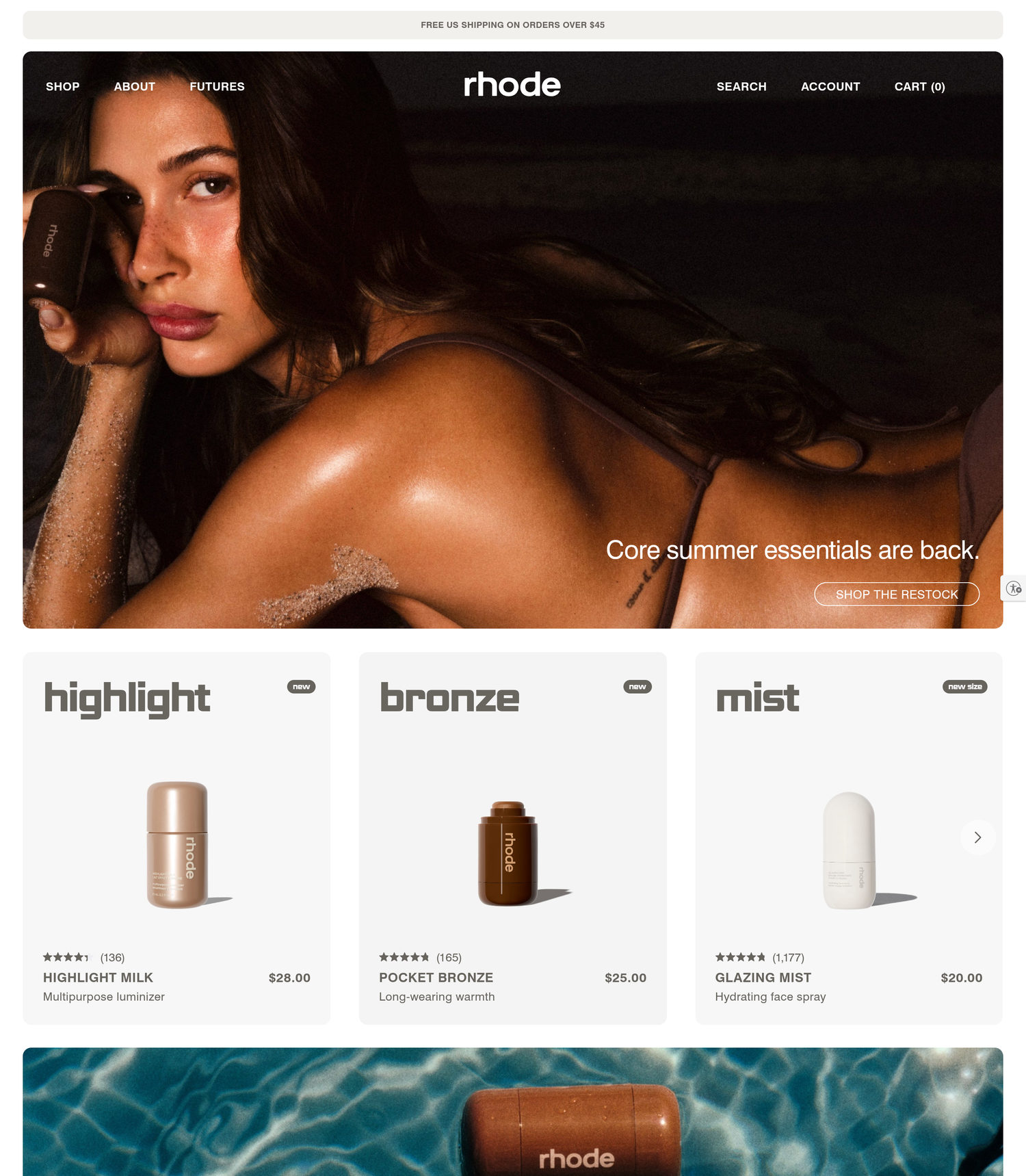
Fluid Intelligence Desk · avg Instagram likes / postTheir storefront, captured live.
The plays
Seven moves behind Rhode.
Move 01 of 07
The founder is the entire ad budget
Rhode’s marketing engine is one person’s face and life. Their Instagram posts average 34,451 likes — one hit 80,661 — against near-zero reliance on paid social. That’s roughly 100x a typical DTC brand’s organic pull. When the founder shows up, the media plan is optional. The reach is already there; the job is just pointing it at a product.
Move 02 of 07
Sell an aesthetic, not a product
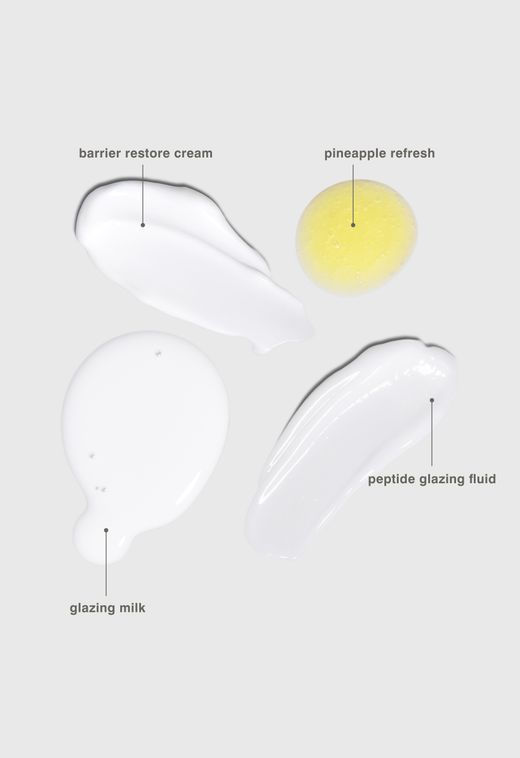
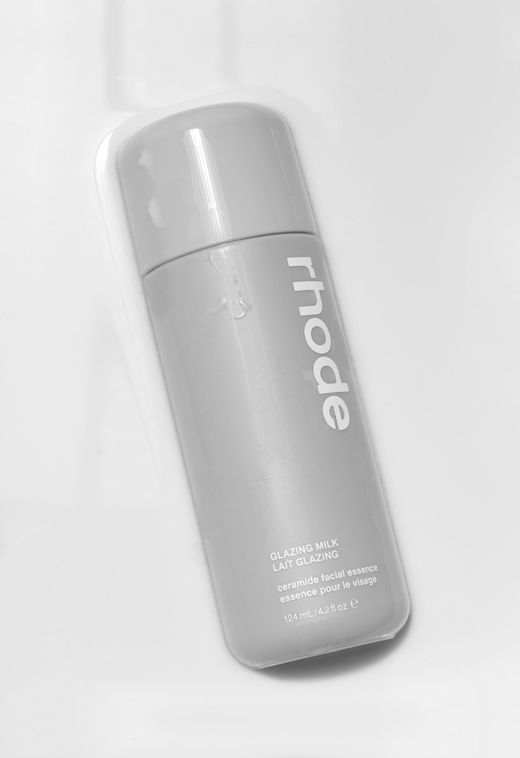
You don’t buy a moisturizer from Rhode — you buy “glazed donut skin.” The brand owns a vocabulary: glazing milk, glazing mist, the whole dewy look. The aesthetic is the product; the tube is just how you access it. Own a word and a look, and every piece of content — yours or a customer’s — reinforces the same idea.
Move 03 of 07
Ruthless minimalism — every SKU is an icon
Rhode hit nine figures on roughly a dozen products. No sprawl, no overwhelm — each item is a small, iconic object at an accessible price ($20 lip tint, $25–$28 milks). Fewer SKUs means every launch is an event and the whole line is memorizable. Scarcity of choice is itself a luxury signal.
Move 04 of 07
Design products to be filmed and carried
Rhode’s most famous move wasn’t a product — it was a phone case that holds the Peptide Lip Treatment. Suddenly the product is an accessory you carry, show, and film without thinking about it. Pocket blush, pocket bronze — everything is built to live in a hand, on camera. The packaging is the ad.
Move 05 of 07
Manufacture moments with drops and collabs
Rhode keeps the feed alive with limited runs and culture collabs — the Krispy Kreme “Strawberry Glazed Donut” tint literally fused the product with the “glazed” aesthetic. Shades sell out; “core essentials are back — shop the restock” turns availability itself into an event. Scarcity plus a cultural wink manufactures the moment that fuels the next wave of content.
Move 06 of 07
Build a brand, not a performance campaign
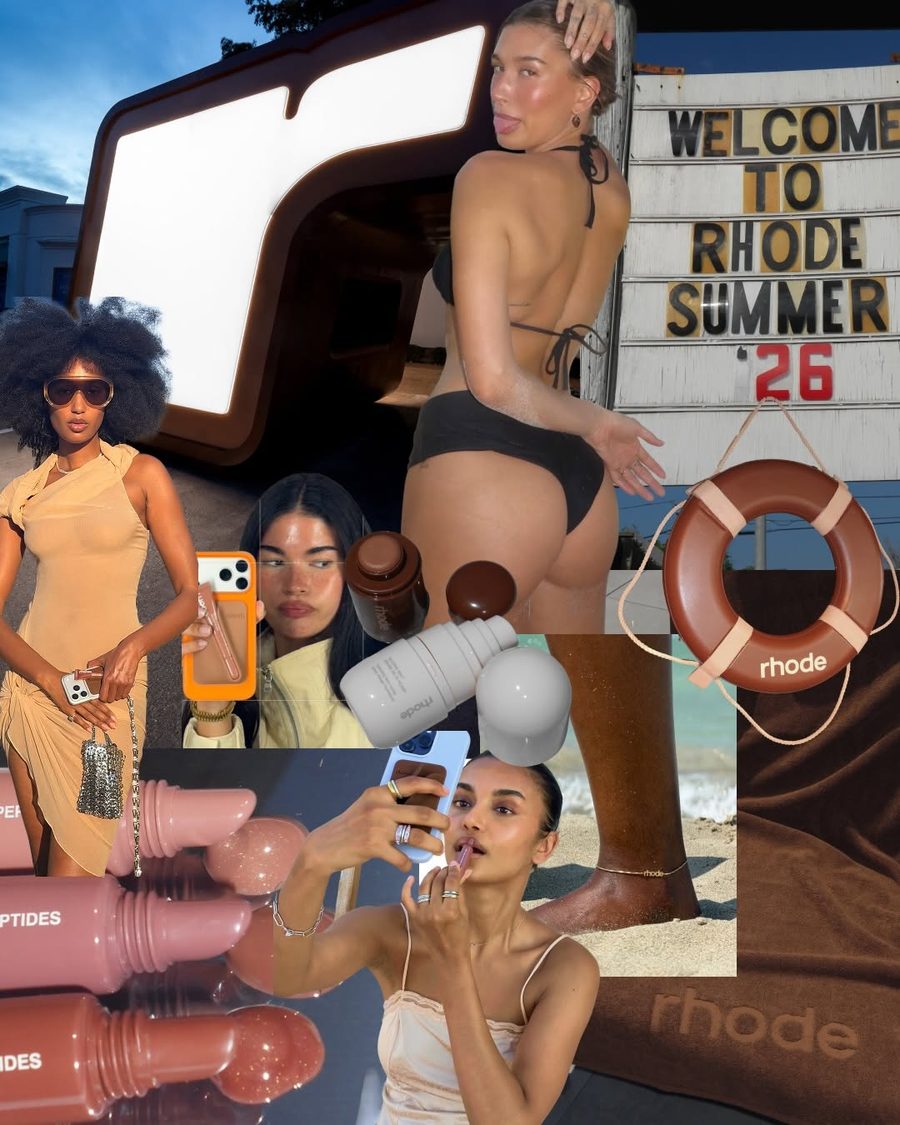
Rhode spends where most DTC brands won’t: on feeling. “Welcome to Rhode Summer ’26” pop-up stations, Ibiza postcards, collection arrivals shot like a travel diary — experiences that generate millions of impressions with zero media spend. It reads in the data: posts pull more genuine engagement than any paid unit could buy, because people want to be in the world, not sold to.
Move 07 of 07
Turn cultural gravity into a $1B outcome
Here’s how it ends. In three years Rhode reached $212M in net sales and sold to e.l.f. Beauty for up to $1 billion — $800M at close plus a $200M earnout tied to future growth — with a Sephora rollout to come. The lesson: brand equity built on genuine cultural gravity doesn’t just drive sales, it becomes enterprise value. The audience is the asset a buyer pays for.
The trade-offs
The founder is the moat — and the single point of failure.
Be clear-eyed. Everything here rests on one person’s relevance and willingness to keep showing up. If the founder steps back, gets over-exposed, or falls out of favor, the gravity evaporates — which is exactly why the $1B deal parks $200M in an earnout tied to future growth. And the uncomfortable truth for most brands: you don’t have a supermodel founder. So the copyable lesson isn’t “get famous” — it’s manufacture founder gravity with a real face, a sharp point of view, and a world worth following. That’s the version any founder-led or field-led brand can actually run.
The Rhode playbook on one screen.
- The founder is the ad budget. One face, ~100x the organic pull of a normal brand.
- Sell an aesthetic, not a product. Own a look and a word — “glazed.”
- Ruthless minimalism. A dozen iconic SKUs beat a catalog nobody can name.
- Design to be filmed. The phone case, the pocket products — packaging as the ad.
- Manufacture moments. Drops, collabs, restocks — plan the sell-out.
- Build a brand, not a campaign. Pop-ups and worlds people want to belong to.
- Gravity becomes enterprise value. $212M net sales → up to a $1B exit.
Keep reading.
All teardowns
Ready when you are
Put these playbooks to work.
Bring us the brand you’re building. We’ll show you what the launch, the offer, and the field could look like in Fluid.
Book a demo