
Brand teardownsHome & grooming
A $7 bar of soap.
Sold in sixes.
A $1.5B exit.
Dr. Squatch never really sold you a bar of soap. It sold you a six-bar kit, on subscription, with a deodorant and a cologne in the cart — and turned a commodity into a $400M+ brand Unilever bought for $1.5 billion. Here’s the teardown.
Start reading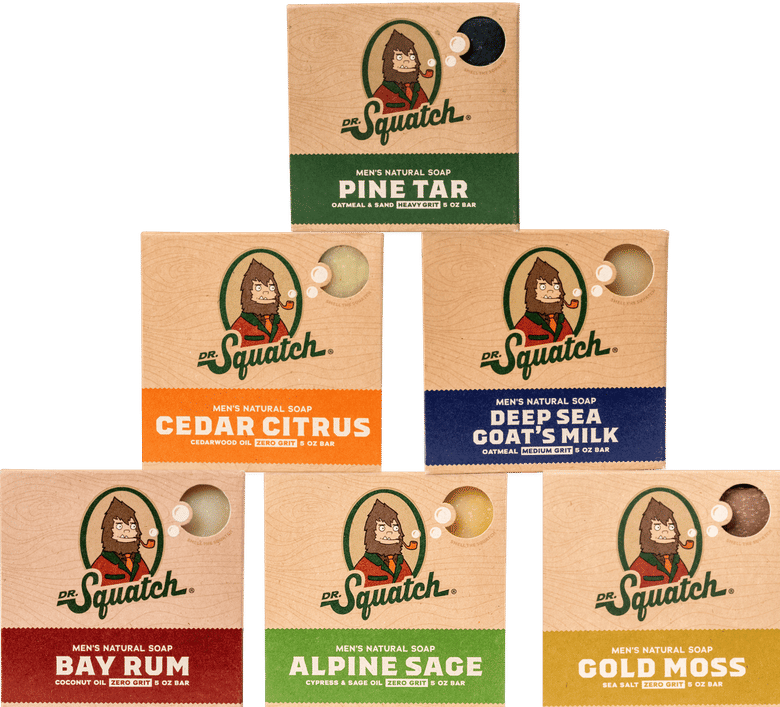
- Unilever, 2025
- $1.5B
- Revenue
- $400M+
- Founded
- 2013
- Default bundle
- 6-pk
- Per bar
- $7
- Every 3 months
- Sub
The idea
Selling a single $7 bar of soap is a losing business — the shipping eats the margin and the customer forgets to come back.
Dr. Squatch solved both problems with one move: it stopped selling bars and started selling bundles. Build-your-own six-packs, deodorant four-packs, subscribe-and-save by default. The average order isn’t one bar; it’s a kit that ships every three months. That single reframe — plus some of the funniest ads in commerce — turned a bar of soap into a business Unilever paid $1.5 billion for.
By the end you’ll have the seven plays behind bundling a $7 commodity into a $1.5B exit — each with a “steal this” you can run tomorrow.
They didn’t sell soap. They sold the six-pack.
Dr. Squatch launched in 2013 selling natural bar soap to men — a category dominated by cheap synthetic body wash. The product was good, but the model is what scaled: instead of a $7 bar, the funnel pushes a build-your-own six-pack, a deodorant four-pack, and subscribe-and-save that ships every three months. Higher first order, higher lifetime value, from the very first click.
Wrap that model in gleefully absurd advertising — Super Bowl spots, Mike Tyson, a Sydney Sweeney “body wash genie” — and a commodity became a cult. Revenue climbed from ~$100M in 2021 to $400M+, and in 2025 Unilever acquired it for $1.5 billion.
“Nobody reorders a single bar. Everybody reorders a routine.”The Dr. Squatch operating principle
The receipts — a bar, bundled
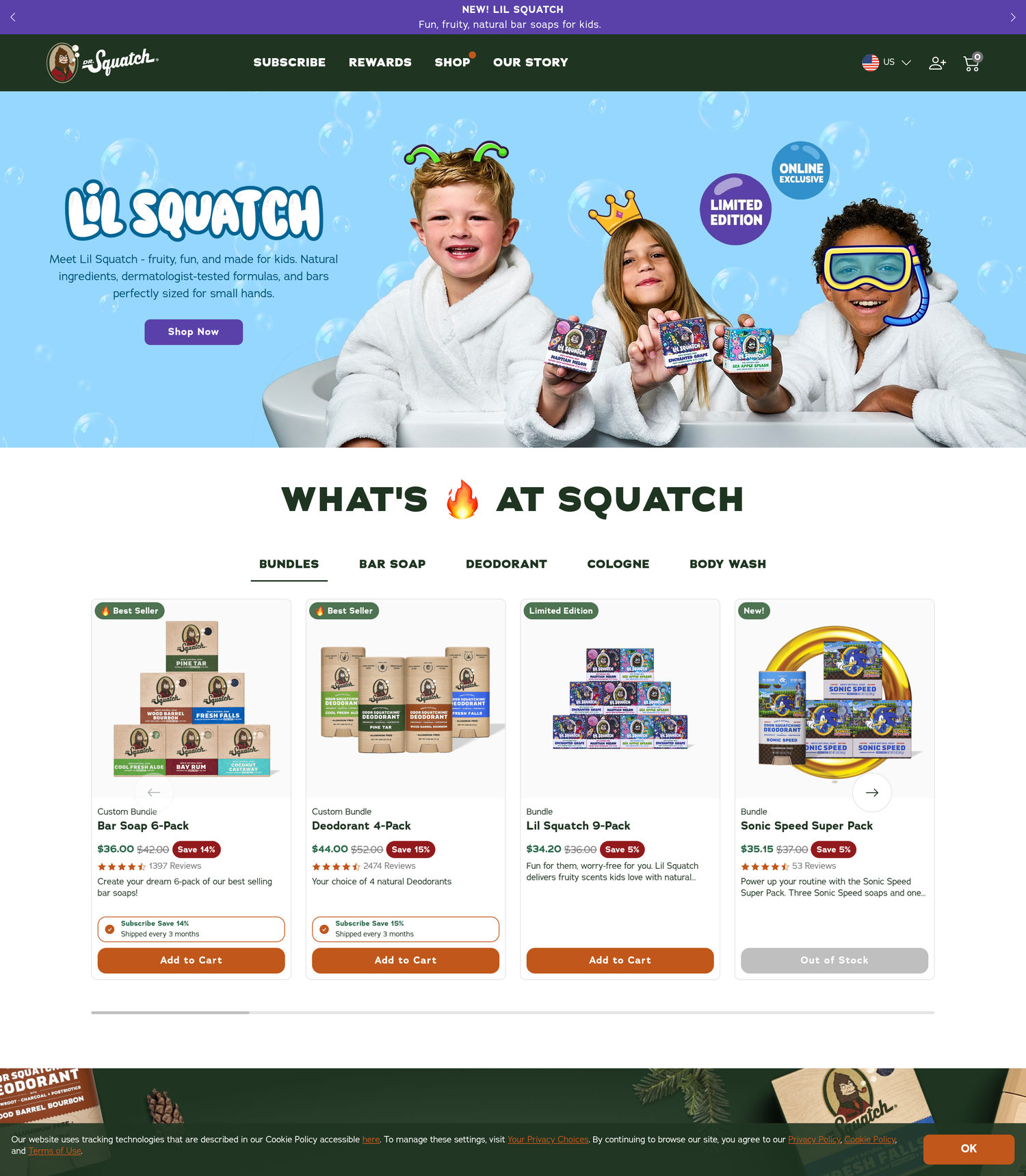
Public reporting · estimated annual revenueTheir storefront, captured live.
Look at what the homepage leads with: not a product, a tab literally labeled BUNDLES — with subscribe-and-save baked into every card.
The plays
Seven moves behind Dr. Squatch.
Move 01 of 07
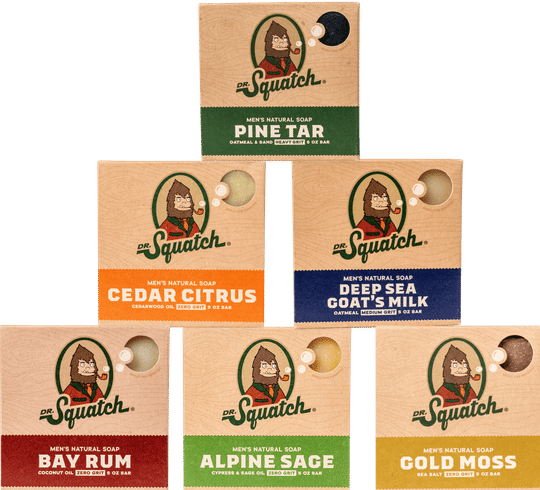
Bundle by default — never sell a single unit
A lone $7 bar barely covers shipping and rarely gets reordered. So Dr. Squatch makes the default offer a six-pack or a four-pack. The average order value triples before the customer has done anything, and the “build your own” format makes buying more feel like a treat, not an upsell.
Move 02 of 07
Turn a consumable into a subscription
Soap runs out. Dr. Squatch pre-selects subscribe-and-save (14–15% off, shipped every three months) so the reorder happens automatically. For a consumable, recurring revenue isn’t a nice-to-have — it’s the entire model.
Move 03 of 07
Sell the routine, not the product
Start with soap, then cross-sell deodorant, cologne, body wash, hair care. Each new category is another bundle and another reason to reorder. The customer didn’t buy a bar; they bought into a grooming system.
Move 04 of 07
Make the ad the product
Dr. Squatch’s over-the-top, funny male-grooming ads are the moat. When your soap is genuinely entertaining, people share it, quote it, and seek it out — turning ad spend into earned reach a commodity could never buy.
Move 05 of 07
Rent culture with big swings
A Super Bowl spot. Mike Tyson. A Sydney Sweeney “body wash genie.” Dr. Squatch makes soap famous by attaching it to culture-sized moments that punch far above a soap brand’s weight.
Move 06 of 07
Own SMS as the reorder channel
Dr. Squatch leans heavily on text — the channel men actually open. SMS nudges the refill, drops the limited edition, and pulls the lapsed subscriber back, all at near-zero cost per send.
Move 07 of 07
Premium-price the commodity — with a story
$7 for a bar of soap only works because it’s “natural, made for men, and hilarious.” The story — ingredients, identity, humor — is what lets a commodity command a premium and fund the bundles and the big ad swings.
The trade-offs
The bundle-and-subscribe model can become the brand’s liability.
Be clear-eyed. First, subscription-by-default invites backlash: if canceling is hard or customers feel auto-enrolled, the model that built the LTV can trigger complaints, chargebacks, and regulatory attention. Second, the entire premium rides on a brand voice — and voice is fragile. Under a $1.5B corporate owner, the irreverent humor that made Dr. Squatch famous is exactly what a big-company marketing committee tends to sand down; lose the voice and you’re left selling a $7 commodity with no moat. Bundle aggressively and subscribe honestly — and protect the personality that justifies the whole thing.
The Dr. Squatch playbook on one screen.
- Bundle by default. Sell the six-pack, not the bar — triple AOV from click one.
- Subscribe the consumable. Build the reorder in; recurring revenue is the model.
- Sell the routine. Cross-sell the whole bathroom, one bundle at a time.
- Make the ad the product. Funny, shareable marketing is the moat.
- Take big cultural swings. Super Bowl and celebrities make soap famous.
- Own SMS. The reorder channel men actually read.
- Premium via story. Identity is the license to charge $7 for soap.
Keep reading.
All teardowns
Ready when you are
Put these playbooks to work.
Bring us the brand you’re building. We’ll show you what the launch, the offer, and the field could look like in Fluid.
Book a demo