
Brand teardownsSupplements & wellness
One product.
$600M a year.
A $1.2B empire.
AG1 is a single green powder that became a $1.2 billion brand doing $600 million a year — almost all of it on subscription. No product sprawl, no viral moment. Just a monthly habit, sold on a thousand podcasts. Here’s the teardown.
Start reading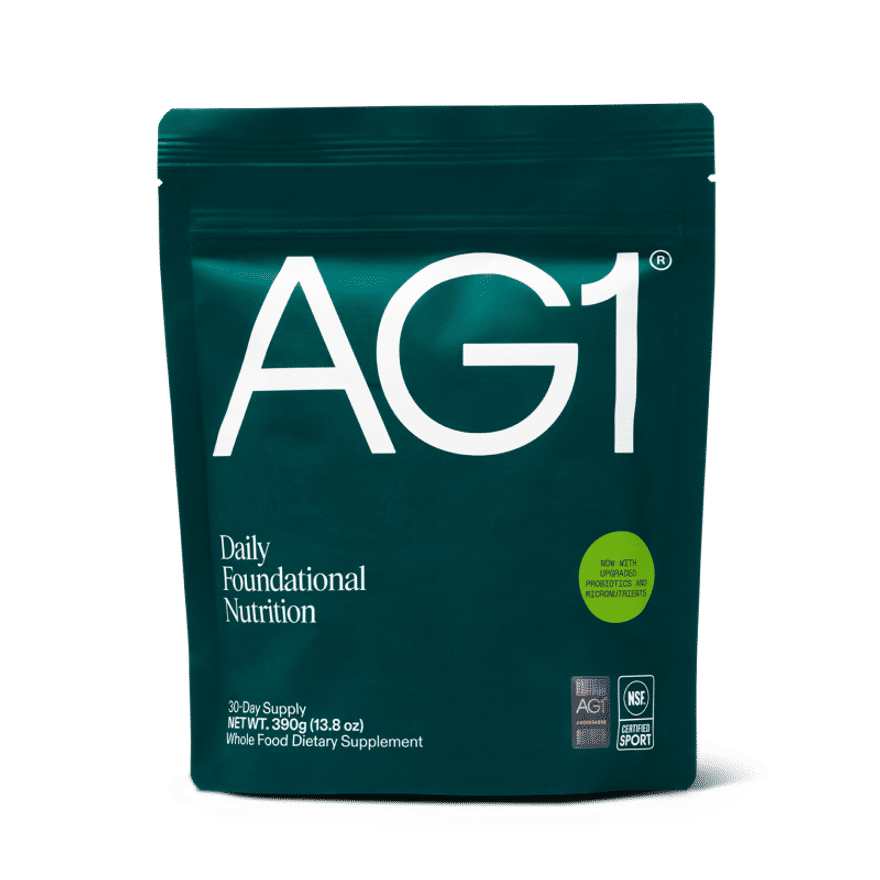
- Annual revenue
- $600M
- Valuation
- $1.2B
- Core product
- 1
- /mo subscription
- ~$79
- Revenue recurring
- 80–90%
- Podcast advertiser
- Nº 3
The idea
A single green powder — one SKU — became a $1.2 billion brand doing $600 million a year. That’s the first thing that should stop you about AG1.
No catalog, no flavors to agonize over, no viral TikTok moment. Just one daily habit, priced as a subscription, and sold to you by the podcast host you already trust. It’s the most disciplined playbook in this whole series: pick one product, one channel, and one recurring revenue model — and go deep.
By the end you’ll have the seven plays behind a single-SKU, subscription-first, $1.2B empire — each with a “steal this” you can run tomorrow.
One SKU, sold by the voice in your ears.
AG1 (formerly Athletic Greens) sells essentially one thing: a daily “foundational nutrition” powder at roughly $79 a month. It grew from $160M in 2021 to ~$600M in 2024 and a $1.2B valuation — not through a big catalog or a viral hit, but through relentless focus: one product, a subscription-first price, and total dominance of one channel — podcasts. When a host you trust drinks it on air every week, the recommendation stops feeling like an ad.
The whole model rests on one bet:
“Win one habit, on one trusted channel, and bill it every month.”The AG1 operating principle
The receipts — one SKU, a rocket of a run
Public reporting · annual revenueOne product. Two prices. One nudge.
AG1’s pricing isn’t an accident — it’s the entire growth engine. Look at the gap.
That gap — cheaper to subscribe than to buy once — is the whole strategy. It makes subscribing the rational choice and pushes 80–90% of revenue into recurring plans, where the real value of a customer lives.
The plays
Seven moves behind AG1.
Move 01 of 07
One product, forever
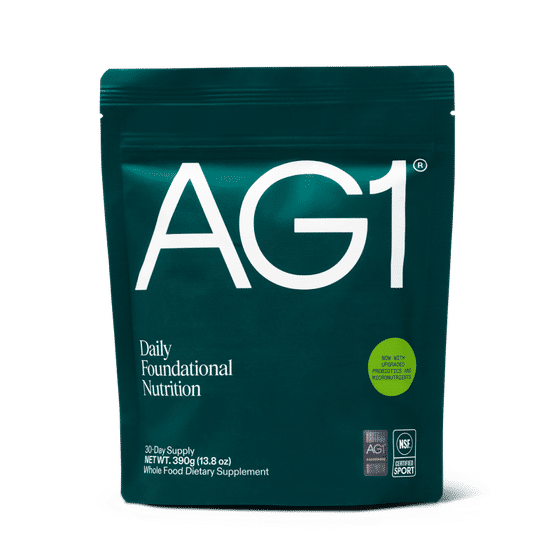
While competitors ship dozens of SKUs, AG1 sells essentially one: a single daily powder. No flavors to agonize over, no “which one is right for me,” no catalog to maintain. All of the brand’s energy — every ad, every podcast read, every dollar of R&D — points at making one $79/month drink the default “foundational” habit. Focus is the strategy.
Move 02 of 07
Engineer the subscription with a price gap
AG1 makes it cheaper to subscribe than to buy once: about $79/month on subscription vs $99 one-time. That inverted gap punishes the one-off buyer and rewards the committed one, which is why 80–90% of revenue is recurring. On a consumable, subscription isn’t a feature — it’s the whole business, because the second, twelfth, and fortieth order is where the margin lives.
Move 03 of 07
Own a channel no one else is fighting for
While every DTC brand knife-fights over Meta and TikTok, AG1 quietly bought audio. It runs host-read sponsorships across hundreds of podcasts at once and ranks as the third-largest podcast advertiser by show count. A weekly host-read spot isn’t an ad you scroll past — it’s a trusted friend telling you what they drink every morning. They found an under-priced channel and dominated it.
Move 04 of 07
Rent the expert’s credibility
AG1’s long-running association with figures like neuroscientist Andrew Huberman does something an ad can’t: it transfers trust. When a credentialed expert says they take it daily, “foundational nutrition” stops sounding like marketing and starts sounding like science. The host’s authority becomes the product’s authority — the most valuable thing you can borrow.
Move 05 of 07
Make retention the real product
For a subscription, the sale isn’t the finish line — it’s the start. AG1 obsesses over adherence: dosing guidance, education emails, refill-timing nudges, habit-building content. Every touch is designed to get you to actually drink it tomorrow, because the whole model only works if lifetime value clears acquisition cost. They don’t just sell the powder; they sell the ritual.
Move 06 of 07
Use a premium price as positioning
$79–$99 a month for a greens powder is a lot — on purpose. The high price signals seriousness, filters for committed customers, and funds the expensive podcast machine that competitors can’t match. Cheap would undercut the “foundational, non-negotiable” story. The price isn’t a barrier to the strategy; it is the strategy.
Move 07 of 07
Bury the first “no” under a welcome kit
Subscribing to a $79/month habit is a big ask, so AG1 loads the first order with value: a free shaker, travel packs, a bottle of vitamin D3+K2, a welcome kit. Suddenly the first month isn’t “pay $79 for powder” — it’s “get a pile of free stuff and the powder.” Stacking gifts onto order one is how you win the subscribe, not the single sale.
The trade-offs
A trust-built brand is only as safe as the trust.
Be clear-eyed. The entire AG1 model rests on credibility — expert endorsements, “foundational nutrition,” a premium price that implies premium science. That’s a strength and a fragility. Critics and even biohackers openly question whether a $99/month greens powder does much of what’s implied, and broad “foundational” health claims are the kind the FTC watches. The brand also weathered a real founder scandal (the founder resigned in 2024 after an old criminal conviction surfaced) — precisely the kind of blow that hurts most when your whole brand is built on trust. And the economics lean on high CAC, rising podcast prices, and subscription fatigue as cheaper challengers pile in. Own a channel and a habit — but know that trust, once dented, is the hardest thing to re-earn.
The AG1 playbook on one screen.
- One product, forever. Depth over breadth — a single iconic SKU.
- Engineer the subscription. Cheaper to subscribe than buy once → 80–90% recurring.
- Own an under-contested channel. Podcasts — the Nº 3 advertiser.
- Rent expert credibility. The host’s trust becomes the product’s.
- Retention is the product. Sell the ritual, not just the powder.
- Premium price as positioning. Expensive on purpose — and it funds the channel.
- Bury the first “no.” A welcome kit worth more than the price.
Keep reading.
All teardowns
Ready when you are
Put these playbooks to work.
Bring us the brand you’re building. We’ll show you what the launch, the offer, and the field could look like in Fluid.
Book a demo