
Brand teardownsSupplements & wellness
One ingredient.
Nobody knew it.
$150M a year.
ARMRA took bovine colostrum — an ancient ingredient almost nobody had heard of — and made itself the brand for it. A doctor-founder, a biohacker halo, and premium jars turned a niche into roughly $150 million a year. Here’s the teardown.
Start reading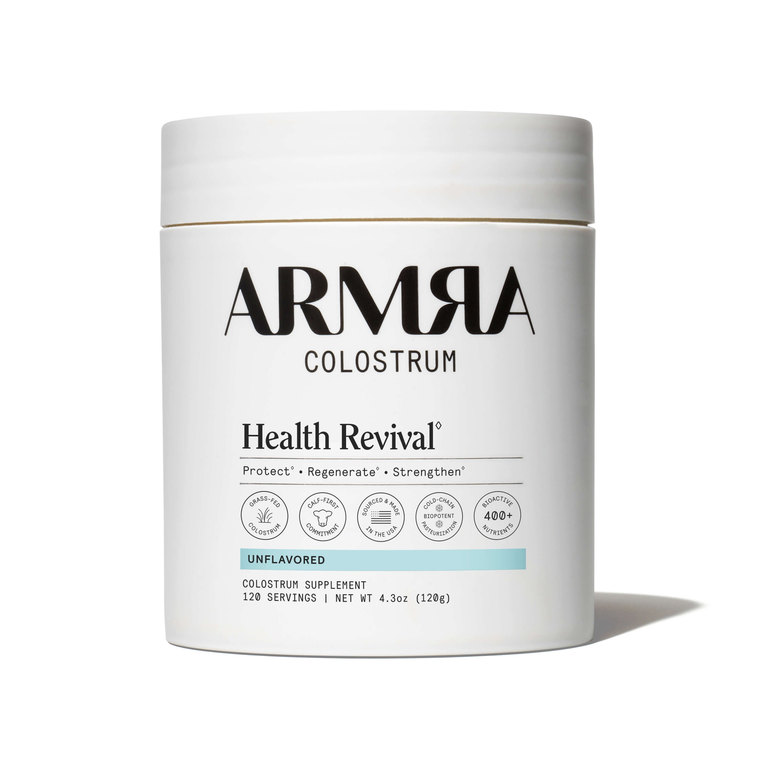
- Est. revenue
- $150M
- Hero ingredient
- 1
- Per jar
- $120+
- Founder
- MD
- To $1M run-rate
- <6mo
- Founded
- 2020
The idea
Most brands fight to win a category. ARMRA did something rarer — it claimed an ingredient.
Bovine colostrum, the first milk a cow produces, had sat in obscurity for decades. ARMRA made its own name and that ingredient one and the same, so that the moment “colostrum” started trending, every search, every podcast mention, and every celebrity smoothie funneled back to a single brand. Then it wrapped that ingredient in a doctor’s credibility, a biohacker’s halo, and a $120 jar. Here’s exactly how the play works.
By the end you’ll have the seven plays behind turning one unknown ingredient into a ~$150M-a-year brand — each with a “steal this” you can run tomorrow.
They didn’t launch a product. They claimed an ingredient.
In 2017, Dr. Sarah Rahal — a pediatric neurologist — was floored by a gut illness conventional medicine couldn’t fix. Her research led her to bovine colostrum, an ingredient with real science but almost no consumer awareness. In 2020 she launched ARMRA not as “another supplement,” but as the definitive brand for one molecule. The bet: if colostrum ever caught on, the brand whose name was the ingredient would capture the wave.
It caught on. And the whole strategy rests on one move:
“Don’t compete in a category. Go own an ingredient nobody else has claimed.”The ARMRA operating principle
The receipts — an ingredient, owned
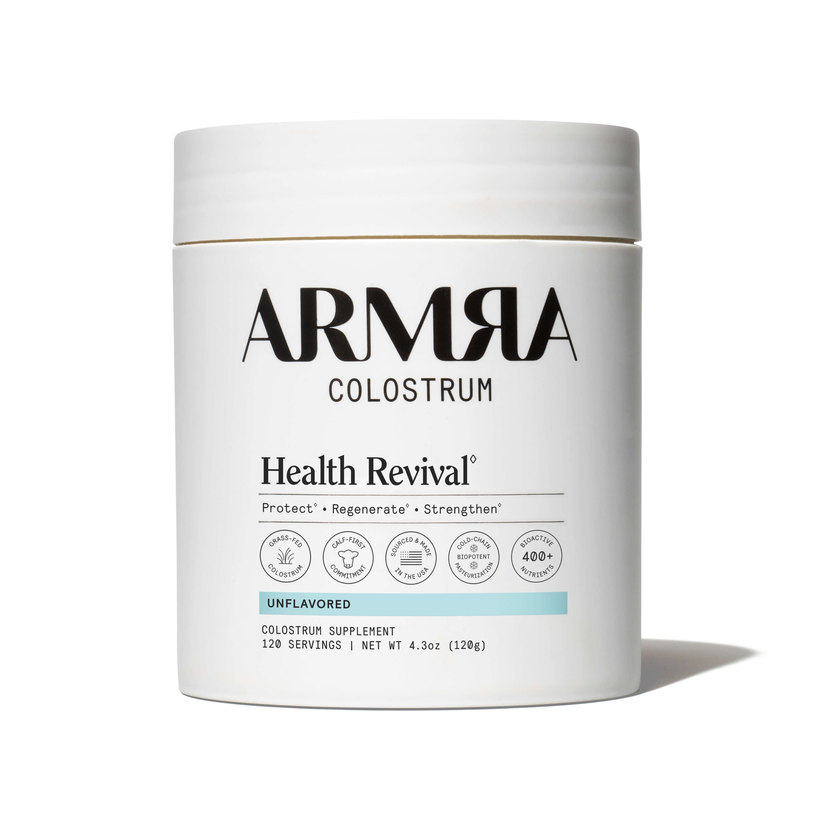
Public reporting · estimated annual revenueThe label is the entire pitch.
ARMRA can’t put a clinical trial on a shelf, so the jar does the selling. Every element is a deliberate signal — here’s the decode.
The plays
Seven moves behind ARMRA.
Move 01 of 07
Own an ingredient, not a product
The crowded fight is over categories — “the best greens powder,” “the best protein.” ARMRA sidestepped it by claiming a single, under-owned ingredient: bovine colostrum. It didn’t try to beat competitors; it made itself synonymous with a molecule, so there effectively were none. Search the ingredient, find the brand.
Move 02 of 07
Make the founder the proof
ARMRA isn’t a faceless label — it’s Dr. Sarah Rahal, MD, a double board-certified pediatric neurologist who discovered colostrum through her own illness. In a health category thick with skepticism, a credentialed founder with a personal origin story does what no ad can: it makes the science feel trustworthy and the brand feel inevitable.
Move 03 of 07
Educate to manufacture the demand
Nobody was searching “colostrum” in 2020 — so ARMRA had to teach the market what it even is: immune support, gut lining, “cellular nutrition,” 400+ bioactive compounds. That education is the top of the funnel. And here’s the trick: the brand that explains a new ingredient becomes the default authority on it. You build the category and crown yourself its expert in the same motion.
Move 04 of 07
Rent the halo of tastemakers
An obscure ingredient becomes aspirational from the top down. ARMRA seeded the exact people its audience already trusts on health: Dave Asprey, the “father of biohacking,” who chased it across the world; Sofia Richie, whose viral smoothie featured it; and Kourtney Kardashian’s Poosh. Suddenly a cow-milk powder is a status ritual.
Move 05 of 07
Price like a pharmaceutical, package like an apothecary
ARMRA jars run $120 to $330. That premium isn’t greed — it’s positioning. Grass-fed sourcing, calf-first ethics, cold-chain processing, and a clean, clinical white jar all justify the number and, crucially, repel the commodity comparison. A cheap colostrum feels like a supplement; a $120 ARMRA jar feels like medicine.
Move 06 of 07
One ingredient, many formats
Owning a single ingredient doesn’t mean selling a single SKU. ARMRA spins colostrum into flavors (Blood Orange, Watermelon, Peach, Pineapple), sizes (travel sticks, XL jars), and use-cases (Performance Revival). More reasons to buy, more reasons to re-order, more shelf and cart presence — all without diluting the one-ingredient story.
Move 07 of 07
Run it on paid and email — not luck
The celebrity halo creates the spark, but the machine underneath is disciplined: an always-on paid presence (dozens of Meta ads at a time) plus heavy lifecycle email. Organic engagement is modest — this brand isn’t waiting to go viral. It captures the “colostrum” demand it created with search and social ads, then email drives the re-order that makes a $120 jar profitable.
The trade-offs
Own an ingredient, and everyone else can sell it too.
Be clear-eyed. First, the claims: colostrum’s broad benefits — immune, gut, “cellular nutrition” — sit on emerging science, and functional health claims are exactly what the FTC and FDA scrutinize. Second, and bigger: a category of one is fragile. The very success that made colostrum mainstream invites imitators — bigger supplement brands and cheap private label can now sell the same molecule, and the education ARMRA paid for now helps them. Being first to own an ingredient is powerful, but it isn’t a moat. The real game is converting first-mover awareness into brand loyalty, formulation IP, and a founder story competitors can’t copy — before the ingredient becomes a commodity.
The ARMRA playbook on one screen.
- Own an ingredient, not a product. Claim an under-owned molecule and be the brand for it.
- Make the founder the proof. A credentialed MD with an origin story sells the science.
- Educate to create demand. Teach the ingredient; become its authority.
- Rent the tastemakers’ halo. Biohackers and celebrities make a niche aspirational.
- Price and package premium. $120 a jar signals medicine, not commodity.
- One ingredient, many formats. Flavors and sizes drive repeat without diluting the story.
- Paid + email, not luck. Capture the demand you created; retain it to profit.
Keep reading.
All teardowns
Ready when you are
Put these playbooks to work.
Bring us the brand you’re building. We’ll show you what the launch, the offer, and the field could look like in Fluid.
Book a demo