
Brand teardownsFood & beverage
“Not mad at coffee.
Just disappointed.”
A $400M brand.
MUD\WTR didn’t start by selling mushrooms. It started by putting coffee on trial — the jitters, the crash, the 2pm anxiety — and then offering itself as the fix. Name the enemy first; become the solution second. That built a $400M brand in five years. Here’s the teardown.
Start reading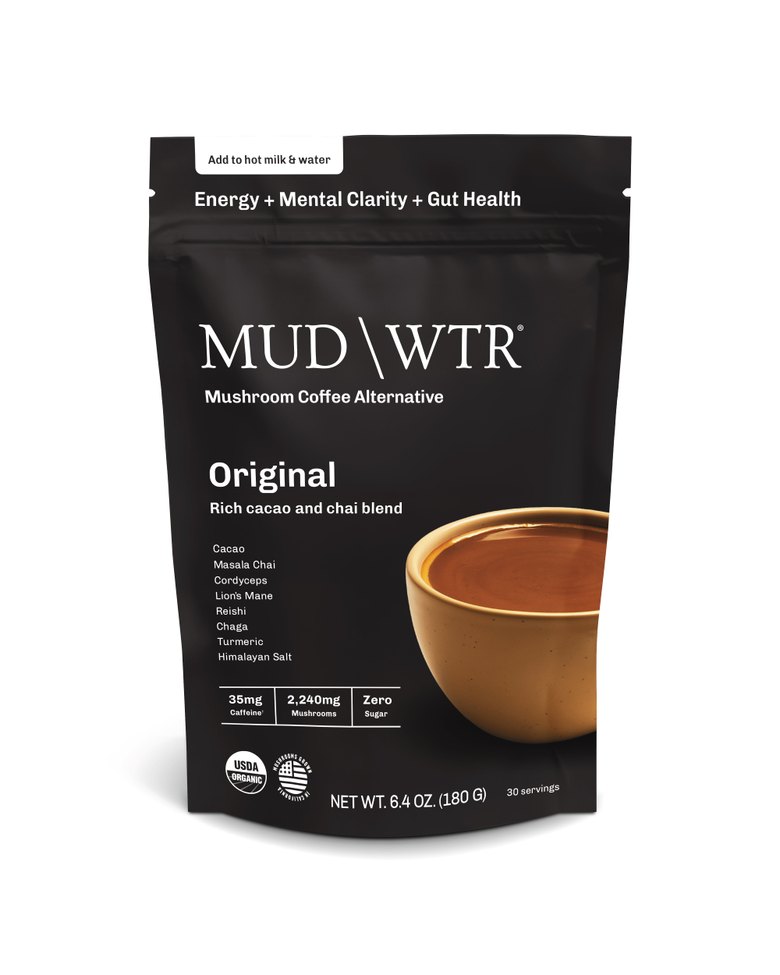
- In ~5 years
- $400M
- Caffeine per cup
- 35mg
- Founded
- 2018
- 5-star reviews
- 60K+
- Mushrooms + cacao
- 7
- Hero product
- 1
The idea
You can’t be the solution until people agree there’s a problem. MUD\WTR understood this better than almost any brand of the last decade.
Before it told you what it was, it told you what it was against: coffee — specifically the jitters, the afternoon crash, and the anxiety that comes with four cups a day. “We’re not mad at coffee, we’re just disappointed.” Name the villain, make it relatable, and your product stops being a weird mushroom powder and becomes the obvious fix. That framing built a $400M brand in five years.
By the end you’ll have the seven plays behind naming an enemy and becoming its $400M alternative — each with a “steal this” you can run tomorrow.
They didn’t sell mushrooms. They put coffee on trial.
Founder Shane Heath was a Silicon Valley designer drowning in hustle-culture coffee — anxiety, bad sleep, jitters (he has the slow-metabolizing “caffeine gene”). He built MUD\WTR in 2018 as the drink he personally needed: cacao, chai, and functional mushrooms, with about one-seventh the caffeine of coffee. He was, in his words, as much a customer of his own product as anyone.
The genius was the framing. An early Instagram post — “We’re not mad at coffee, we’re just disappointed” — named the enemy with humor instead of preaching. That single line of positioning turned an odd mushroom powder into the obvious coffee alternative, and MUD\WTR grew from $16M in 2020 to a $400M brand.
“We’re not mad at coffee, we’re just disappointed.”MUD\WTR’s founding line
The receipts — an enemy, named
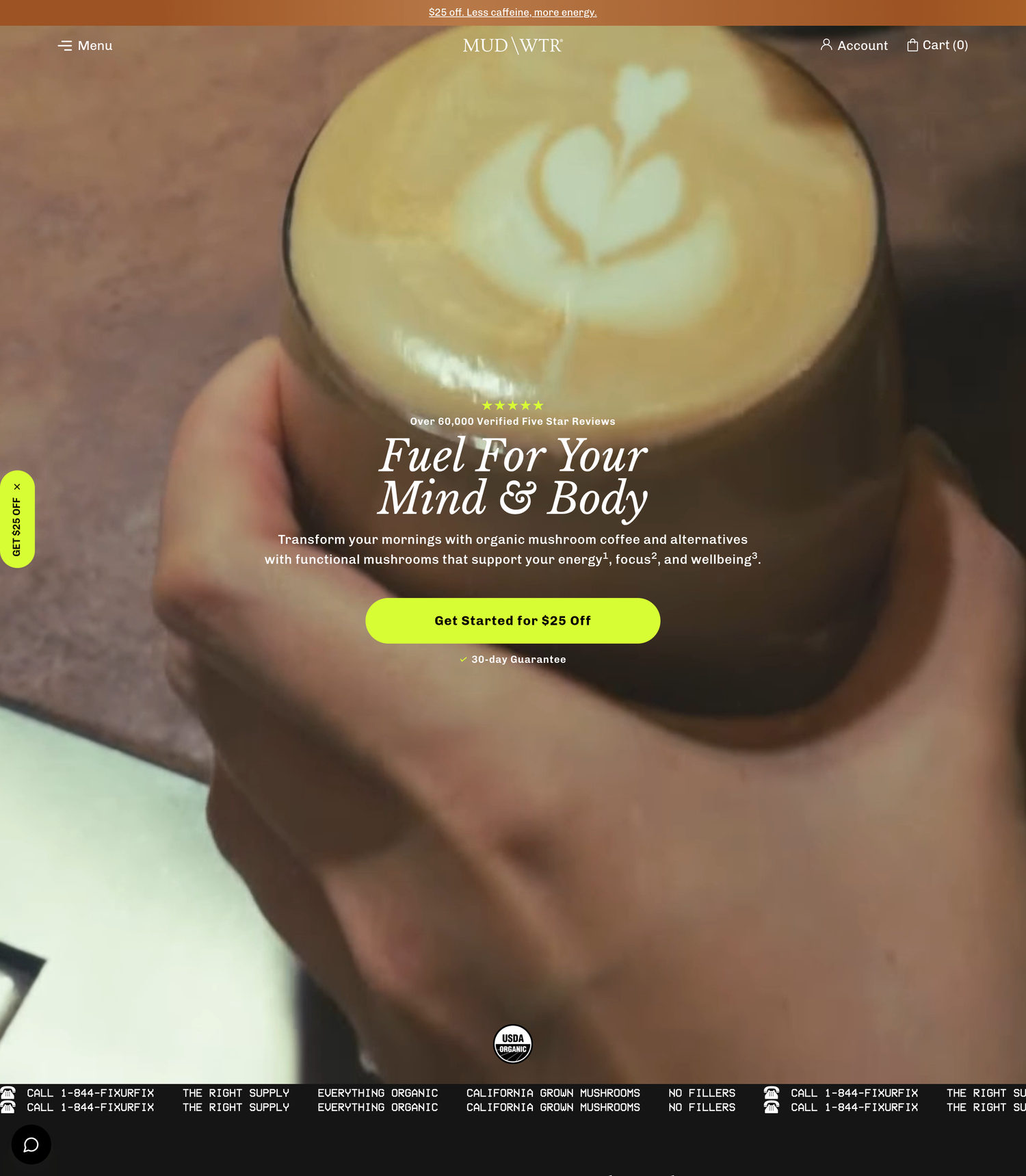
Public reporting · estimated annual revenueTheir storefront, captured live.
The very top of the site names the enemy in five words: “Less caffeine, more energy.” The whole pitch is a comparison to coffee.
The plays
Seven moves behind MUD\WTR.
Move 01 of 07
Name the enemy before you name yourself
MUD\WTR’s first job wasn’t to explain mushrooms — it was to indict coffee: the crash, the jitters, the 2pm anxiety. Once the audience agrees the enemy is real, the product becomes the obvious answer. No villain, no need for a hero.
Move 02 of 07
Make the enemy relatable, not evil
“Not mad at coffee, just disappointed” is the whole trick. MUD\WTR mocks coffee with affection, not judgment — so customers who love coffee don’t feel attacked. Humor lets you criticize the incumbent without preaching.
Move 03 of 07
Be the obvious swap, not a new habit
MUD\WTR asks for one easy substitution: the morning cup. One-seventh the caffeine, add hot water, same ritual slot. It’s positioned as a swap, not a lifestyle overhaul — which is why people actually try it.
Move 04 of 07
Make the founder patient zero
Shane Heath built MUD\WTR as the drink he personally needed, caffeine gene and all. That origin story is both the proof and the marketing — a founder who is his own best customer is instantly more believable than a boardroom.
Move 05 of 07
Anchor everything to one hero ritual
MUD\WTR sells essentially one thing — the morning cup (:rise). One ritual, refined and refilled, keeps the message simple and the reorder obvious. The focus is the product and the marketing.
Move 06 of 07
Make the reorder the model
Starter kits, refills, and subscription turn a curiosity purchase into a standing habit. “Get started for $25 off” frames the first order as beginning a ritual — and rituals repeat.
Move 07 of 07
Sell a worldview, not a powder
MUD\WTR wraps the product in a philosophy — less hustle, more mindfulness, its “Trends with Benefits” content and rest rituals. Customers buy into a way of living, which makes the brand sticky in a way a functional powder never could be.
The trade-offs
Name an enemy, and you inherit its whole army of imitators.
Be clear-eyed. First, taste and expectation: MUD\WTR literally means “mud water,” and an earthy mushroom drink isn’t for everyone — the enemy framing gets people to try it, but the product still has to survive the first sip. Second, the “anti-coffee” position that MUD\WTR pioneered is now crowded with mushroom-coffee copycats, and the caffeine-as-villain narrative is contested science, not settled fact. Being first to name an enemy earns you attention, but it also teaches every competitor the exact pitch. The defensible move is converting first-mover awareness into a brand, a ritual, and a community before the category fills with cheaper “less caffeine” clones.
The MUD\WTR playbook on one screen.
- Name the enemy first. Indict the status quo before you pitch the fix.
- Make it relatable. Attack with humor, not judgment.
- Be the easy swap. Replace a daily habit, don’t invent one.
- Founder as patient zero. “I made this because I needed it.”
- One hero ritual. Anchor to a single daily cup.
- Reorder is the model. Sell the start of a habit, then refill it.
- Sell a worldview. A philosophy turns buyers into believers.
Keep reading.
All teardowns


Ready when you are
Put these playbooks to work.
Bring us the brand you’re building. We’ll show you what the launch, the offer, and the field could look like in Fluid.
Book a demo