
Brand teardownsFood & beverage
A new kind of soda.
50,000 shelves.
A $1.85B brand.
OLIPOP didn’t invent a new category — it hijacked soda. Prebiotics and nostalgia turned a $100K bet into a $1.85 billion brand, on 50,000 shelves and the Nº 1 non-alcoholic brand in America. Here’s the teardown.
Start reading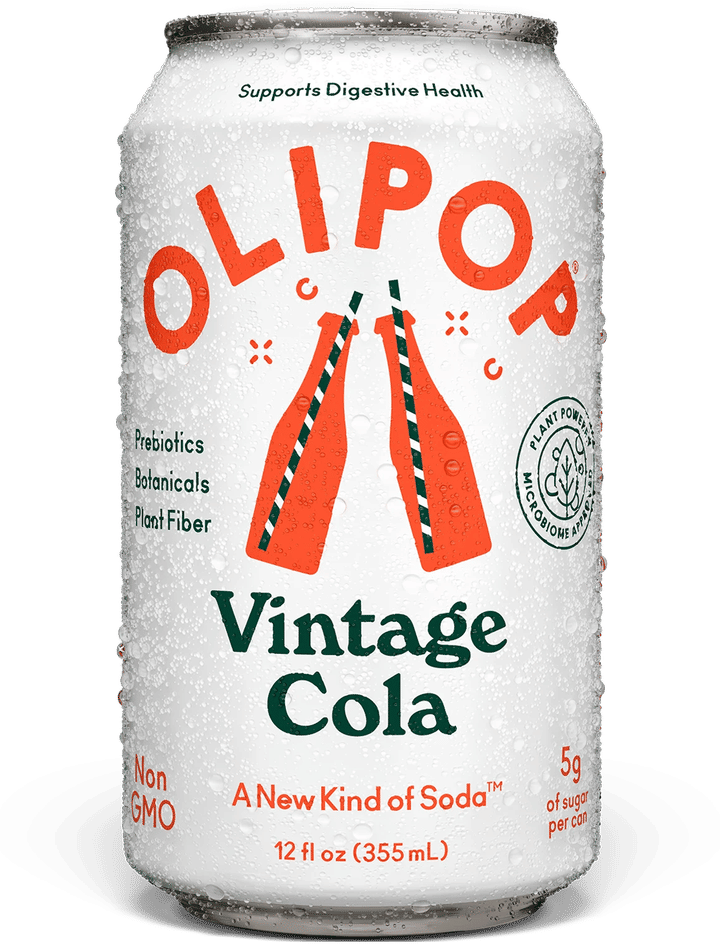
- Valuation
- $1.85B
- Revenue
- $500M+
- Stores
- ~50K
- Non-alc brand, US
- Nº 1
- Flavors
- 18
- Starting bet
- $100K
The idea
Nobody wakes up craving plant fiber. They crave root beer.
That single insight is why OLIPOP is a $1.85 billion brand. It didn’t try to build a new category and teach people to want it — it took the most familiar, most nostalgic category on the planet, soda, and quietly swapped the sugar for prebiotics. Same craving, same format, better-for-you payoff. Then it went where soda is actually bought: the shelf. Here’s exactly how the reframe works.
By the end you’ll have the seven plays behind a $100K bet that became a $1.85B retail juggernaut — each with a “steal this” you can run tomorrow.
They didn’t build a category. They stole one.
OLIPOP launched in 2018 (after the founders’ first brand failed) with a deceptively simple idea: make soda you don’t have to feel bad about. Prebiotics, plant fiber, and natural sweeteners in the exact flavors you grew up on — cola, root beer, cream soda, grape. Revenue climbed from roughly $200M in 2023 to over $500M in 2024, and a $1.85B valuation, off a category that already had a hundred years of demand baked in.
The whole play rests on one move:
“Don’t teach a new craving. Hijack an old one and make it healthy.”The OLIPOP operating principle
The receipts — a category, reframed
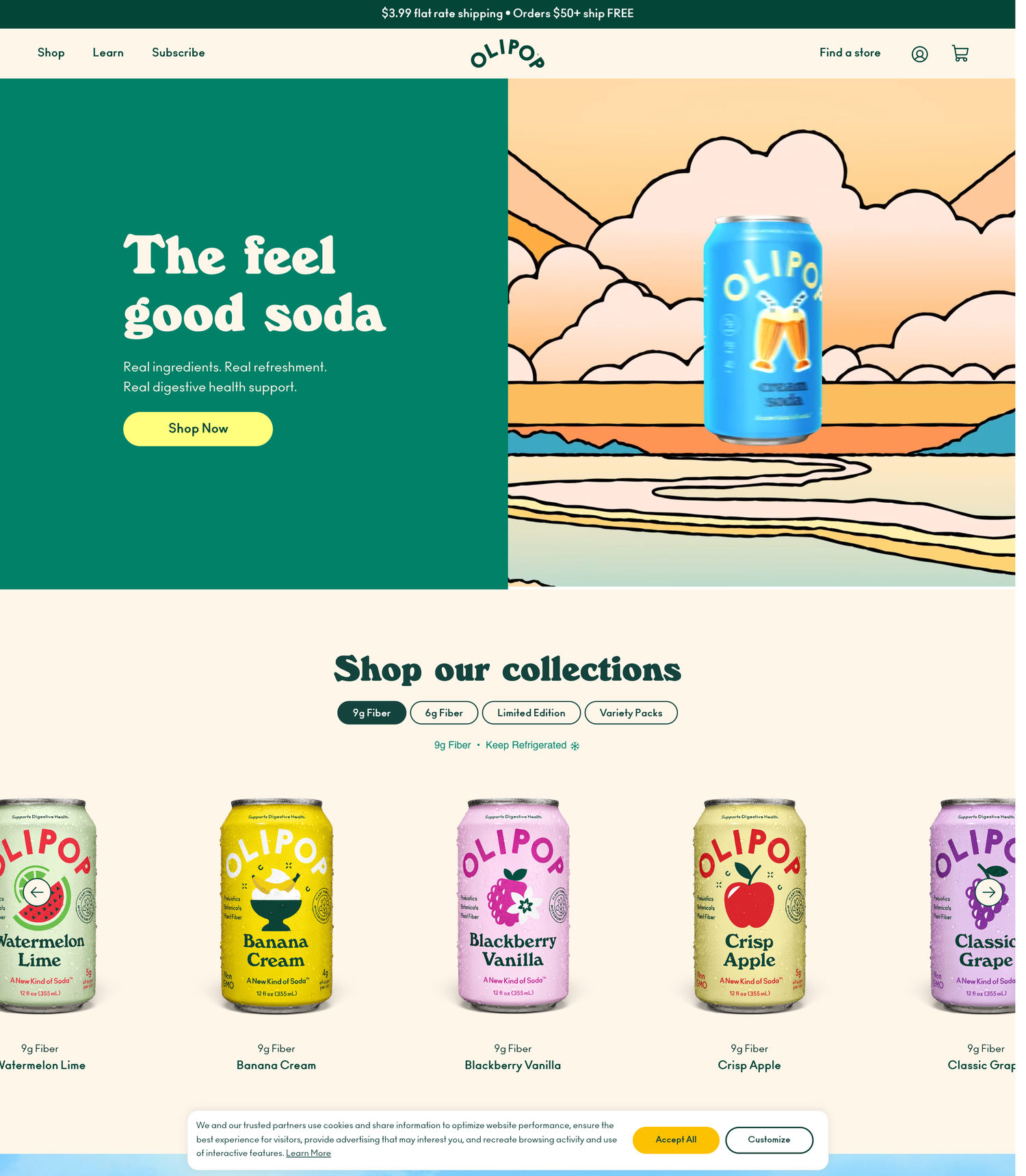
Public reporting · annual revenueTheir storefront, captured live.
The plays
Seven moves behind OLIPOP.
Move 01 of 07
Reframe a legacy category — don’t invent one
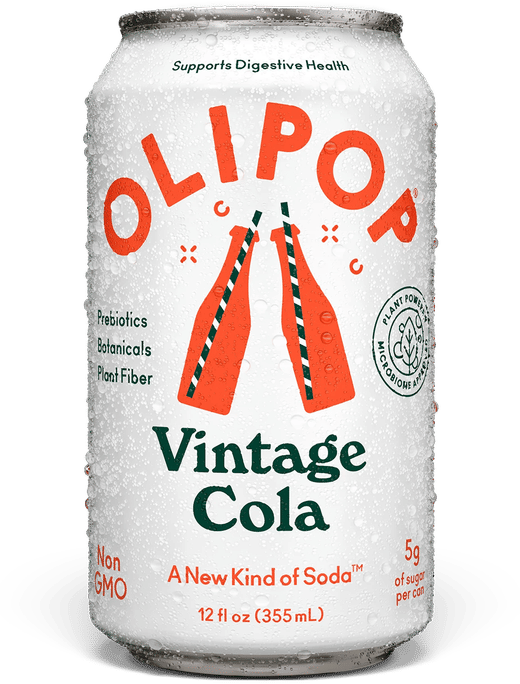
The hardest thing in commerce is teaching people to want something new. OLIPOP skipped it entirely. Instead of inventing a category, it took soda — a $40B+ market with a century of built-in demand — and swapped the sugar for prebiotics. “A New Kind of Soda.” Customers already know they want it; OLIPOP just gives them permission to.
Move 02 of 07
Nostalgia is the hook, health is the permission
OLIPOP doesn’t lead with fiber — it leads with Vintage Cola, Root Beer, Cream Soda, Shirley Temple. It sells the childhood feeling, and the “supports digestive health” line is just the permission slip that lets an adult buy it. People don’t crave prebiotics; they crave the taste of being ten. The health is what closes the guilt gap.
Move 03 of 07
Wrap it in the wellness trend
The reframe only works because it rides a wave: gut health. Prebiotics, plant fiber, “microbiome approved,” 5g of sugar vs 39g. Gut health is one of the biggest stories in food right now, and OLIPOP made a soda the easiest, tastiest way to participate in it. The trend gives an old product a brand-new reason to exist.
Move 04 of 07
Go where the category is actually bought — retail
Soda isn’t an online purchase; it’s a grab from the cold case. So unlike the DTC brands in this series, OLIPOP went retail-first: Target in 2020, Kroger in 2021, Walmart in 2022, now ~50,000 stores. It fought for shelf space next to Coke, because that’s where the impulse and the habit live. The channel matched the category.
Move 05 of 07
Use social to earn the shelf
Retail buyers don’t stock unknowns — so OLIPOP built demand online first. A playful, high-engagement social presence (posts average well over 1,000 likes) and a distinct retro brand created the pull that made buyers say yes. The social proof precedes the shelf placement, then the shelf makes every future post convert harder. Demand and distribution feed each other.
Move 06 of 07
Turn flavors into shelf presence
OLIPOP runs 18 flavors, and that’s a merchandising weapon, not indecision. More flavors mean more facings in the cold case (a bigger wall of your brand), more “ooh, let me try that one” trial, and more reasons for a fan to buy again next week. In retail, variety is how one brand takes over a whole section of the shelf.
Move 07 of 07
Premium-price a commodity — the reframe earns it
Legacy soda costs about 50 cents a can. OLIPOP is roughly $2.50–$3. That 5x premium on a commodity only works because the reframe — health, brand, a “new kind of soda” — gives people a reason to pay it. Reframing isn’t just a marketing story; it’s what unlocks the pricing power that makes the whole business profitable.
The trade-offs
Reframe a giant category, and the giants notice.
Be clear-eyed. First, the claims: “supports digestive health” on a soft drink is exactly the kind of functional claim the FTC and FDA scrutinize, and OLIPOP has faced criticism and legal challenges over how healthy a sweetened soda really is. Second, and bigger: when you prove a $40B category can be reframed, the incumbents copy you — Coke, Pepsi (via Poppi), and every store brand can launch a “prebiotic soda” and out-distribute a challenger overnight. The reframe that built you is the exact playbook that can be run back against you. Winning the reframe is step one; defending it against players with infinite shelf leverage is the real game.
The OLIPOP playbook on one screen.
- Reframe, don’t invent. Ride a category’s existing demand — “a new kind of soda.”
- Nostalgia hooks, health permits. Sell the craving; the benefit closes the guilt.
- Wrap it in the trend. Gut health makes an old product feel new.
- Go retail-first. Sell where the category is actually bought — the cold case.
- Social earns the shelf. Build demand online so buyers say yes.
- Flavors = facings. 18 SKUs take over the aisle and drive repeat.
- Premium-price the commodity. The reframe is the license to charge 5x.
Keep reading.
All teardowns
Ready when you are
Put these playbooks to work.
Bring us the brand you’re building. We’ll show you what the launch, the offer, and the field could look like in Fluid.
Book a demo