
Brand teardownsSupplements & wellness
$100M+ brand.
56 likes a post.
Zero virality.
Inno Supps is one of the fastest-growing supplement brands in America — and it did it with almost no organic reach. No viral moment, no celebrity, no founder face. Just stacks, discounts, and a relentless direct-response machine. Here’s the teardown.
Start reading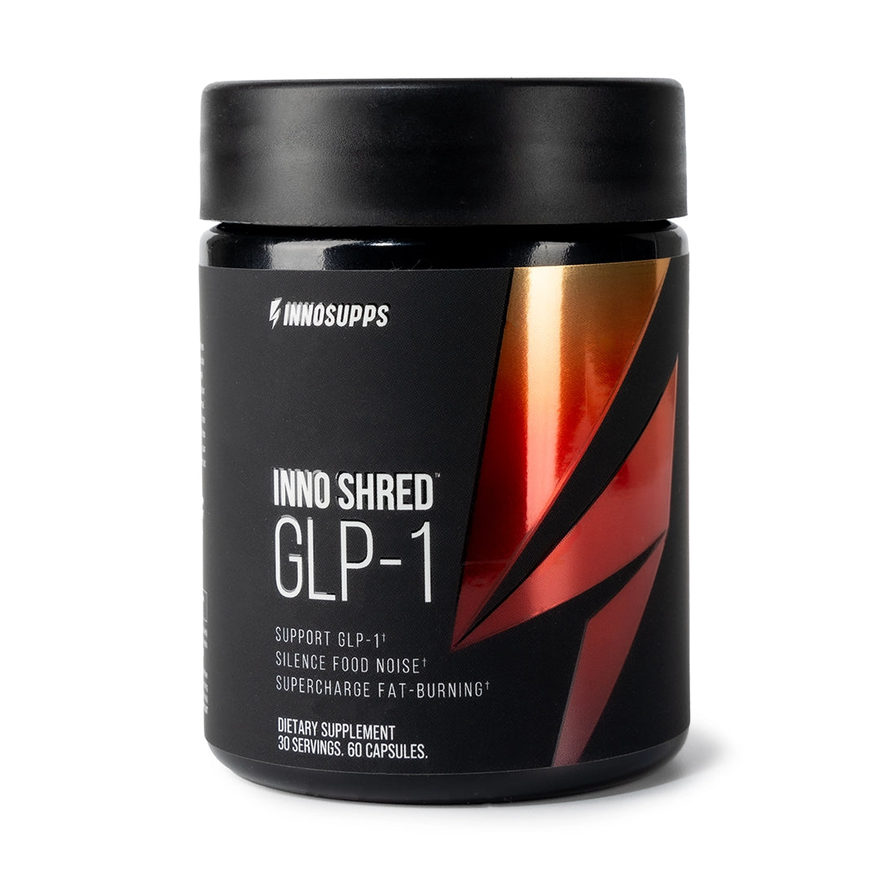
- Est. revenue
- $100M+
- SKU variants
- 8,522
- Avg likes / post
- ~56
- Top “Shred Stack”
- $200
- Off “full price”
- ~33%
- Founded
- 2019
The idea
A brand doing north of $100 million a year gets fewer than sixty likes on a typical Instagram post. That’s the first thing that should stop you about Inno Supps.
There’s no viral hook, no famous founder, no organic flywheel. There’s a catalog of bundled “stacks,” a permanent discount, and a paid-plus-SMS-plus-affiliate machine that turns cold clicks into repeat orders. If you think you need to go viral to scale — this is the counter-example.
By the end you’ll have the seven plays behind a nine-figure supplement brand built entirely on direct response — each with a “steal this” you can run tomorrow.
No face, no fame — just a machine.
Inno Supps was founded in 2019 by Kevin Gundersen in Las Vegas, and it grew into a nine-figure supplement brand the un-glamorous way: performance marketing. Where the other brands in this series lean on a celebrity or a viral aesthetic, Inno Supps leans on offer, price, and repetition — a huge catalog of bundled “stacks,” a permanent discount, doctor-endorsement authority, and an affiliate army pushing paid traffic.
Strip it down and the whole thing runs on one loop:
“Win the cold click with an offer, capture the contact, then sell the stack — again and again.”The Inno Supps operating principle
The receipts — they sell stacks, not bottles
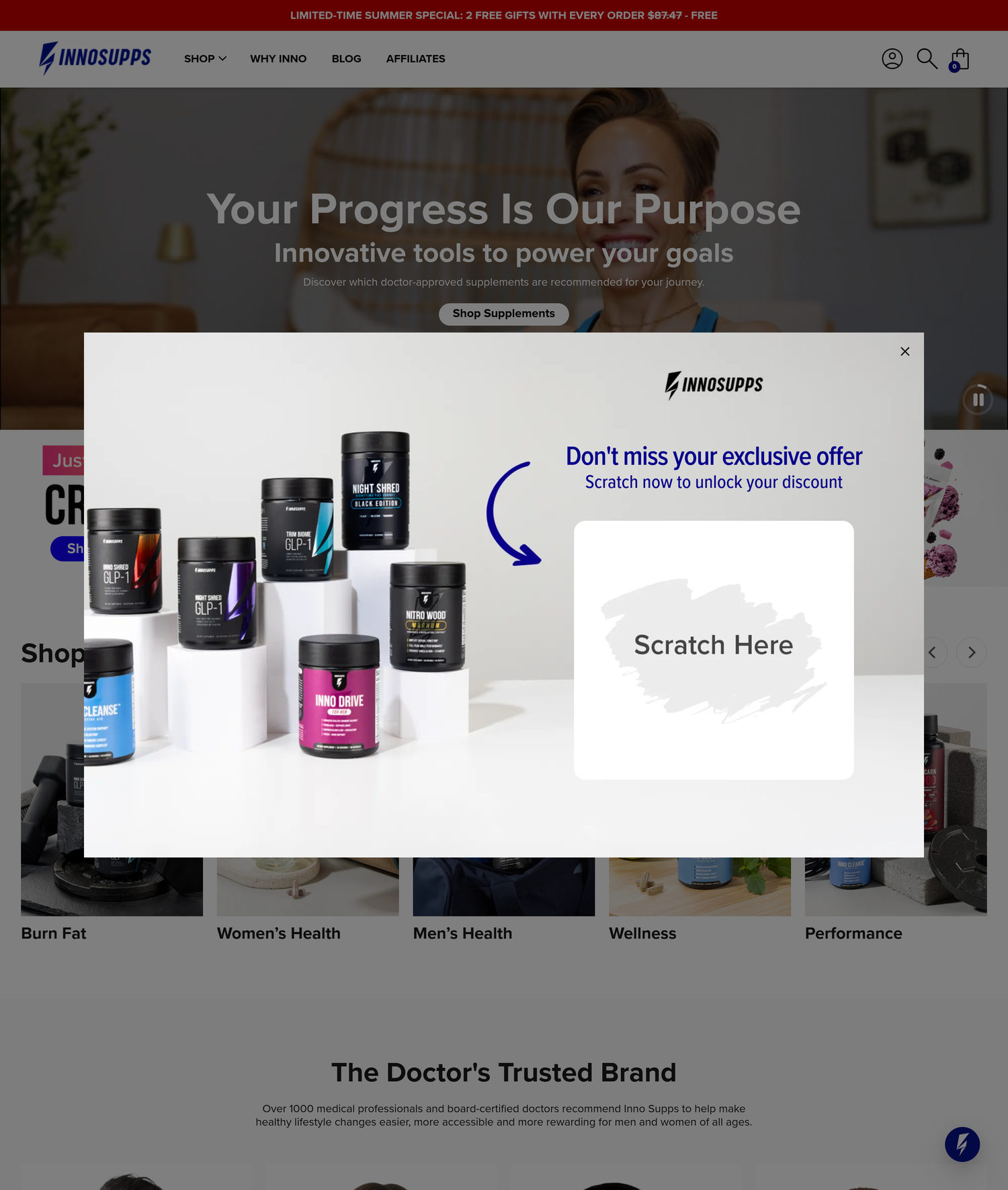
Fluid Intelligence Desk · avg tracked price per offerTheir storefront, captured live.
The plays
Seven moves behind Inno Supps.
Move 01 of 07
Sell stacks, not bottles
Almost nothing at Inno Supps is sold as a single tub. It’s the Digestion Stack ($112), the Female Shred Stack ($170), the GLP-1 Shred Stack ($200). Bundling the actives into a benefit-named “stack” triples the average order, tells a “system” story, and makes a $50 tub feel like the incomplete option. The stack, not the SKU, is the unit of sale.
Move 02 of 07
Name the goal, then jack the trend
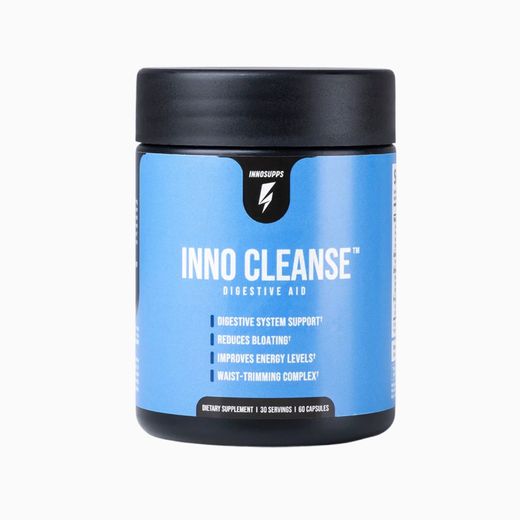
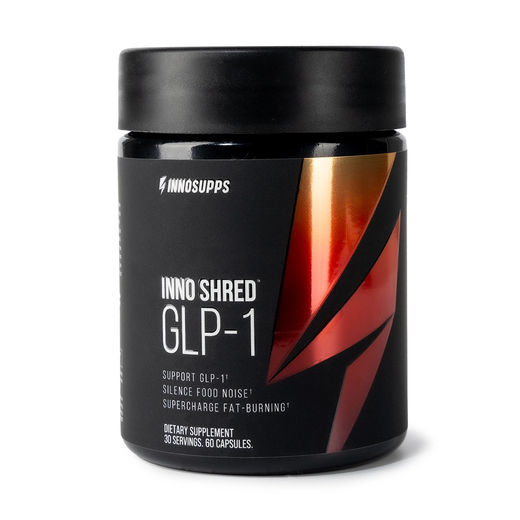
Inno Supps never names a product after an ingredient — it names it after the outcome, and wraps it in whatever’s hot. Inno Shred GLP-1 (“silence food noise, supercharge fat-burning”), Night Shred, Trim Biome GLP-1, Inno Cleanse (“reduces bloating, waist-trimming”). When GLP-1 blew up, they had a GLP-1 line overnight. The label is the customer’s goal plus the trend they’re already searching.
Move 03 of 07
The discount is the close
Inno Supps almost never sells at “full price.” There’s a permanent “Summer Special,” a strike-through original, “2 free gifts ($87 value) with every order,” and a scratch-to-win popup that unlocks a discount the instant you land. Tracked orders come in around a third off the listed “full” price. The offer — not the product page — does the converting.
Move 04 of 07
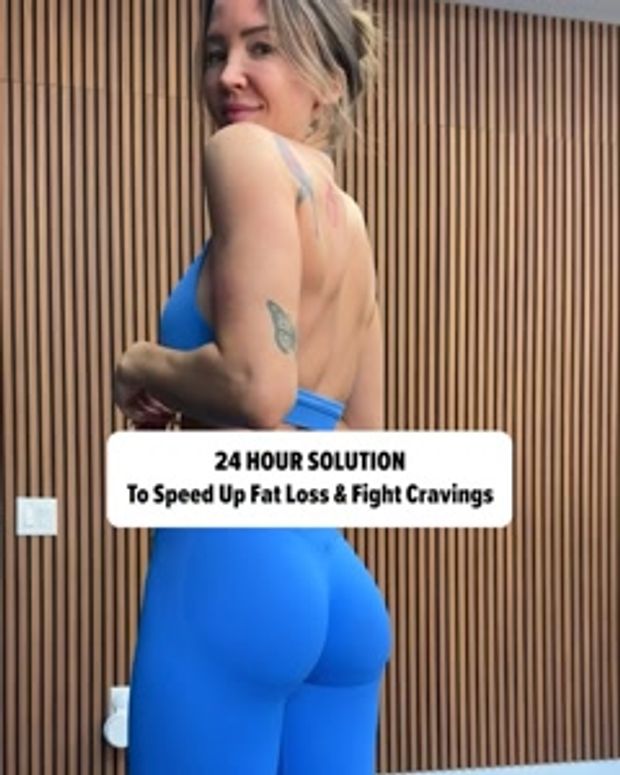
Reverse the risk on every ad
Look at their ad titles: “Risk-Free Offer,” “with Guarantee,” “24-Hour Solution.” Cold traffic won’t gamble $100 on a fat-burner from an ad — so Inno Supps removes the gamble. Money-back guarantees, free gifts, and “risk-free” framing lower the bar to the first click, which is the only click paid acquisition has to win.
Move 05 of 07
Run direct response, not a popularity contest
Here’s the counter-intuitive core. Inno Supps’ Instagram averages ~56 likes a post — basically no organic reach — yet the brand does nine figures. How? A snapshot shows 28 live Facebook ads and heavy SMS, plus email and an affiliate program. They don’t chase virality; they buy the click, capture the phone number, and monetize the list forever. Retention is the whole game.
Move 06 of 07
Sprawl the catalog to feed the list
Inno Supps tracks 2,200+ products and 8,500+ variants — Black Editions, for-her and for-him versions, new flavors, limited stacks, “Better You” challenges. That sprawl isn’t chaos; it’s fuel. Every new drop is another email, another SMS, another reason for an existing customer to come back. A big catalog keeps the retention machine fed.
Move 07 of 07
Borrow authority to license bold claims
Aggressive fat-loss promises need cover, so Inno Supps wraps them in credibility: “The Doctor’s Trusted Brand,” “1,000+ doctors and medical professionals recommend,” “doctor-approved,” and a clean-label story (“zero sucralose, artificial sweeteners or fillers”). The authority makes the bold benefit feel responsible instead of hype.
The trade-offs
This category is a regulatory tightrope.
Be clear-eyed. Fat-burner and GLP-1 language — “supercharge fat-burning,” “silence food noise,” “24-hour solution to speed up fat loss” — is exactly what the FTC and FDA scrutinize on dietary supplements, where weight-loss claims demand real substantiation. Perpetual “was $X, now $Y” pricing invites FTC fictitious-former-price scrutiny if the “full price” is rarely charged. And “1,000 doctors recommend” is the kind of claim regulators ask you to prove. The model also lives or dies on paid CAC: near-zero organic means if ad costs rise, the whole machine tightens. The playbook works — but every lever here is one a regulator can pull.
The Inno Supps playbook on one screen.
- Sell stacks, not bottles. Benefit-named bundles → 2–3x the order.
- Name the goal, jack the trend. “Inno Shred GLP-1,” not “berberine.”
- The discount is the close. Gifts, timers, scratch-to-win on every visit.
- Reverse the risk on the ad. A guarantee wins the cold click.
- Direct response over virality. ~56 likes, nine figures — buy the click, own the list.
- Sprawl to feed the list. 8,500 variants = endless send-worthy moments.
- Borrow authority. “Doctor’s trusted brand” licenses the bold claim.
Keep reading.
All teardowns
Ready when you are
Put these playbooks to work.
Bring us the brand you’re building. We’ll show you what the launch, the offer, and the field could look like in Fluid.
Book a demo