
RoSponsored
Esc
How Ro turns GLP-1 pricing into a 10-second daily-cost animation
A 10-second product animation from Ro: two GLP-1 pills on a sunny yellow background under the line "FDA-approved GLP-1s could cost less than you think on Ro" and a large per-day price that changes as it plays. It ran on Meta from September 21, 2026 and sends people to Ro's Serena Williams quiz entry.
Ro
71 creatives lead here1 / 71
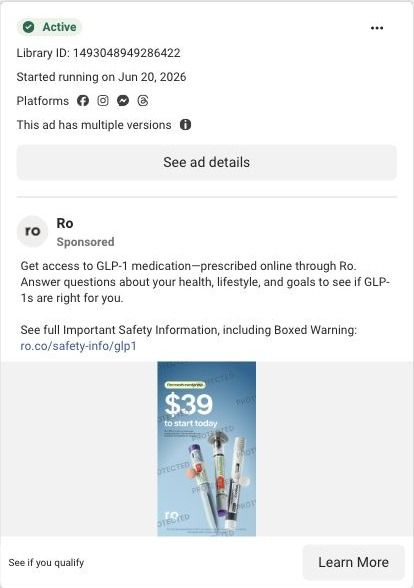
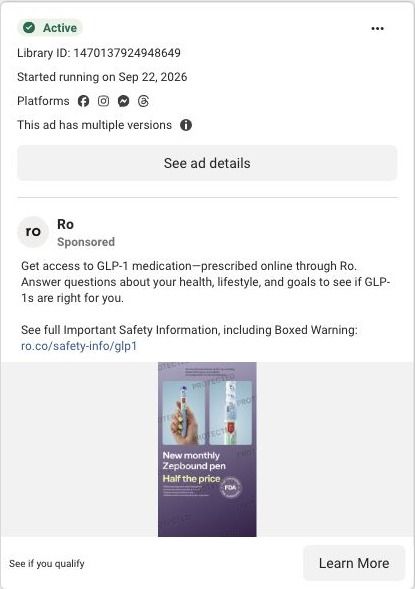
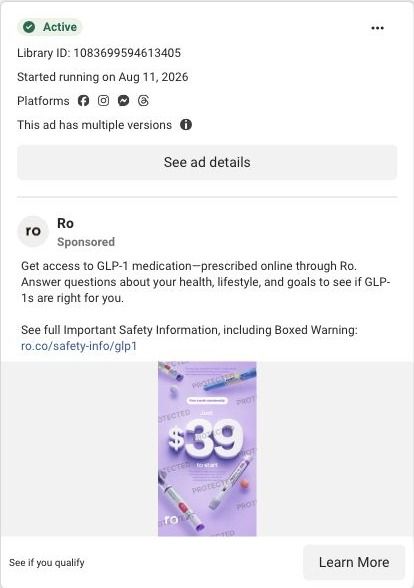
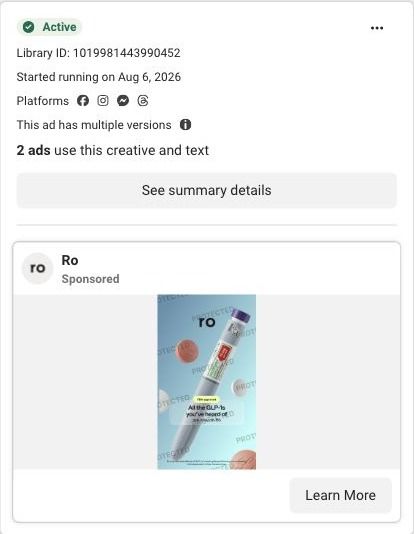
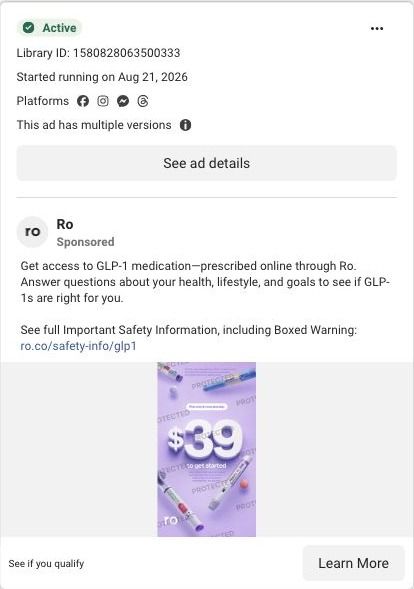
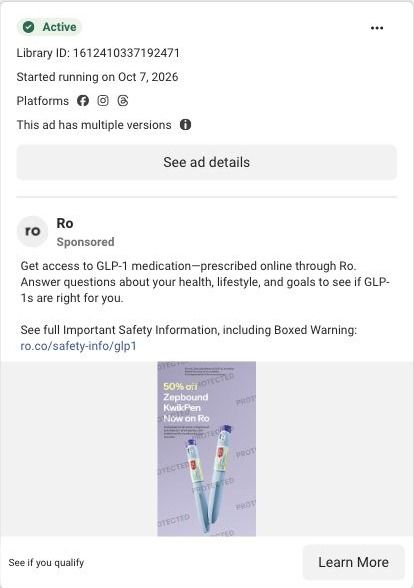
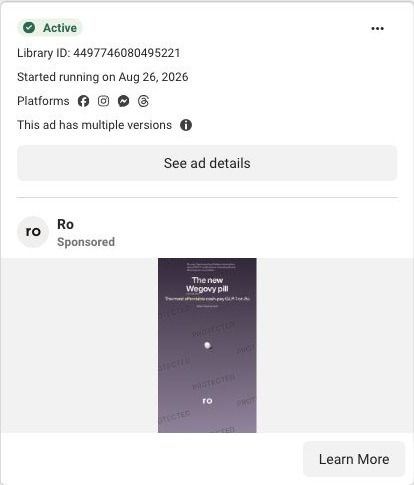
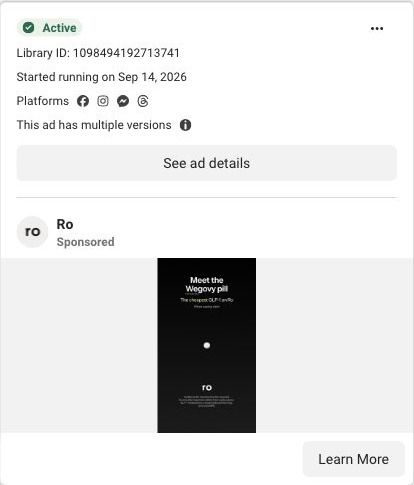
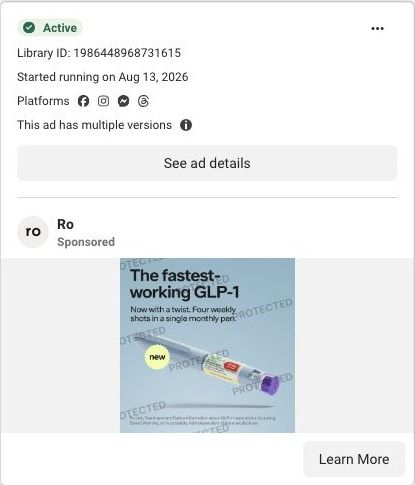
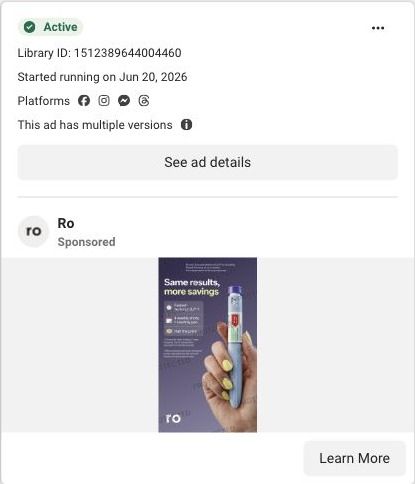
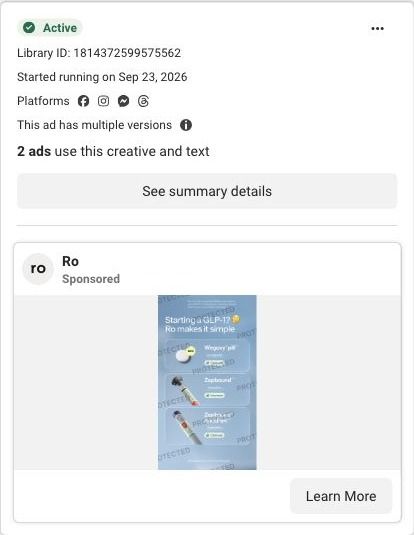
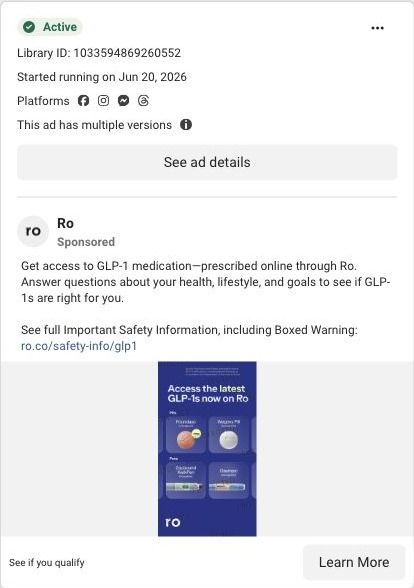
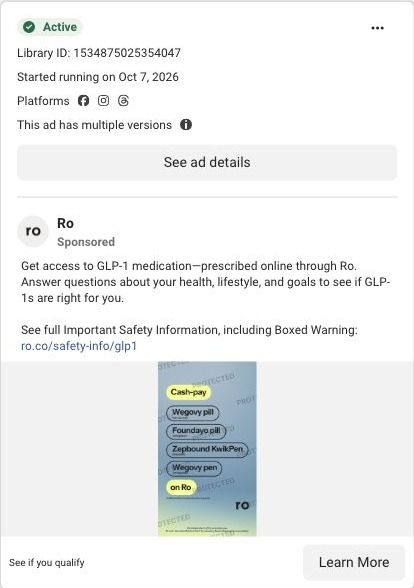
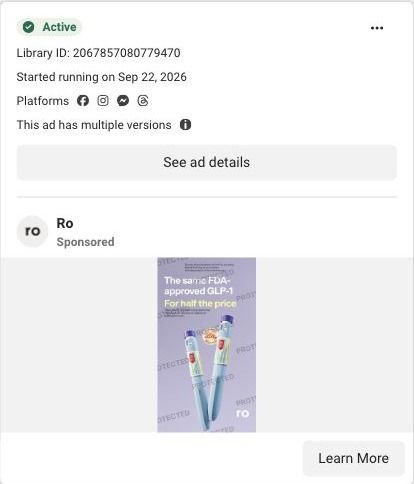
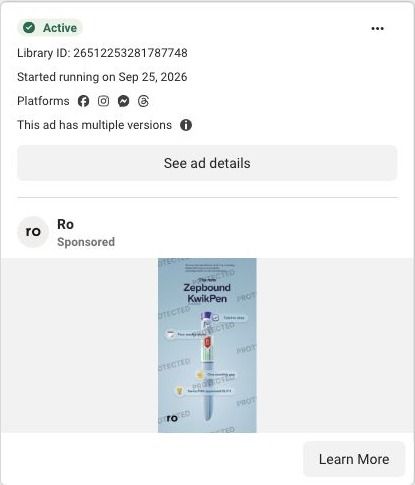
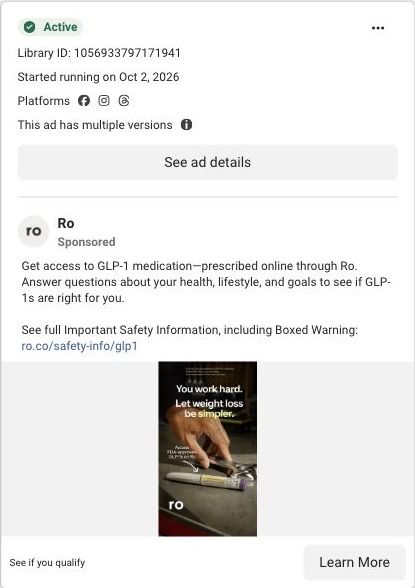
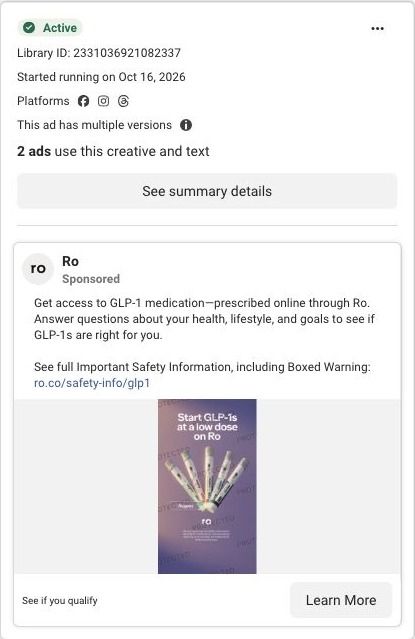
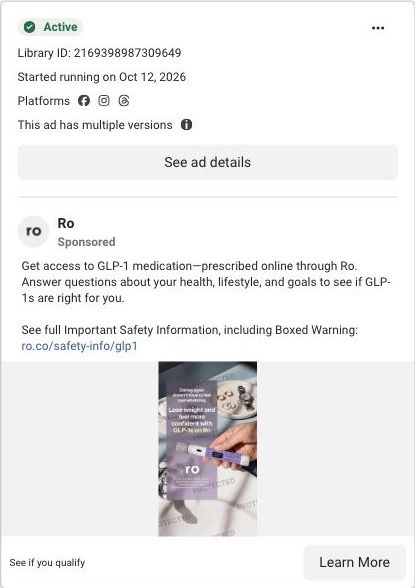
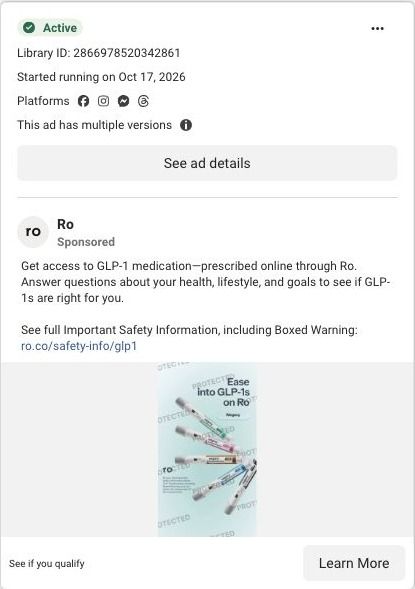
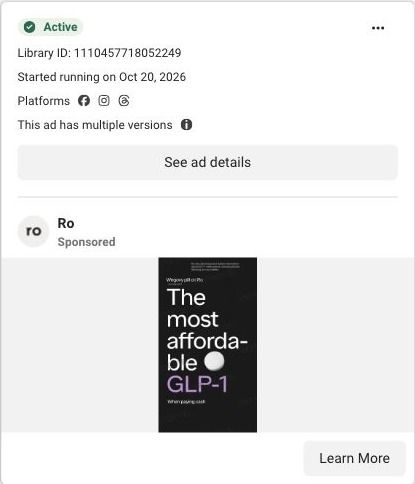
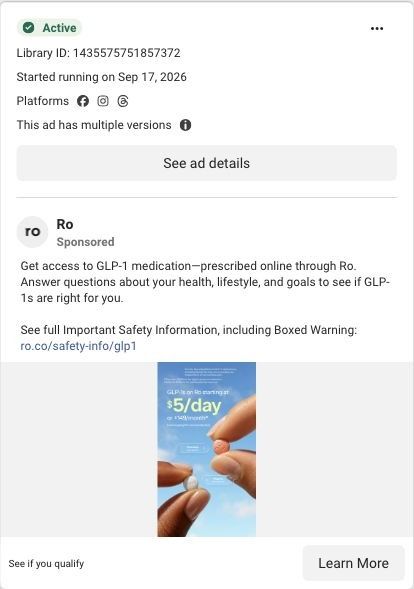
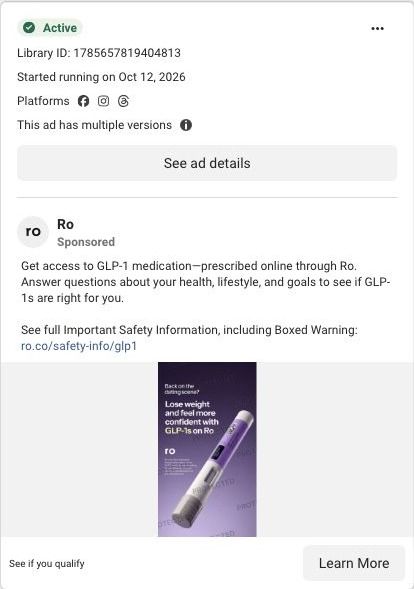
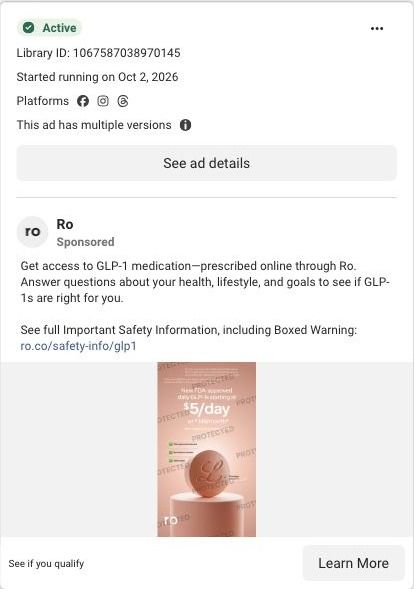
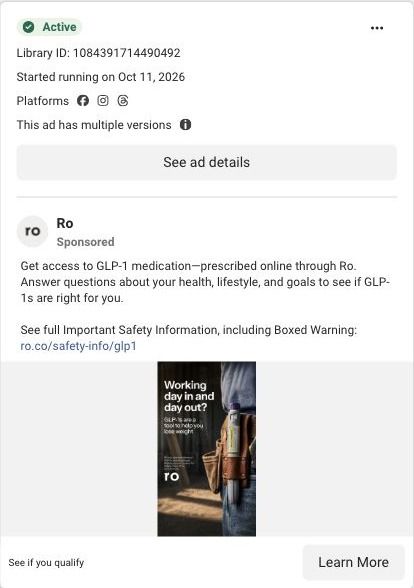
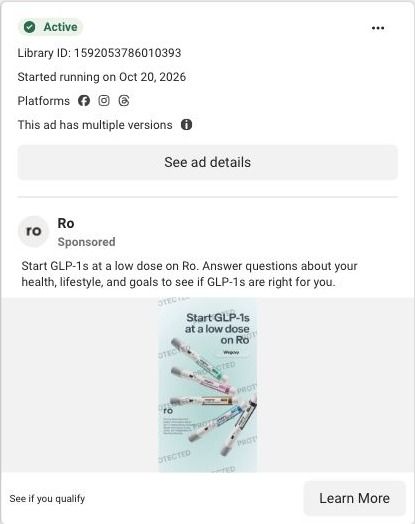
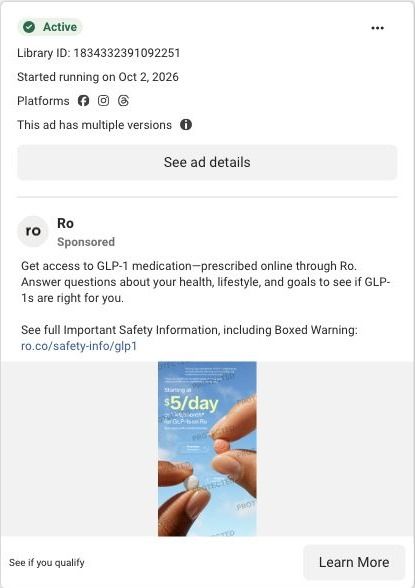
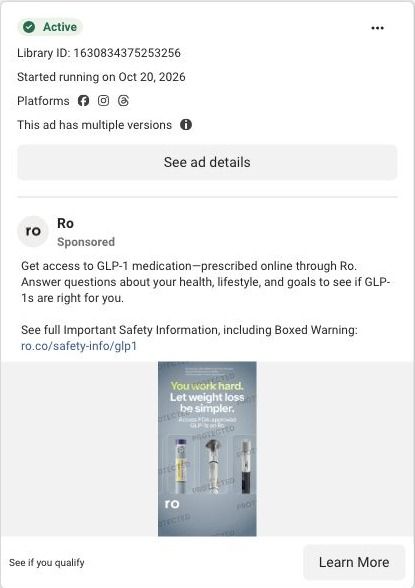
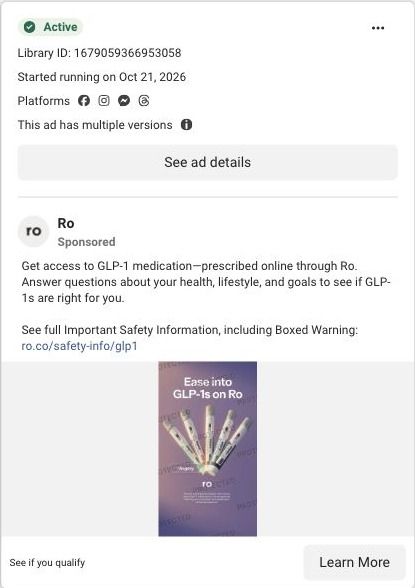
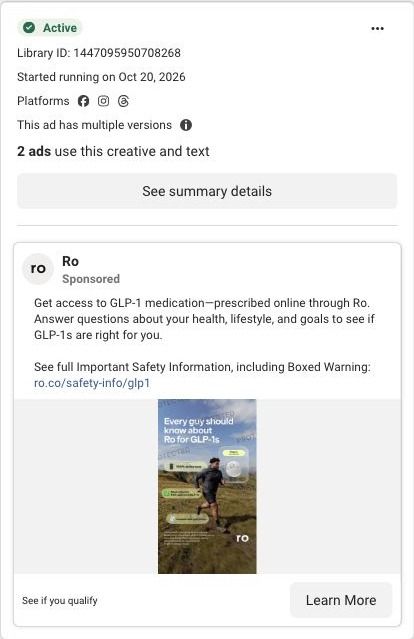
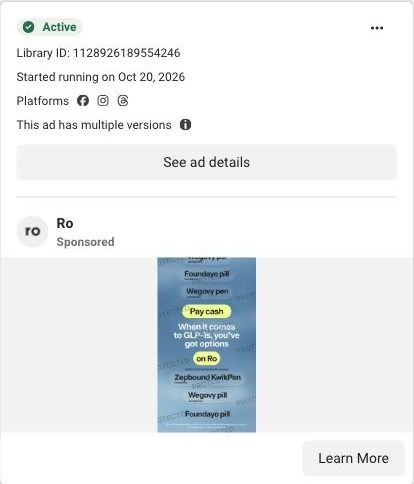
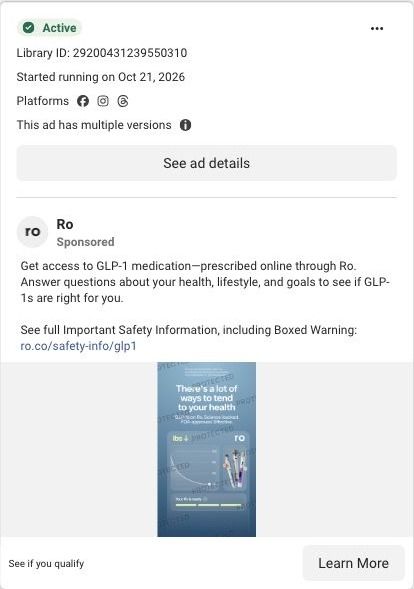
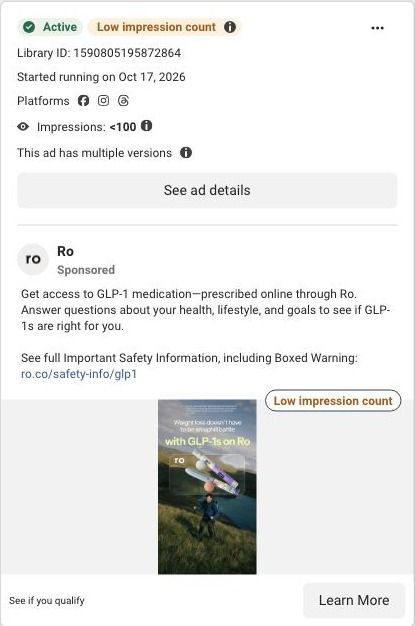
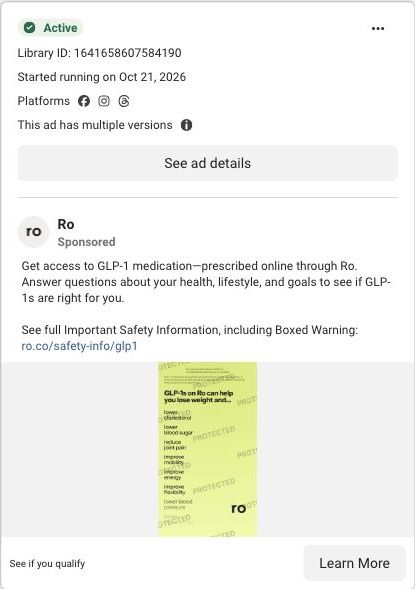
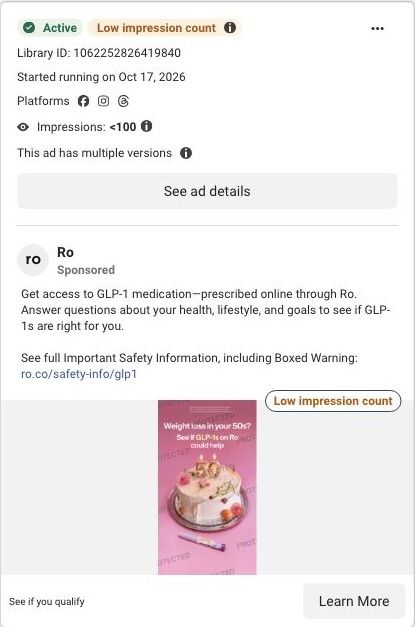
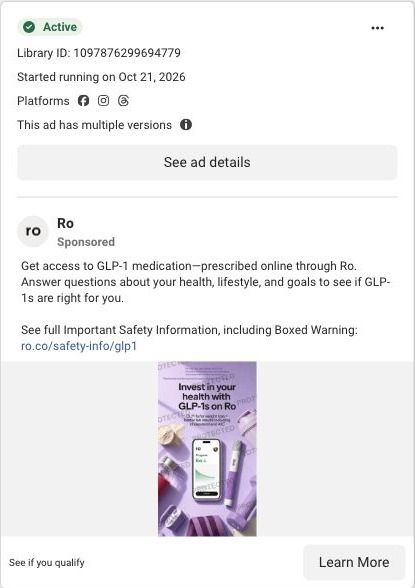
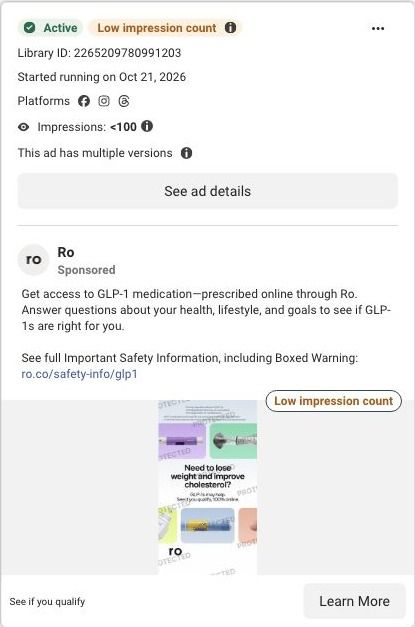
Ro · Serena-led weight-loss quiz
Public page captured October 22, 2026. Promotional sheets and temporary interface overlays were dismissed or removed in the static reference. No personal or medical information was entered. Captured entry screens do not reproduce the complete consultation.
See if you qualify
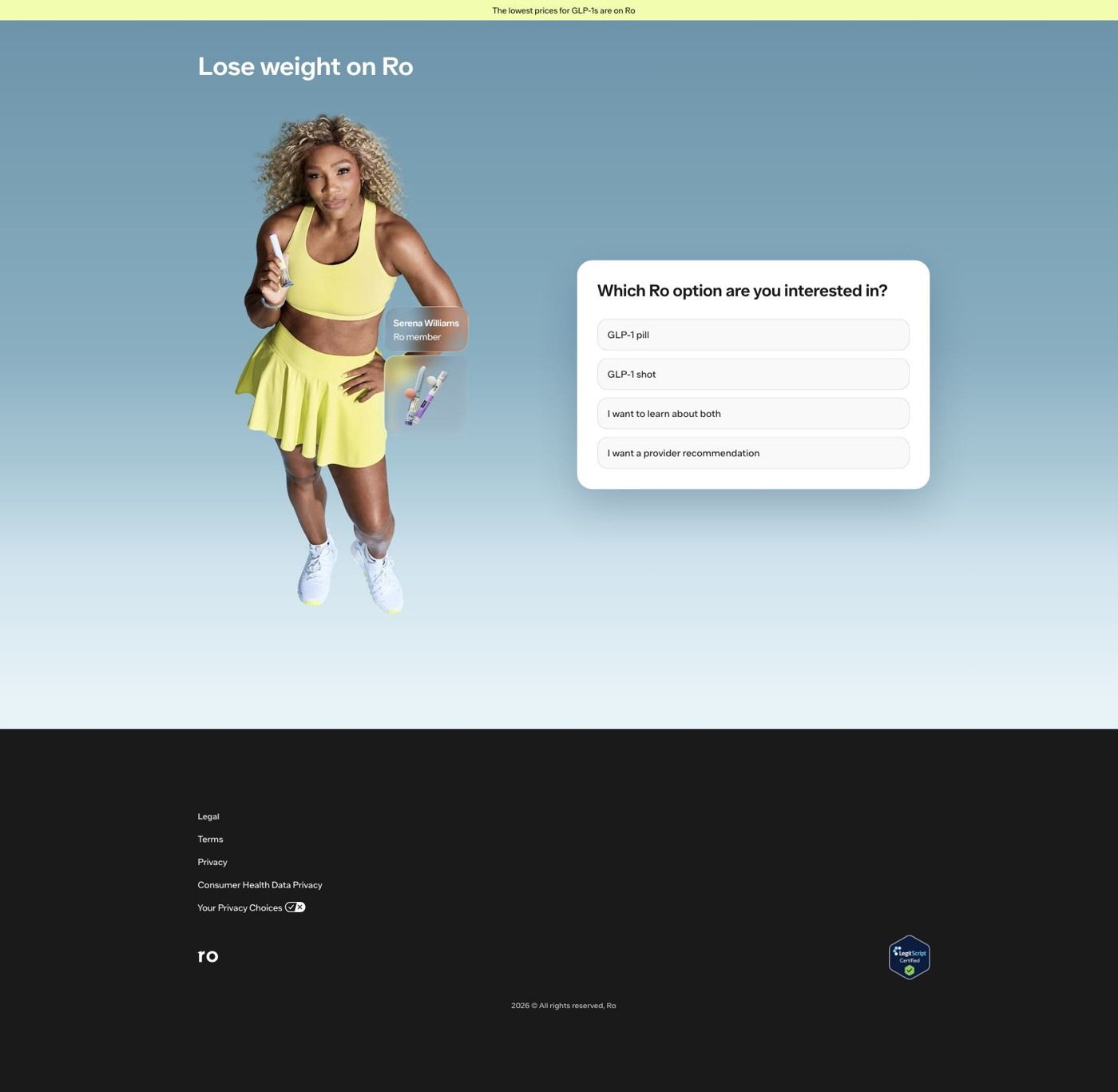
Visual reference: Daily-price message · product animation. The main campaign sends price, medication-launch, creator and celebrity ads to one Serena-led entrance. A treatment-format question sits in the hero; choosing Learn about both reveals a weight-goal question without leaving the page. Compare the creative with the destination and explore the other ads sharing this route.
- Brand
- Ro
- Observed offer
- Online GLP-1 assessment; medication and membership terms apply
- Creative angle
- Price-led
- Page type
- Quiz entry
- Ad format
- Video · 0:10
- Listed start date
- Sep 21, 2026
- Captured
- Oct 22, 2026
- Library ID
- 1116392264118375
- Destination
- ro.co
Selected for its design and offer structure. Ad performance isn’t available in this collection.
What this ad does well
Ro reframes a monthly medication cost as a daily one, which is a familiar way to make a price feel smaller, and it does it with motion: the per-day number changes while the headline stays put, so your eye keeps returning to the price. The two pills (one stamped novo, one with a script L) are lit with hard window shadows, which gives a plain product shot some warmth. The headline is phrased as a correction of what you assume (could cost less than you think), and it's short enough to read in the first second of a 10-second ad.
What's missing
The ad is all price and no person, so it only speaks to someone who already wants a GLP-1 and thinks it's too expensive. The fine print also works against the headline: it says doses can rise to $299 a month and a $149 monthly membership is required, which leaves the viewer unsure what they'd actually pay. If you make one like this, pick one clear figure and say what it includes, then add a single line naming who it's for, so the price has someone to land on.
Beat by beat
- 0-3sTwo pills sit in hard sunlight under the line FDA-approved GLP-1s could cost less than you think on Ro, with As little as and a per-day price.
It opens on the objection most viewers already have (cost) and answers it before they scroll.
- 3-8sThe daily price changes as the animation continues, while disclaimers about higher doses and the membership fee sit at the top.
The moving number keeps attention on the price while the required terms stay on screen.
- 8-10sThe ad ends on a daily figure tied to a $149 monthly price, plus the monthly Ro membership fee.
It closes on the lowest figure in the sequence and states the monthly equivalent.
The offer
A per-day price framed as as little as a few dollars a day, tied to $149 a month, with higher doses costing up to $299 a month and a separate monthly Ro membership fee.
Where it sends people
The ad lands on Ro's quiz entry, where the first thing to do is choose between a GLP-1 pill, a shot, learning about both or a provider recommendation. Because the ad shows pills, choosing GLP-1 pill is a natural first tap. The page doesn't repeat any daily or monthly price, though; the only cost message is the yellow bar claiming the lowest prices are on Ro. Showing the same per-day figure next to the pill option would close the loop for someone who clicked for the price.
The page it sends people to: How Ro turns its Serena Williams ads into a one-question start
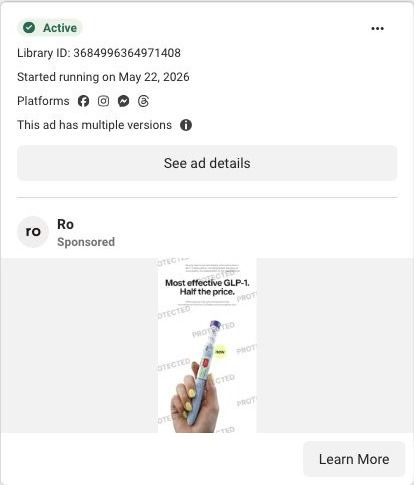
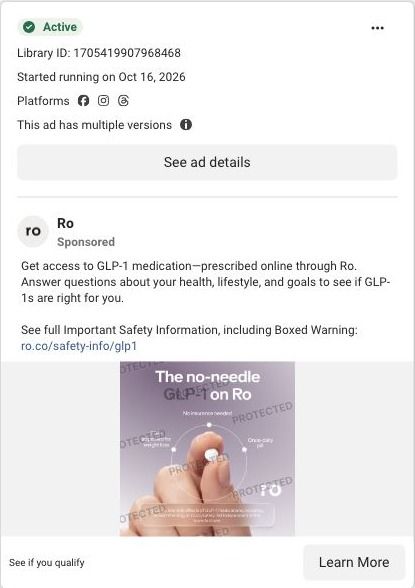
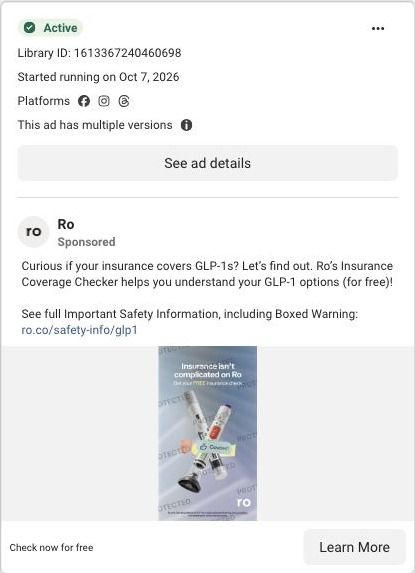
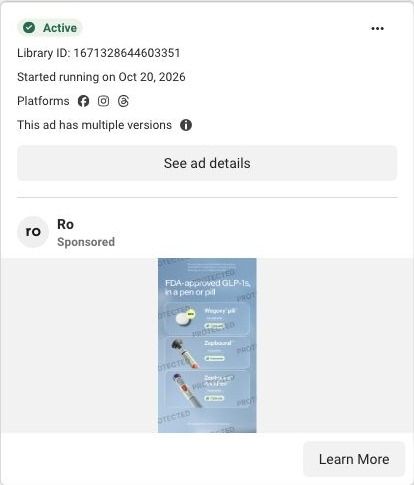
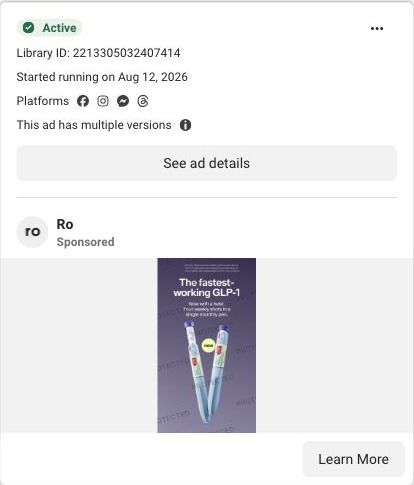
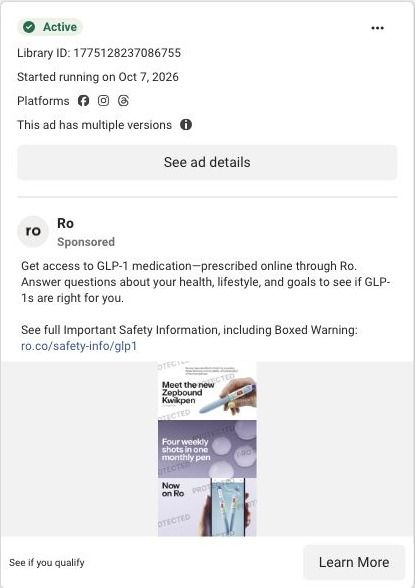
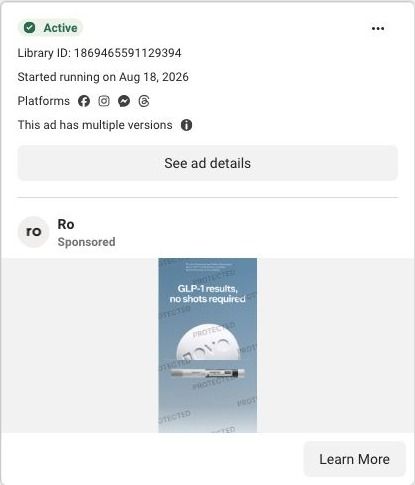
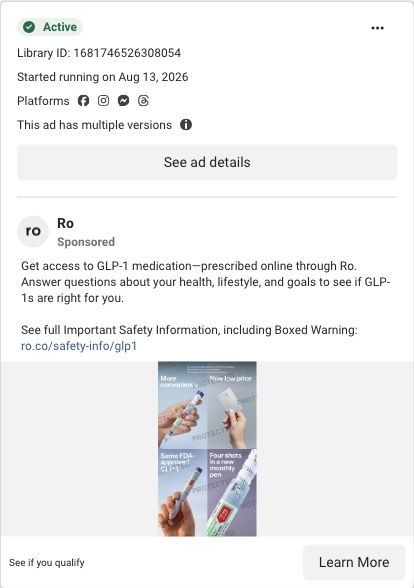
Ro's main weight-loss landing page is a quiz entry: Serena Williams, labeled as a Ro member, stands beside a card asking which GLP-1 option you want. It's the destination for 71 Ro ads in the Fluid library, mostly price-led statics, Serena creator videos and pill-versus-pen product stills, nearly all ending on See if you qualify.
How the page is built
- 01Announcement bar
A pale yellow strip claims the lowest prices for GLP-1s are on Ro, the page's only answer to 'is this affordable?'
- 02Headline
Lose weight on Ro names the category and the brand, so the visitor knows they're in the right place before reading anything else.
- 03Serena Williams photo
Serena holds a pen-style product with a Ro member label and a product thumbnail beside her, answering 'is this the thing from the ad?'
- 04Treatment-format question
A white card asks which Ro option you're interested in (pill, shot, learn about both, or a provider recommendation), which starts the quiz and sorts visitors by how far along they are.
- 05Weight-goal question
After Learn about both, the same card asks how much weight you're looking to lose in ranges plus Not sure yet, keeping the visitor on the page while the quiz continues.
- 06Footer
Legal, terms, privacy and consumer health data privacy links sit beside a LegitScript Certified badge, answering 'is this a legitimate pharmacy?' for anyone who scrolls.
The first fixes we would make
- Many of the ads sending traffic here lead with price (Half the price, Affordable GLP-1, Same results, more savings), and the page answers with one general claim in the announcement bar. Put a starting price under each format option, using the same number the ad showed, so the person who clicked for the price sees it before they answer.
- The format question asks people to choose between a pill and a shot with nothing beside either option. Add a short line under each choice that describes it the way the product-choice ads already do, so someone arriving from a Pill or pen ad can pick without leaving to research.
Read the full breakdown of this page
Three hooks you could test
- Turn the benefit into a picture people get in a second. “Break your monthly price into a daily one and let the number count down on screen.”
- Call out the habit you're replacing. “You spend more on your morning coffee than this costs a day.”
- Make the product the whole scene. “Just the product, hard sunlight and one price, with nothing else in the frame.”
What to borrow for your brand
- Turn a monthly price into a per-day figure and animate it, so the number moves while the headline holds still.
- Write the headline as a correction of what people assume about your price, which invites them to check.
- Light a simple product shot with hard window shadows to give a short animation warmth without adding props.
Transcript
There's no speech in this video. The on-screen text and music carry the message.
Text on screen
- Rx only, See side effects of GLP-1 medications,
- including Boxed Warning. at ro.co/safety. Ad
- independent on manufacturer.
- Then up to $299/mo for higher doses of medication. Additiona
- 149/mo Ro membership fee required. e
- PROT
- FDA-approved GLP-1s could
- cost less than you think on RROT
- As little as
- OTECTI
- $32/day
- PROTECTED
- OTECTED
- TED
- -TED
- Rx only. See side effects of GLP-1 medications,
- including Boxed Warning, at ro.co/safety. Ad
- *Then up to $299/mo for higher doses of medication, Additional
- 149/mo Ro membership fee required.
- cost less than you think on ROR.OT
- $24/day
- -oundayo
- including Boxed Warning, at ro.co/safety, Ad
- *Then up to $299/mo for higher doses of medication. Additional
- $149/mo Ro membership tee required C
- cost less than you think on ROR. OT
- OTECTE
- S10 day
- cost less than you think on ROROT
- $5/day
- ($149/month*) plus monthly
- Ro membership fee
One of 100 Ro ads in the Fluid Inspiration Library, captured from the Meta Ad Library on Oct 22, 2026. We record that an ad ran publicly, not how it performed.