

Daisykentt with PoppiSponsored
Esc
How Poppi sold its Taco Bell collab with a creator's car taste test
A 47-second paid-partnership video from creator Daisykentt. She goes to Taco Bell because Poppi is on the menu, orders her usual plus an orange Poppi and a cherry limeade Poppi, then unwraps everything and tastes it in her car. The caption says it's available at Las Vegas Taco Bell for a limited time. It links to the Poppi homepage.
Poppi
20 creatives lead here1 / 20






Poppi brand homepage
Native screenshot captured from the public Meta Ad Library. Destination captured while scrolling on October 20, 2026; current offers and default variants may differ from the original creative.
Daisykentt
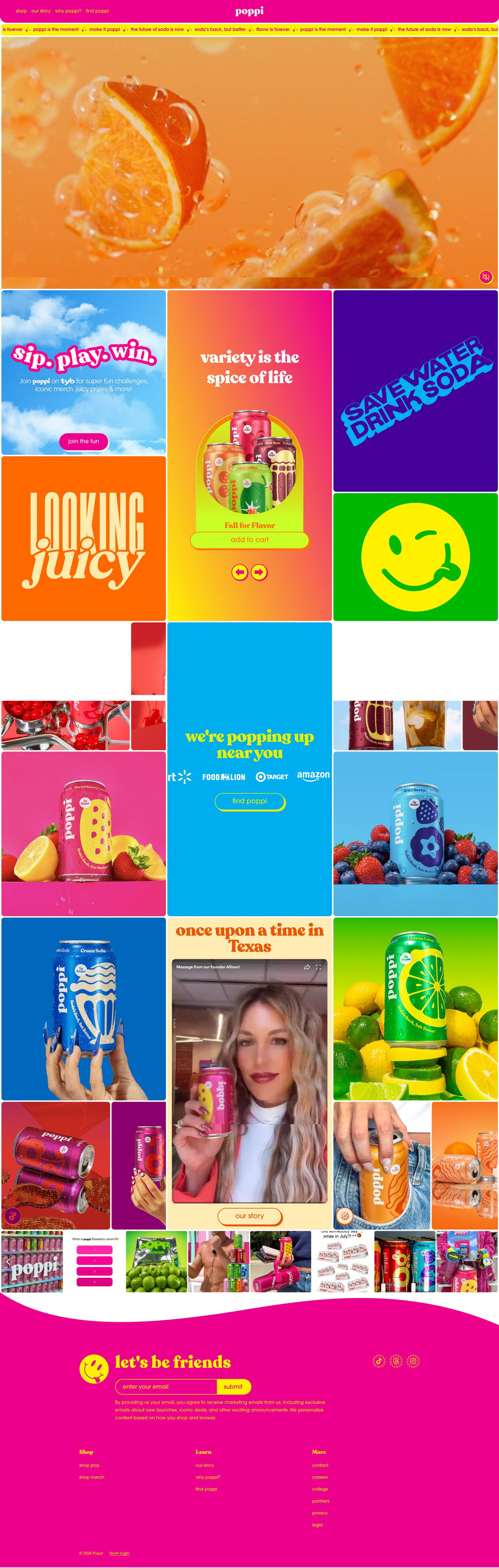
A creator sits in a car with an orange Poppi drink and Taco Bell food. All 20 selected ads link to the same brand homepage. The observed destination leads with a colorful product video, then uses a tiled mix of flavor, shopping, community and retail content rather than a creative-specific sales page. Compare the creative with the destination and explore the other ads sharing this route.
- Brand
- Poppi
- Observed offer
- Poppi at Las Vegas Taco Bell for a limited time
- Creative angle
- Limited retail collaboration
- Page type
- Homepage
- Ad format
- Video · 0:47
- Listed start date
- Oct 15, 2026
- Captured
- Oct 20, 2026
- Library ID
- 1551168367044002
- Destination
- drinkpoppi.com
Selected for its design and offer structure. Ad performance isn’t available in this collection.
What this ad does well
This is a specific moment of use done well: she reads out a real order (cheese roll up, bean and cheese burrito, crispy taco) and adds two Poppi flavors to it, so viewers can picture doing the same thing on their next run. Eating in the car with the food spread out feels like a normal drive-thru habit, not a shoot. Her reaction is easy to believe because it's tied to food she clearly already loves, and the closing text (go get your fav Taco Bell order & a Poppi right now) gives a direct call to action.
What's missing
The most important limit, that it's only at Las Vegas Taco Bell for a limited time, appears only in the caption, so most viewers watching with the caption collapsed will assume they can get it anywhere. Someone in another city could drive to Taco Bell and come up empty. If you run a regional collaboration, put the city and the time limit on screen in the opening seconds, target the ad to that area, and link to a page that confirms which locations have it.
Beat by beat
- 0-5sText reads “Poppi X Taco Bell” as she says Poppi is at Taco Bell and she had to go see.
The collab itself is the hook, and her curiosity gives viewers a reason to keep watching.
- 5-20sShe orders her go-to items plus a cherry limeade and an orange Poppi, with each item labeled on screen.
A real, specific order makes the moment easy to copy.
- 20-40sShe unwraps everything in the car and tastes the drinks, calling one her favorite flavor.
The taste reaction is the proof, delivered in a setting that feels unscripted.
- 40-47sOn-screen text says to go get your favorite Taco Bell order and a Poppi right now.
It closes with a direct instruction and a sense of now.
The offer
Poppi available at Las Vegas Taco Bell for a limited time, stated in the caption only.
Where it sends people
The ad sends people to the Poppi homepage, the weakest rung of the landing-page ladder, and the Taco Bell collaboration isn't mentioned anywhere in the page structure we captured. The closest match is the retail locator tile in the bento grid (popping up near you) with retailer logos and a Find button, but that points to stores, not to a restaurant partnership. A short collab page listing the participating Las Vegas locations and the end date would answer the first question anyone will have after watching.
The page it sends people to: How Poppi's bento-grid homepage handles traffic from every ad
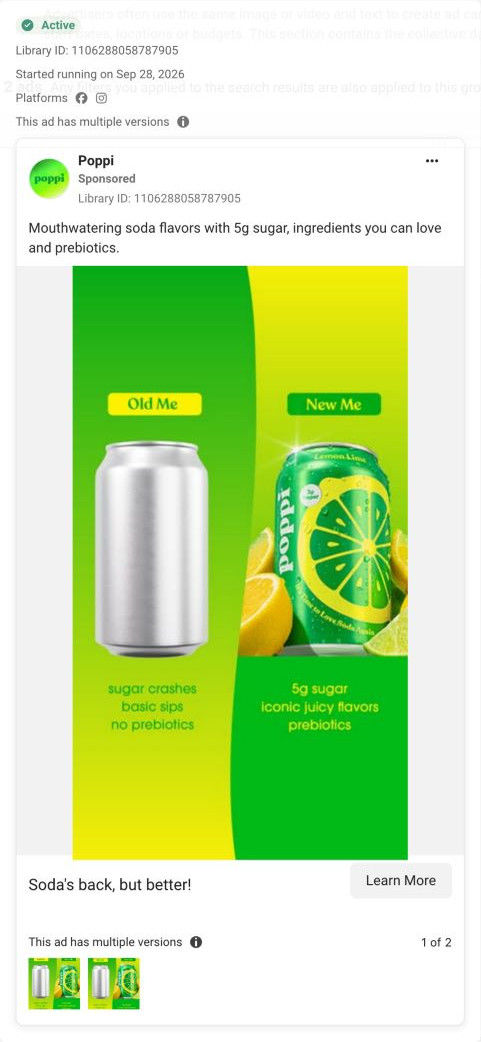
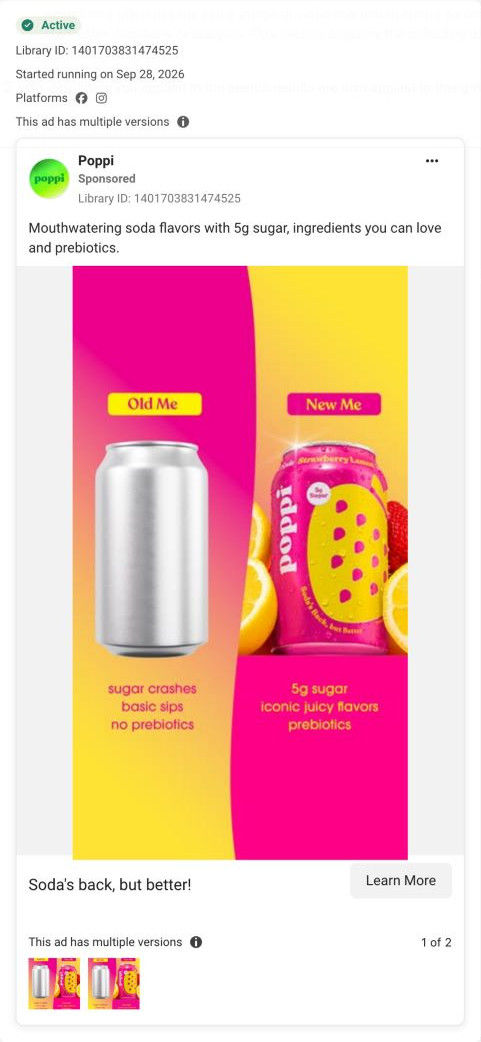
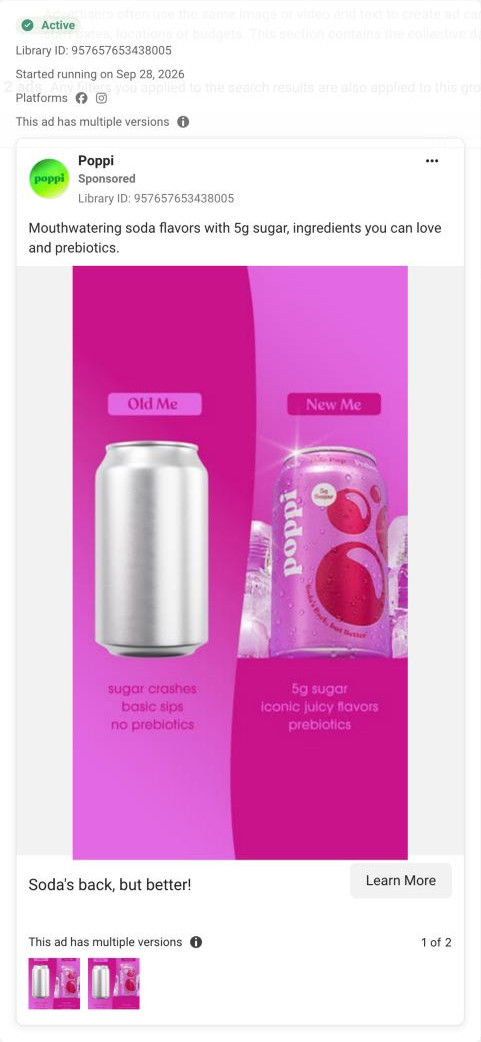
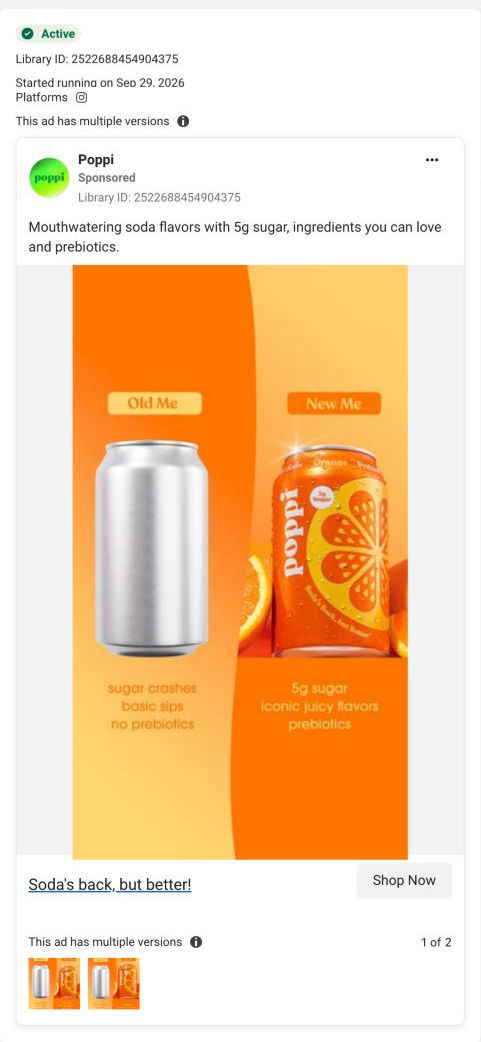
Poppi's homepage is a colorful bento grid with a muted fruit video in place of a headline, then tiles for a variety pack, a loyalty program, a retail locator, a founder video and social posts. All 20 Poppi ads in the Fluid library link here, from Sour Apple launch videos and recipes to campus sweepstakes creators and Old Me / New Me statics.
How the page is built
- 01Header
A pink bar with shop, our story, why poppi? and find poppi links and a centered logo answers where to go next for each kind of visitor.
- 02Slogan ticker
A thin scrolling strip of taglines like soda's back, but better repeats the brand's lines so the page sounds like the ads.
- 03Hero video
A full-width muted macro video of fruit in fizzing liquid sets the mood but answers no buying question, since it has no headline or button.
- 04Bento grid: shop and loyalty
Tiles for the loyalty program, a variety-pack carousel with Add to Cart, and bold slogan and icon tiles answer what can I buy and why join.
- 05Retail locator
A popping up near you tile with retailer logos and a Find button, surrounded by flavor-can photos, answers where can I buy it in a store.
- 06Founder story
A tile with a storytelling headline, an embedded founder video and an Our Story button answers who's behind this brand.
- 07Social strip
A horizontal carousel of social posts and UGC thumbnails shows real people with the cans, which answers whether other people actually drink this.
- 08Newsletter and footer
A wavy band with a mascot, a let's be friends email sign-up, socials and link columns gives visitors who aren't buying today a way to stay in touch.
The first fixes we would make
- The hero has no headline, so a visitor arriving from a Sour Apple launch ad or a Kroger sweepstakes ad doesn't see their reason for clicking on the first screen. Either send the biggest ad groups to their own pages, or add a rotating tile right under the hero for the current launch (Sour Apple, with Add to Cart) and the current promotion.
- The campus creator ads ask viewers to submit a Kroger receipt for a Homefield gift card, and nothing on the page lets them do it. Add a sweepstakes tile to the grid with the receipt entry, the prize and the end date, placed next to the retail locator.
Read the full breakdown of this page
Three hooks you could test
- Show a specific moment of use. “My usual drive-thru order, plus the one thing I never used to add.”
- Make the product the whole scene. “Spread the whole order across the passenger seat and open the drink last.”
- Sell the outcome. “The combo that makes a regular lunch feel like a treat.”
What to borrow for your brand
- Have the creator read out their real order before adding your product, so viewers see exactly where it fits in a habit they already have.
- Label each item on screen as it's named, which keeps a fast-talking video easy to follow with the sound off.
- Put location and time limits in the video itself, not just the caption, whenever an offer only exists in one place.
Transcript
Apparently, Poppy is at Taco Bell right now, so I had to go see what it's all about, and I'm not coming here without getting my go to order. Can I do a cheese roll up, bean and cheese burrito, a crispy taco, and then could I do a cherry limeade, and orange poppy? Thank you. Thank you. I need to unwrap everything because, obviously, I'm not gonna eat the wrapper, in and cheese burrito, cheese roll up, and a crispy taco. Look at her, Poppy at Taco Bell. I'm obsessed. This one's my favorite flavor. Second favorite flavor. Exactly what I needed. This is the perfect Taco Bell combo.
Text on screen
- Poppi X Taco Bell
- COMBO
- NEW
- poppi
- CHERRY
- CRANGE
- cheese roll up
- bean and cheese burrito
- crispy taco
- orange poppi
- cherry limeade poppi
- cheese.roll up
- TACO BELL
- TACO W
- TACO PE
- lod
- go get your fav Taco Bell order
- & a Poppi right now
One of 20 Poppi ads in the Fluid Inspiration Library, captured from the Meta Ad Library on Oct 20, 2026. We record that an ad ran publicly, not how it performed.