The Absorption CompanySponsored
Esc
How The Absorption Company turned a ghost costume into a WLP-1 ad
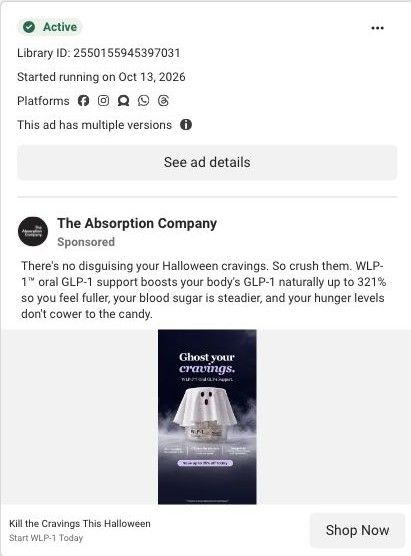
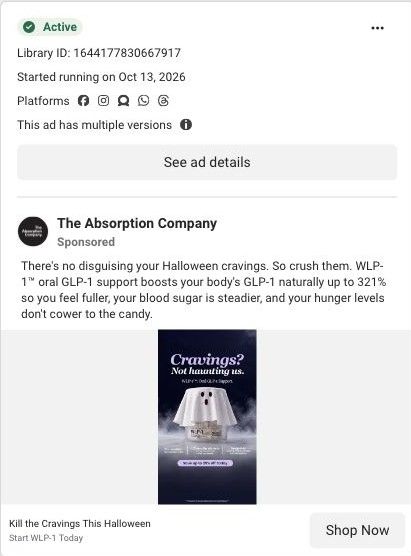
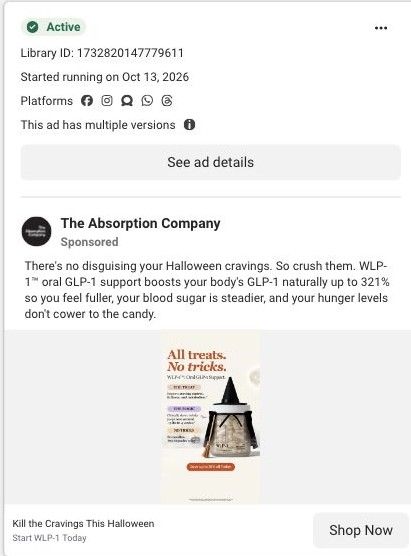
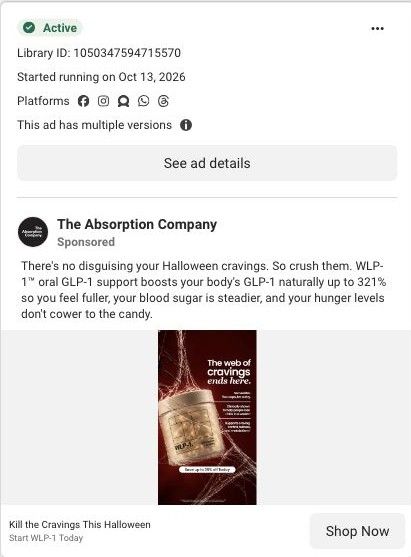
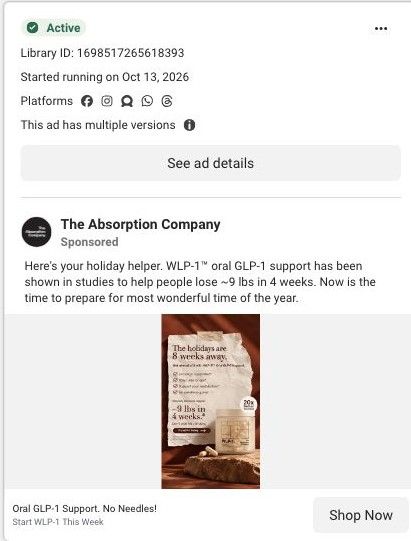
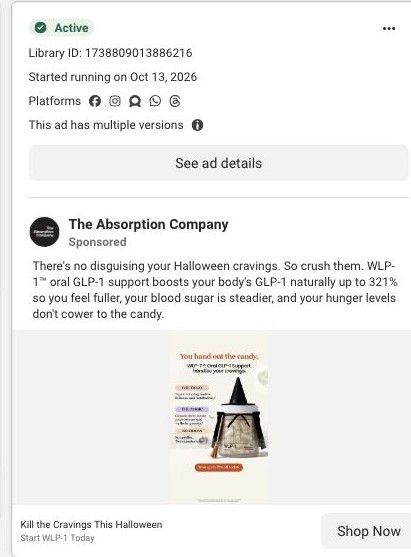
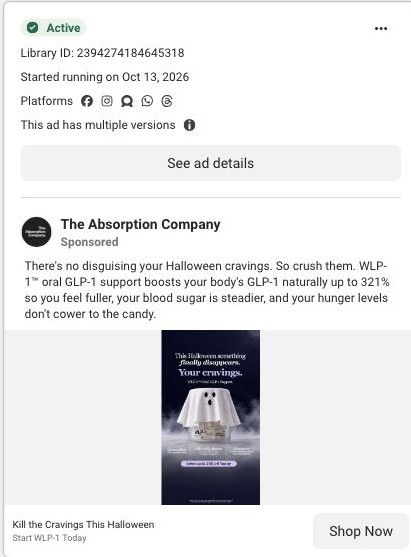
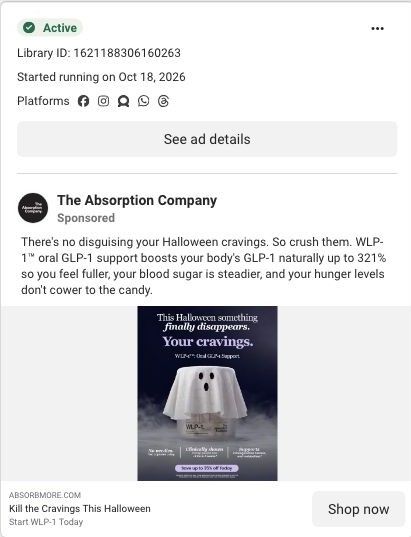
A Halloween static for WLP-1 that drapes the jar in a white ghost sheet under the line "Ghost your cravings." The copy ties candy season to hunger and claims WLP-1 raises your own GLP-1 by up to 321%. The headline calls Halloween the time to kill cravings and links to the WLP-1 product page.
The Absorption Company
30 creatives lead here1 / 30
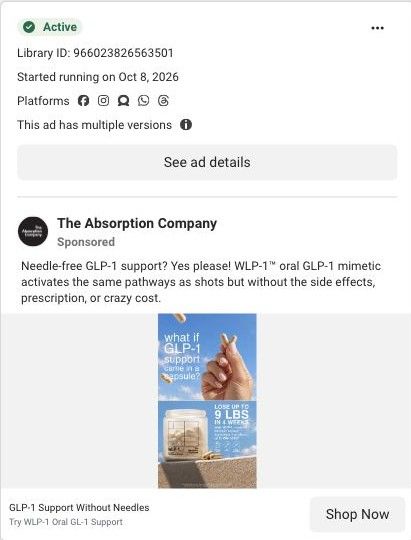
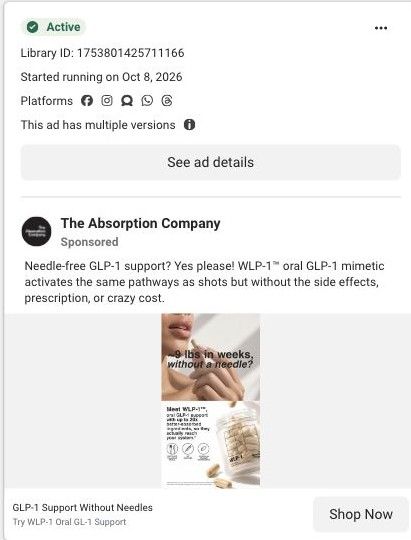
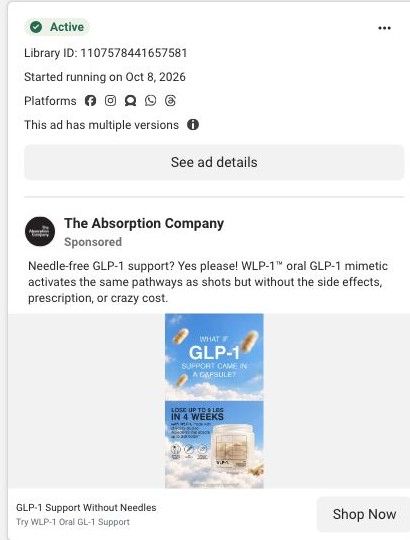
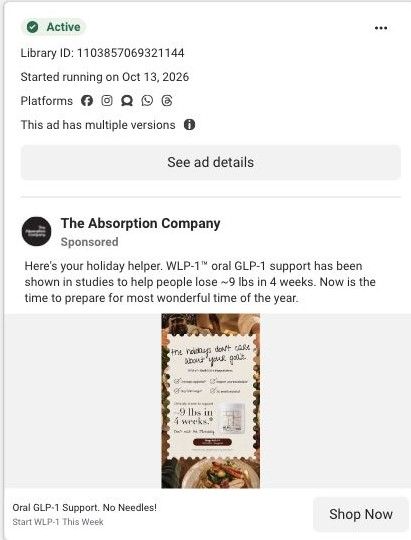
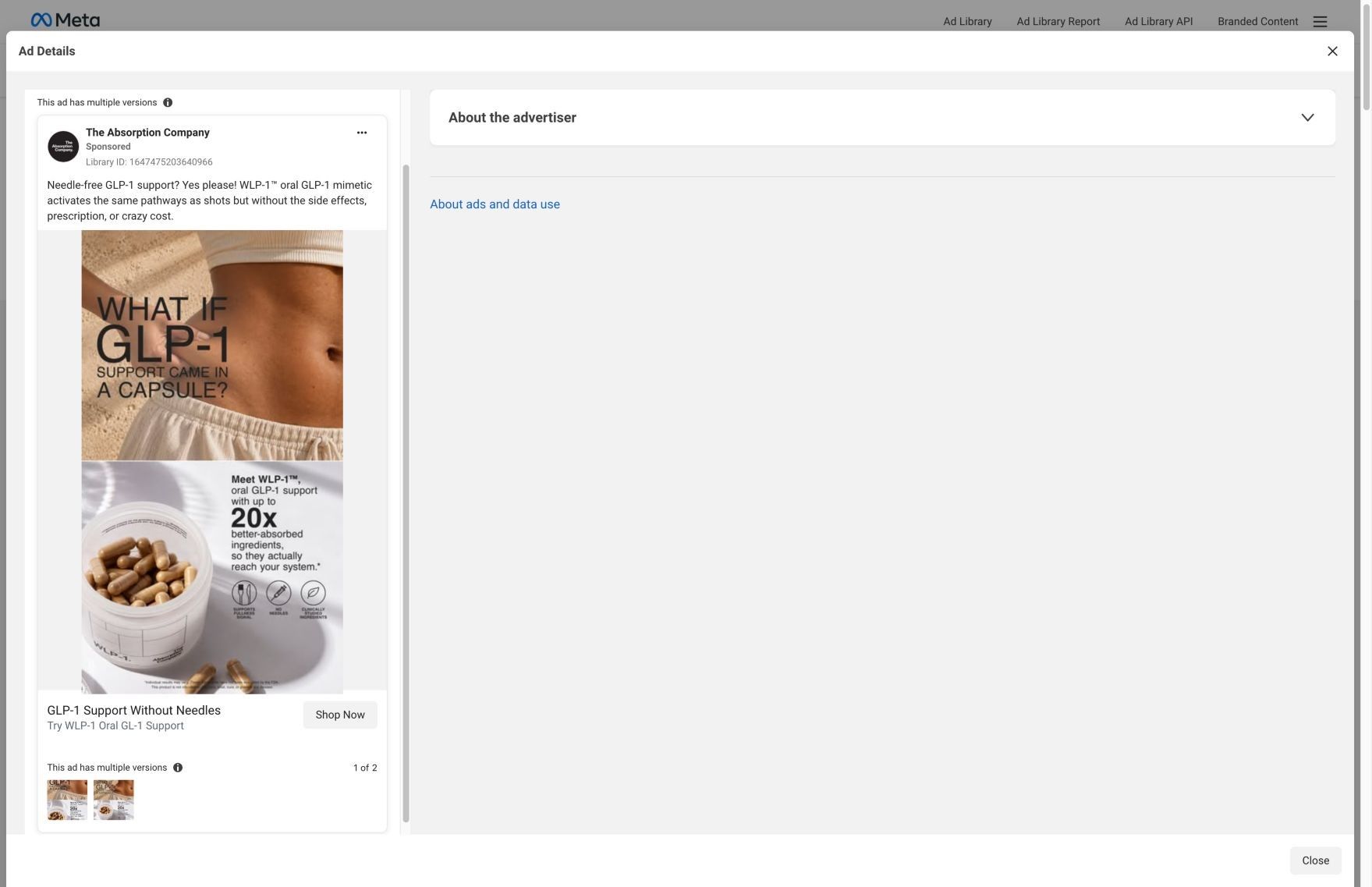
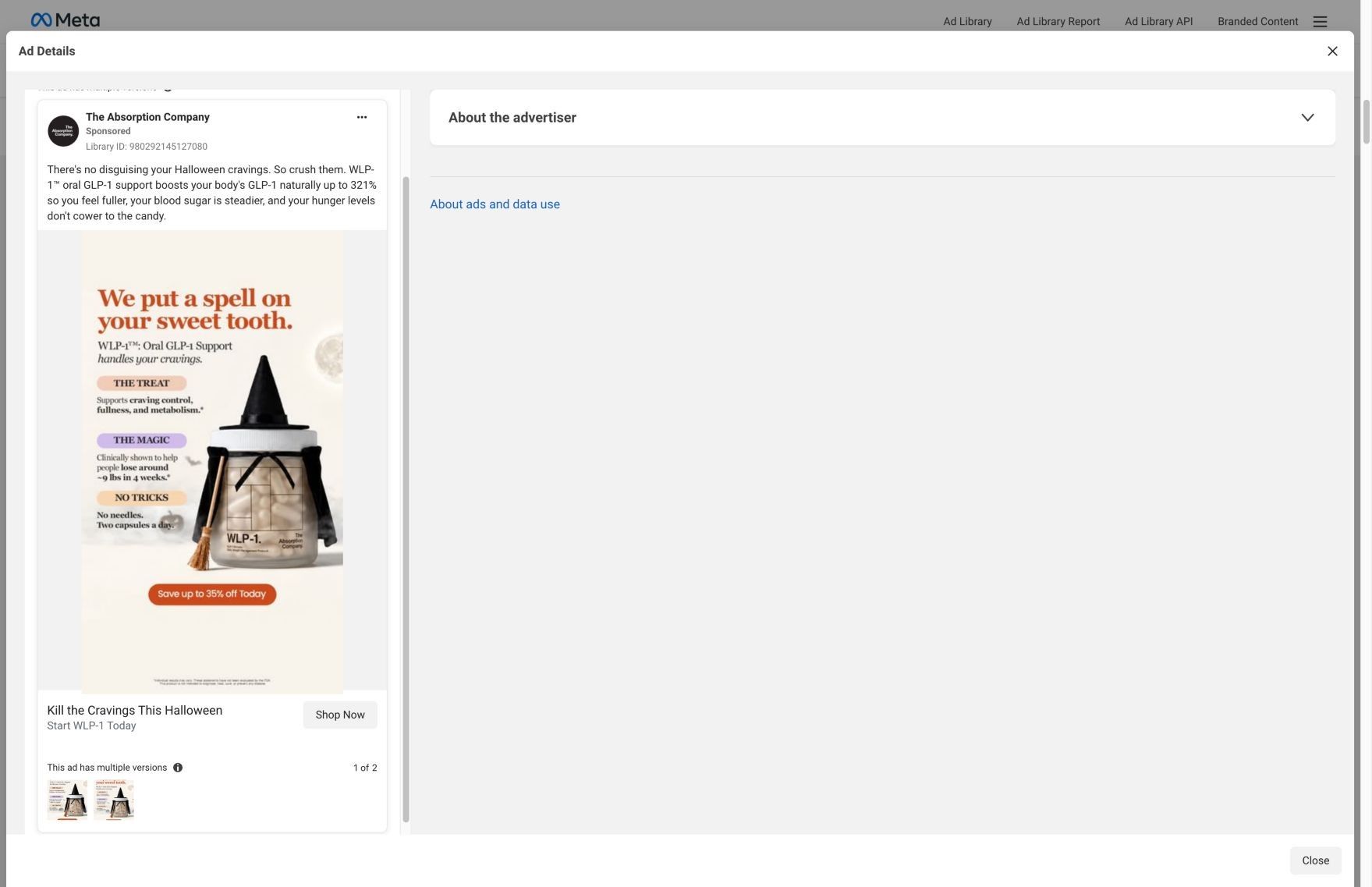
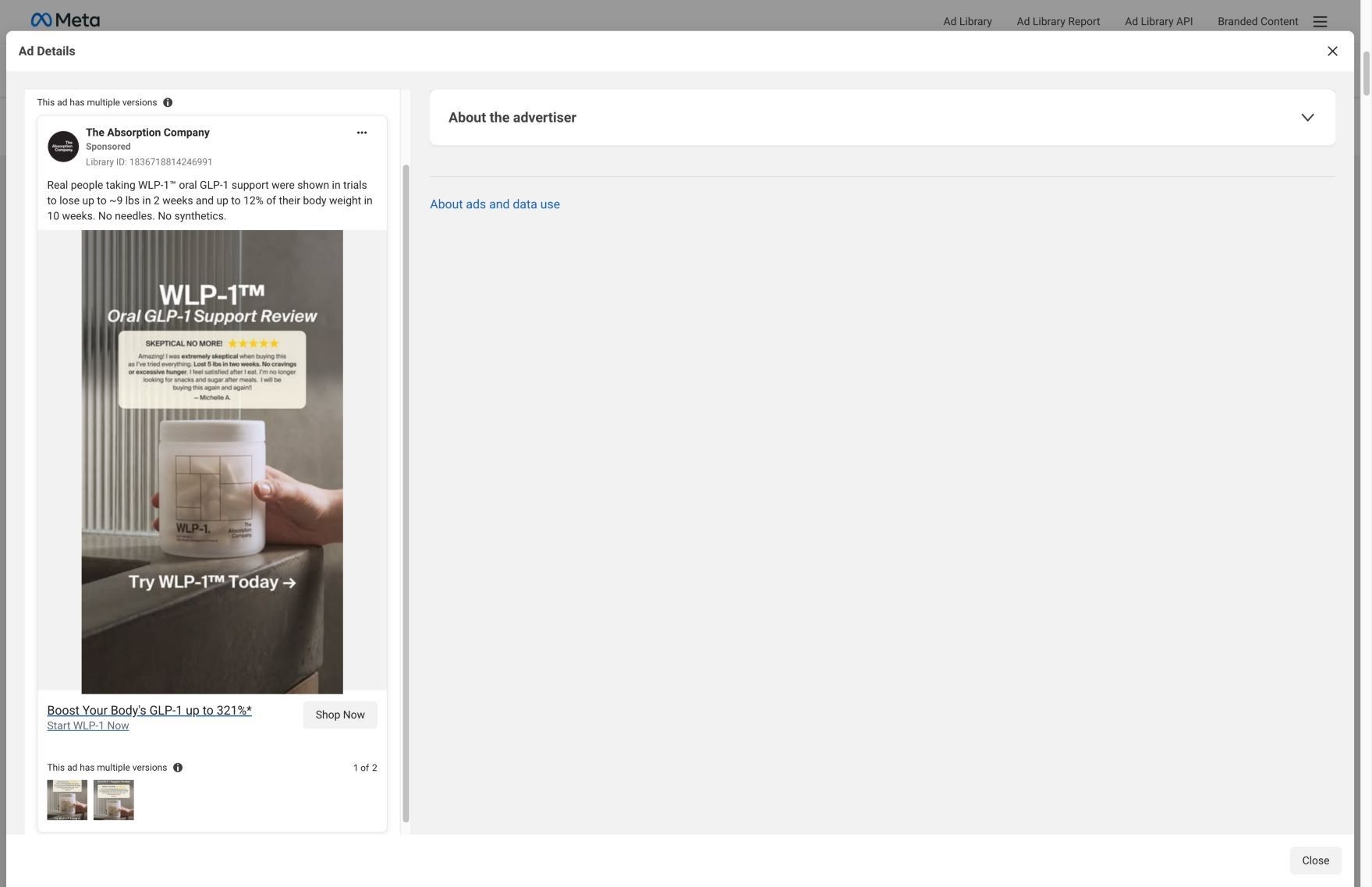
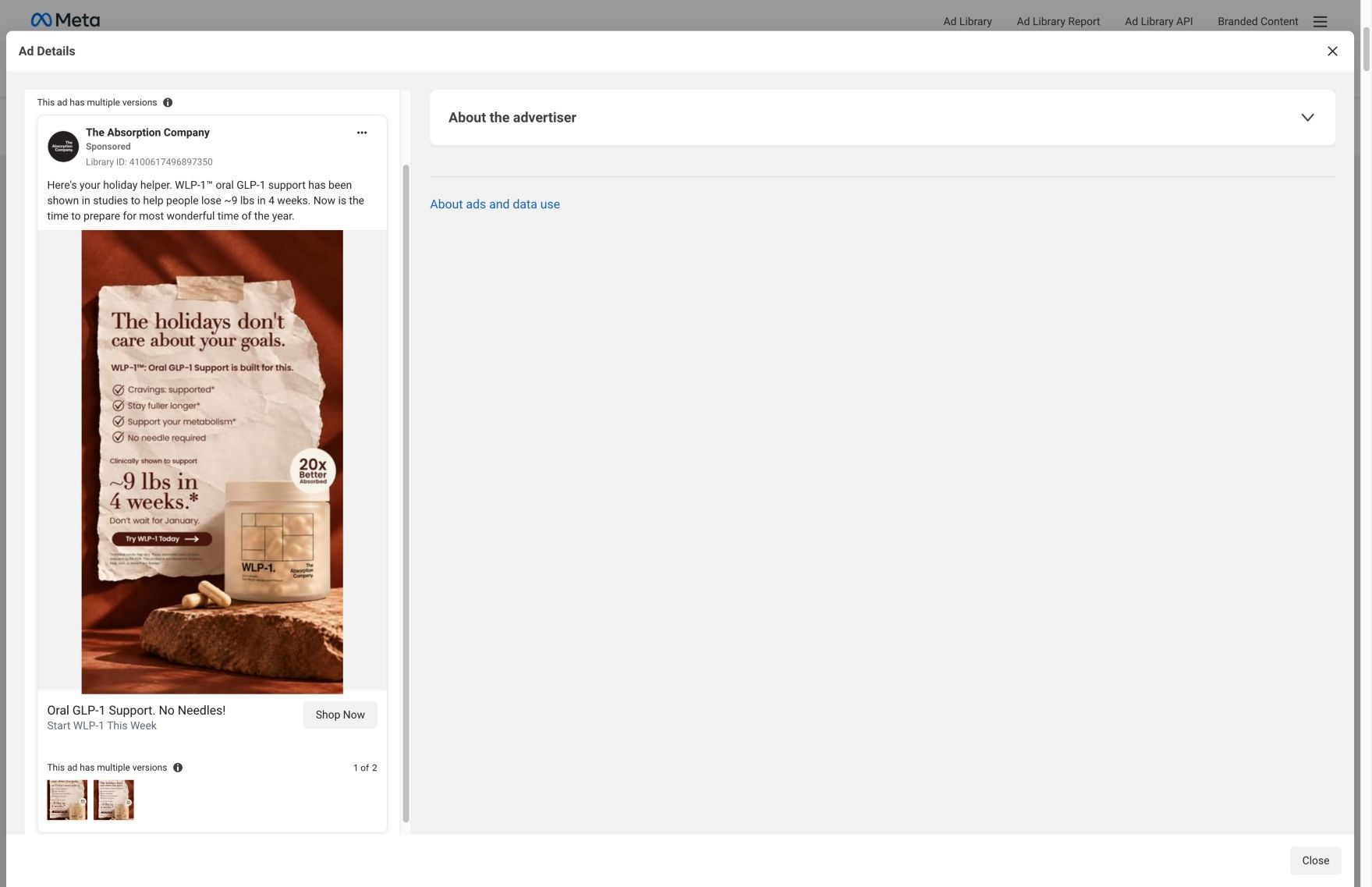
WLP-1 · product offer
Active ad and exact outbound link observed in Meta Ad Library on October 22, 2026. The page image and section source are the existing October 20 capture of this destination. Offers and product selections may change. Selection reflects creative and page structure; performance is not available.

Kill the Cravings This Halloween
Ghost your cravings. Product benefits lead into subscription plans, gifts, a goal calculator, testimonials, and ingredient research. Compare the creative with the destination and explore the other ads sharing this route.
- Brand
- The Absorption Company
- Observed offer
- Kill the Cravings This Halloween
- Creative angle
- Seasonal offer
- Page type
- Product page
- Ad format
- Image
- Listed start date
- Oct 13, 2026
- Captured
- Oct 22, 2026
- Library ID
- 2550155945397031
- Destination
- absorbmore.com
Selected for its design and offer structure. Ad performance isn’t available in this collection.
What this ad does well
The ghost sheet over the jar makes the product the whole scene, and the pun lands before you've read anything else, which is hard to do with a supplement jar. The copy turns the costume into a moment everyone recognizes this month: the candy bowl. It then lists three outcomes the brand claims (feeling fuller, steadier blood sugar and hunger that doesn't give in to the candy), so the benefit is specific instead of a vague wellness promise. Halloween also gives the ad a built-in reason to start now, and The Absorption Company ran several versions of it on Meta from October 13, 2026.
What's missing
The image never shows the craving itself. There's no candy and no hand reaching for it, so the viewer has to connect the ghost to the problem on their own. The 321% claim lives only in the copy, with no note on what it's measured against or where it comes from, which makes it easy to scroll past or doubt. If you make a seasonal ad like this, put the temptation in the frame next to the product, and either source your big number in a line the viewer can read or swap it for a plainer claim you can show.
Beat by beat
- ImageThe WLP-1 jar sits under a white ghost sheet in purple fog, with the line Ghost your cravings at the top.
A costume on the product grabs attention in a feed full of candy posts and makes the pun instant.
- CopyThe text says there's no disguising Halloween cravings, then claims WLP-1 boosts your GLP-1 naturally up to 321% so you feel fuller.
It connects the costume joke to the actual problem and stacks the outcomes the brand is promising.
- HeadlineKill the Cravings This Halloween, with Start WLP-1 Today underneath.
It gives the seasonal moment as the reason to start now.
The offer
The capture doesn't show a clear price or discount. The urgency comes from the season itself, with the headline treating Halloween as the moment to start.
Where it sends people
The ad sends people to the WLP-1 product page, a standard product page rather than a focused landing page, and it's one of 30 ads in the Fluid library pointing there. The page is evergreen: it opens on WLP-1 as oral GLP-1 support with 3-month, 6-month and monthly plans, then explains the product, shows testimonials and clinical trials. None of the Halloween framing carries over, so the joke that earned the tap disappears at the first screen. A small seasonal banner at the top of the page that repeats the cravings line, plus any Halloween offer, would make the click feel continuous.
The page it sends people to: How The Absorption Company built its WLP-1 product page
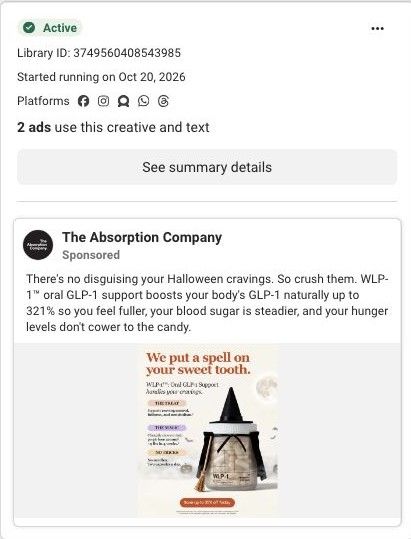
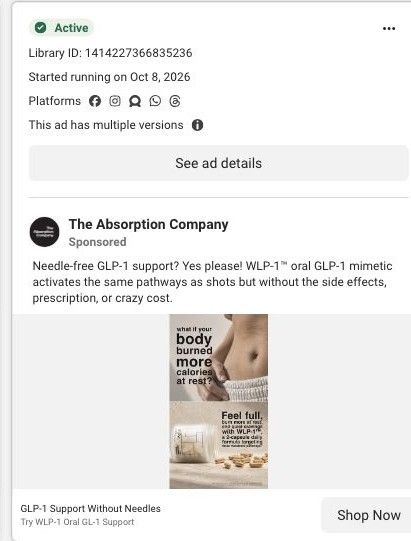
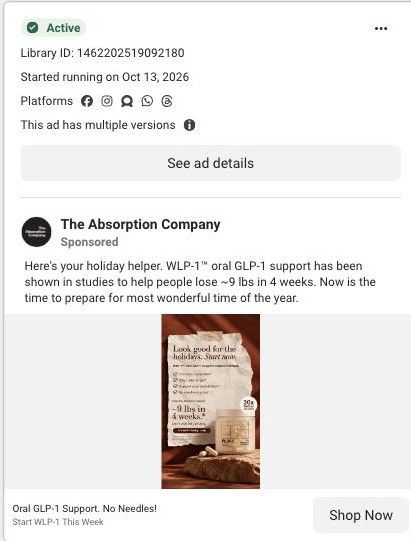
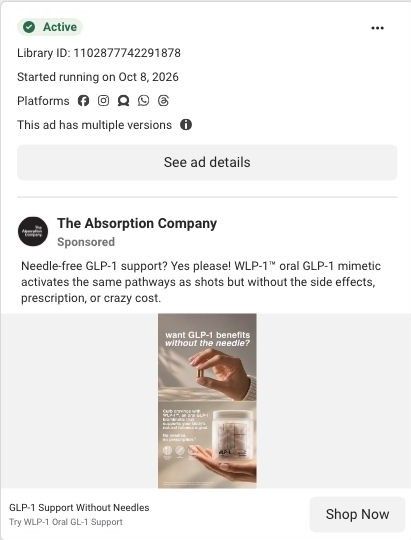
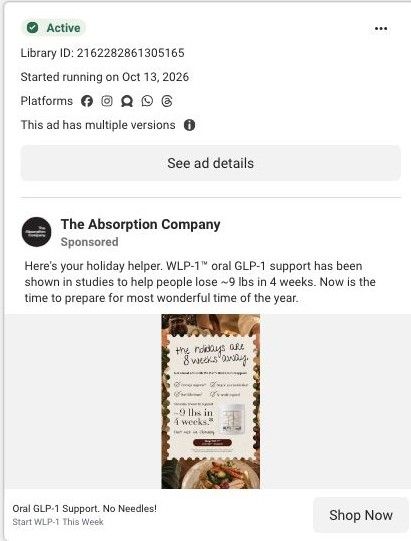
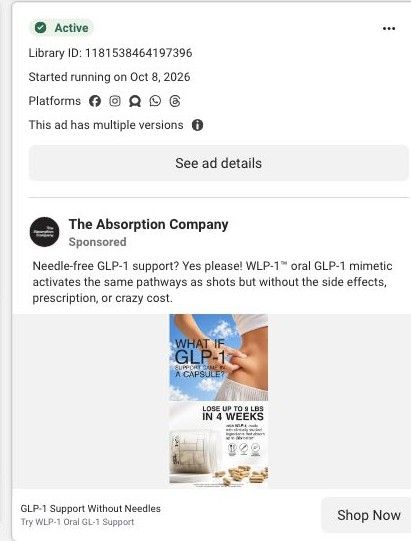
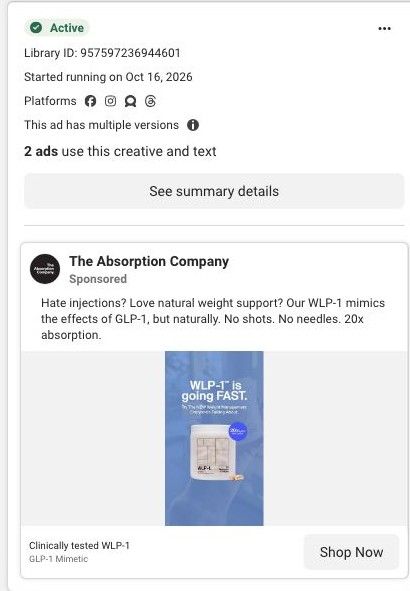
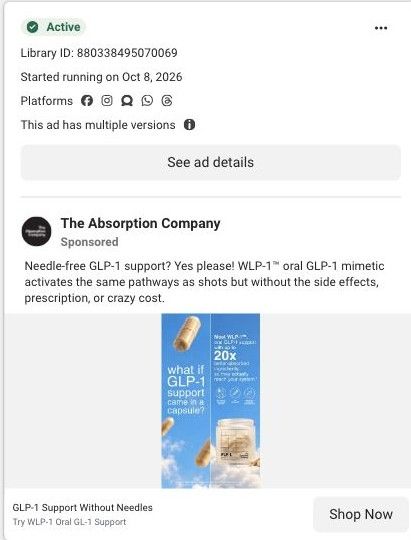
The Absorption Company's WLP-1 product page, pitched as oral GLP-1 support, with a claims strip, a 70-Day Challenge gift offer, subscription plans, video testimonials, clinical study cards and a stack upsell. 30 Absorption Company ads in the Fluid library link here, led by Halloween cravings statics and "no needles" comparison statics.
How the page is built
- 01Gallery and claims
Shows the jar beside the product name, rating and claimed outcomes, answering what WLP-1 is and what it's said to do.
- 02Plan picker and challenge
Offers 3 Months, 6 Months and Monthly with savings, free gifts and the 70-Day Challenge, answering what it costs and why to subscribe.
- 03Why WLP-1 Works
Explains the brand's mechanism claims, answering how the product is supposed to work.
- 04Over-time section
Describes what the brand says changes over time, answering when to expect anything.
- 05Video testimonials
Shows vertical videos with each reviewer's name and time on the product, answering what real users say.
- 06Expert proof
An expert quote card with a headshot and a clinicians' choice badge, answering whether professionals back it.
- 07Clinical trials
Quotes study findings as sourced cards, answering what evidence the claims rest on.
- 08Stack upsell
Asks why stop at three metabolic pathways, answering what to add and raising order size.
- 09Pairs Well With and reviews
Suggests complementary products and collects customer reviews, answering what else to buy and what buyers say.
The first fixes we would make
- The Halloween ads promise a seasonal moment, and the page only carries a generic fall special. Add a seasonal banner or hero line that repeats the ad's cravings-at-Halloween idea so the visitor knows they found the offer they clicked.
- The "no needles" comparison ads set up a contrast that this page never draws. Add a short capsule vs. injection comparison near the plan picker, using the brand's existing comparison copy from its advertorials and keeping every claim attributed and sourced.
Read the full breakdown of this page
Three hooks you could test
- Show a specific moment of use. “The candy bowl is by the door. Your plan for it starts this morning.”
- Make the product the whole scene. “We dressed our jar up for Halloween. Its costume is your cravings.”
- Lead with the uncomfortable problem. “Already into the trick-or-treat stash and it's only the 20th?”
What to borrow for your brand
- Dress the product itself in the season's costume, so the creative feels timely without a single new photo shoot of people.
- Follow a playful seasonal headline with copy that names the concrete outcome you're promising, so the joke leads somewhere.
- Match the landing page to the seasonal ad with a banner that repeats the line people tapped on.
One of 188 The Absorption Company ads in the Fluid Inspiration Library, captured from the Meta Ad Library on Oct 22, 2026. We record that an ad ran publicly, not how it performed.