

sujatakhatidiyali with MedicubeSponsored
Esc
How Medicube used an extreme nose close-up to sell a pore mask
A silent creator video from sujatakhatidiyali with Medicube, running on Meta from Aug 20, 2026. It moves from a Before close-up of nose pores to the Zero Pore Blackhead Mud Mask drying in place, then an After shot. There's no voiceover or price. The Shop now button opens the Zero Pore cleansing oil page.
Medicube
2 creatives lead here1 / 2

Zero Pore Blackhead Cleansing Oil
Page captured October 20, 2026. The current offer may differ from the original ad.
sujatakhatidiyali
A tight face close-up shows a drying blue mud mask and visible pore texture around the nose. The mud-mask creatives actually link to the Zero Pore cleansing-oil product page. The page uses an oil-bottle hero, single and bundle choices, a subscription option and customer reviews; this is an observed mismatch, not an inferred mud-mask destination. Compare the creative with the destination and explore the other ads sharing this route.
- Brand
- Medicube
- Observed offer
- Zero Pore mud-mask creative; recorded CTA opens the cleansing oil
- Creative angle
- Texture / pore-care demonstration
- Page type
- Product page
- Ad format
- Video · 0:26
- Listed start date
- Aug 20, 2026
- Captured
- Oct 20, 2026
- Library ID
- 1703932904168511
- Destination
- medicube.us
Selected for its design and offer structure. Ad performance isn’t available in this collection.
What this ad does well
This ad is almost entirely product and skin, filmed so close that the pores on the creator's nose are the subject. The Before caption on the first frame tells the viewer exactly what kind of video this is, so they stay to see the After. Midway, the blue mask dries with dark dots across the nose, which turns the claim into something you can see without anyone explaining it. It also runs without sound, so it plays the same on a muted feed.
What's missing
The mud mask is what the viewer watches, but the button opens the Zero Pore cleansing oil page, so the product they wanted isn't the one in front of them. The video also never says how the mask is meant to work, how long it stays on, or what's in it, and the copy is just the product name and hashtags, so a curious viewer gets no reason or specifics to carry them to the click. If you make a before-and-after like this, add one caption line on how it's used and link to the mask itself, or to a mask-plus-oil bundle if you want the routine.
Beat by beat
- 0-3sAn extreme close-up of the creator's nose with visible pores and the caption Before.
It names the format up front so the viewer knows a payoff is coming and keeps watching for it.
- 3-18sThe blue Zero Pore mud mask dries across the face, with dark dots showing on the nose as the creator presses around it.
It makes the pore claim visual, so the viewer sees the product doing something rather than being told.
- 18-26sThe mask comes off and the clip ends on an After close-up with the product name on screen.
It closes the loop the Before caption opened and puts the product name next to the result.
Where it sends people
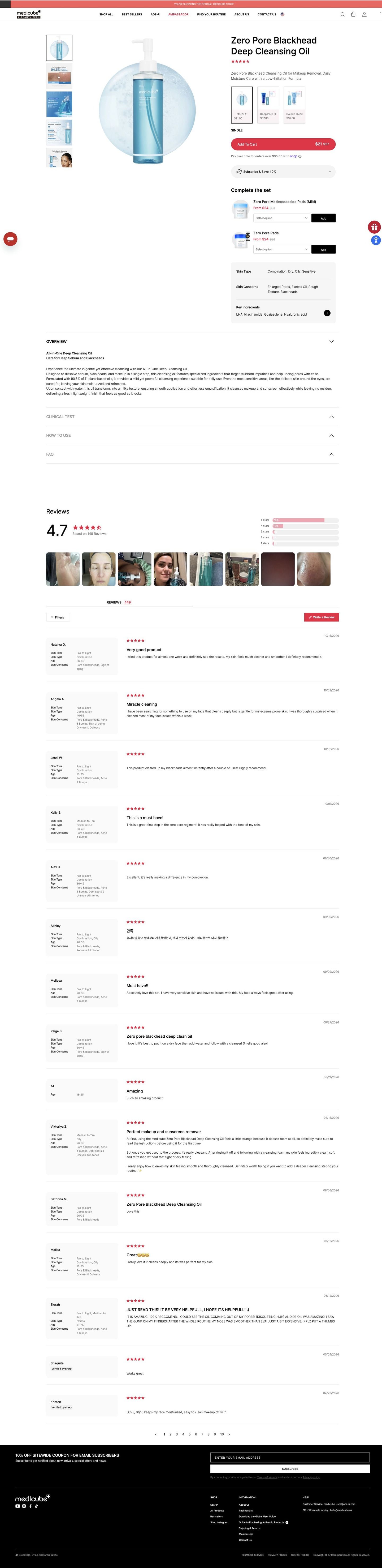
The ad lands on the Zero Pore cleansing oil product page, one of 2 ads in the Fluid library sent there. On the persona's ladder that's a basic product page, and here it's also the wrong product: the hero is an oil bottle, while the video shows the mud mask. The page has a solid buy box (single and bundle tiles with prices, a subscribe-and-save option and a complete-the-set block under the cart), plus reviews tagged with skin type and a customer photo strip. None of it shows the mask or a before-and-after like the one in the ad. Sending this traffic to the mud mask page, or to a pore routine page with both products and the close-up clip near the top, would let the page finish what the ad started.
The page it sends people to: How Medicube's Zero Pore cleansing oil page sells bundles and refills
Medicube's Zero Pore Blackhead Cleansing Oil page is a short, standard product page: image option tiles, Subscribe & Save, Complete the set add-ons, a spec card, accordions and reviews tagged with skin profiles. Two Medicube ads in the Fluid library link here, both creator texture and application demos featuring a mud mask rather than the oil.
How the page is built
- 01Announcement bar and header
An official-store line and a nav with the ambassador link highlighted confirm it's the brand's own shop.
- 02Gallery
Thumbnails of an infographic, a before-and-after and a model beside a pack shot on a bubble graphic answer what the oil is and what the page says it does.
- 03Option tiles
Name, rating, descriptor and image tiles for the single and bundles answer how much to buy.
- 04Cart
A full-width Add to Cart with the sale price inside, a pay-over-time line and a Subscribe & Save dropdown answer how to pay and whether you can get refills.
- 05Complete the set
Add-on rows with variant dropdowns and Add buttons answer what pairs with the oil.
- 06Spec card
Rows for skin types, concerns and key ingredients answer whether the oil suits your skin.
- 07Accordions
An open overview, then clinical test, how-to-use and FAQ panels hold the detail.
- 08Reviews
Average rating, distribution bars, a customer photo strip and reviews tagged with skin tone, type, age and concerns answer whether it worked for people like you.
- 09Footer
An email signup for a sitewide coupon gives undecided visitors a reason to stay in touch.
The first fixes we would make
- The ads feature a mud mask, but the link opens the cleansing oil. Send those ads to the mud mask's page, or, if pairing is the plan, add the mask to Complete the set and open the gallery with an image of the two together.
- The customer photo strip is the only demo-style content on the page. Add a short clip of the oil being massaged in and rinsed off, so anyone arriving from an application demo sees the product working.
Read the full breakdown of this page
Three hooks you could test
- Lead with the uncomfortable problem. “Zoom in on your nose. Yeah, that's what we're fixing.”
- Make the product the whole scene. “Fill the screen with the product doing its thing on skin and nothing else.”
- Turn the benefit into a picture people get in a second. “Before on the left, after on the right, same lighting, same nose.”
What to borrow for your brand
- Put the word Before on the very first frame so viewers know a reveal is coming and stay for the After.
- Film so close that the problem itself is the subject, which makes the product's effect visible without narration.
- Keep the whole video readable with the sound off by carrying the story in a few on-screen words.
Transcript
There's no speech in this video. The on-screen text and music carry the message.
Text on screen
- Before
- medicube®
- ZERO PORE
- BLACKHEAD MUD MARK
- After
One of 28 Medicube ads in the Fluid Inspiration Library, captured from the Meta Ad Library on Oct 20, 2026. We record that an ad ran publicly, not how it performed.