
areliwellness with TryEdenSponsored
Esc
How Eden turned the category's “$99 a month” claim into its hook
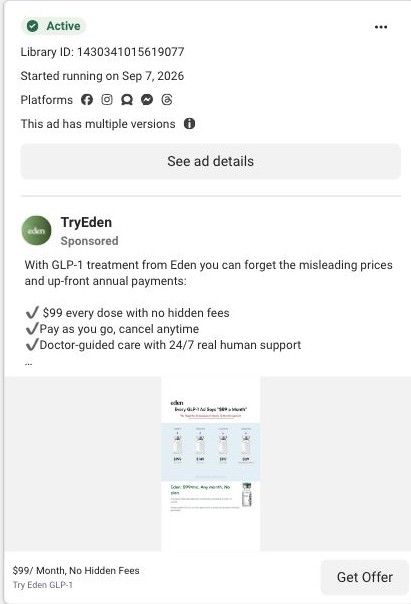
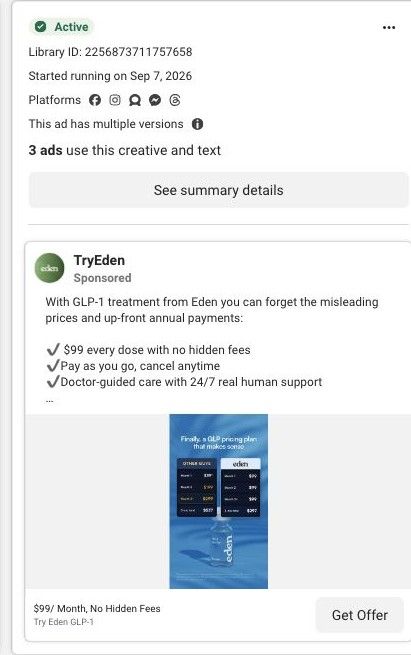
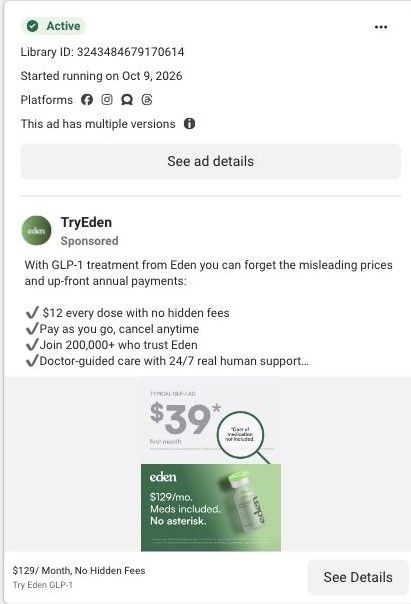
A static Eden ad on Meta from Sep 7, 2026. The creative opens on every GLP-1 ad saying $99 a month, shows a row of vials with different prices under each, and closes on Eden's flat $99/mo. The copy promises $99 every dose with no hidden fees and links to Eden's GLP-1 landing page.
Eden
16 creatives lead here1 / 16




GLP-1 care · affiliate campaign destination
Native Meta creative and exact outbound link observed October 22, 2026. Redirects were followed to the captured public destination. Actual GLP-1 acquisition creative; peptide/sermorelin keyword searches showed no matches. Advertiser claims are source material; activity does not establish performance. No personal, health or payment details were entered.

$99/ Month, No Hidden Fees
A long care page develops a direct offer through product quality, treatment comparisons, care steps, customer stories and assessment entry. Compare the creative with the destination and explore the other ads sharing this route.
- Brand
- Eden
- Observed offer
- $99/ Month, No Hidden Fees
- Creative angle
- Price / offer layout
- Page type
- Service landing
- Ad format
- Image
- Listed start date
- Sep 7, 2026
- Captured
- Oct 22, 2026
- Library ID
- 1430341015619077
- Destination
- eden.health
Selected for its design and offer structure. Ad performance isn’t available in this collection.
What this ad does well
The hook quotes the category back to itself: the headline points out that every GLP-1 ad claims $99 a month, which is something a shopper in this market has seen many times. That turns the viewer's own skepticism into the opening, so Eden gets to be the brand that agrees with them. The row of vials with different price tags shows the gap between the advertised price and what people pay, and the Eden line at the bottom gives the answer in one short sentence. Eden ran several versions of this creative from September 7, 2026.
What's missing
The chart is dense for a phone screen: four vials, four small price labels and a sub-headline compete with the Eden line, and the numbers are hard to read at feed size. The point of the ad is the contrast, so the contrast has to be readable in a second. Cut it to two columns (what you see in other ads versus what Eden charges) and make Eden's $99 the biggest text on the card. Adding the lifetime price guarantee from the landing page as the final line would also answer the obvious follow-up: will my price go up?
Beat by beat
- HeadlineEden's logo sits above a headline about every GLP-1 ad claiming $99 a month, with a red sub-line beneath.
It names a claim the viewer has already seen, which earns attention from people who've stopped trusting it.
- ImageA pale blue band shows four vials, each labeled with a different price.
It makes the difference between advertised and real prices visible without a paragraph of explanation.
- CopyA white panel closes on Eden's $99/mo line next to a single vial; the post copy lists no hidden fees, cancel anytime and doctor-guided care.
It delivers the answer to the problem the headline raised, in the same short format.
The offer
$99 a dose, presented as the price that actually stays $99, with pay-as-you-go billing and no hidden fees.
Where it sends people
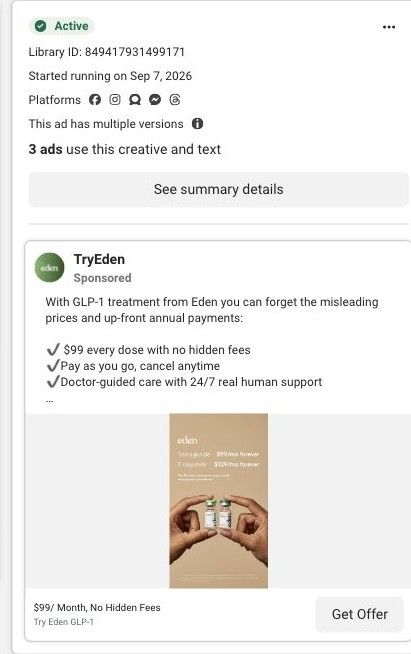
The ad lands on Eden's GLP-1 affiliate page, a focused landing page whose hero opens on GLP-1s, finally done right and lists semaglutide at $99/mo and tirzepatide at $129/mo under monthly pricing at every dose. That label is the direct answer to this ad's complaint about prices that change, so the message carries over cleanly. The ticker under the hero adds a lifetime price guarantee, and the treatment comparison section further down gives the visitor room to check the claim. The free assessment button is the single next step.
The page it sends people to: How Eden's GLP-1 landing page turns a price ad into an assessment
Eden's GLP-1 affiliate page is a long, focused landing page that opens on semaglutide at $99/mo and tirzepatide at $129/mo with a free assessment, then covers quality, treatment, care steps, stories and FAQs. All 16 Eden ads in the Fluid library link here, mostly price comparisons plus creator and doctor videos.
How the page is built
- 01Care offer hero
The headline, three benefits, both monthly prices and the free assessment button answer what it costs and how to start, with Trustpilot and member-count proof alongside.
- 02Quality and clinical oversight
It covers where the medication comes from and who oversees care, answering whether a low price means cutting corners.
- 03Problem and treatment explanation
It explains the problem and how the treatment is meant to work, answering why someone would consider it at all.
- 04Treatment comparison
It compares treatment options so the visitor can work out which one fits before starting the assessment.
- 05Care process
It walks through the steps from assessment to ongoing care, answering what happens after the click.
- 06Customer stories
It shows stories from customers, answering whether people like the visitor have used the service.
- 07Plan inclusions and assessment entry
It lists what the plan includes and repeats the assessment entry, answering what the monthly price covers right before asking again.
- 08FAQs and safety information
It handles remaining questions and the safety and compounding disclosures, answering the last objections before signing up.
The first fixes we would make
- Most of the ads that link here argue against other providers' pricing (teaser prices, annual prepay, prices that rise with the dose), but the captured sections don't repeat that receipt or other-guys table near the top. Put a compact version of the comparison right under the hero so the argument that earned the click is still on screen.
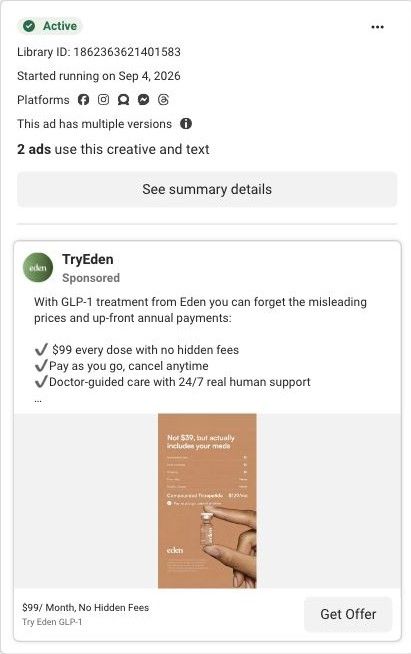
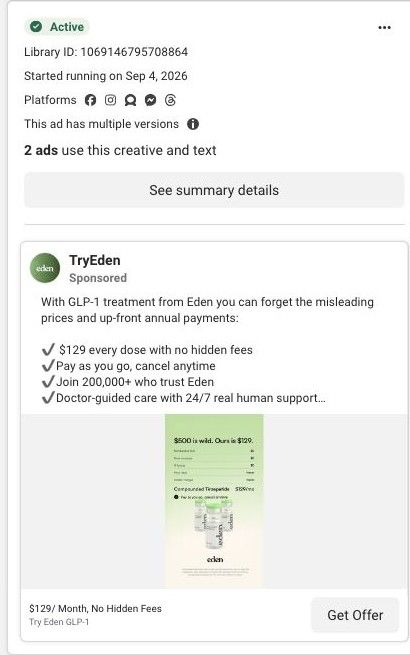
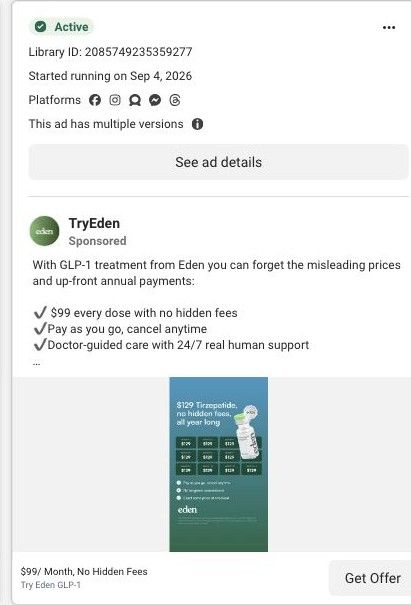
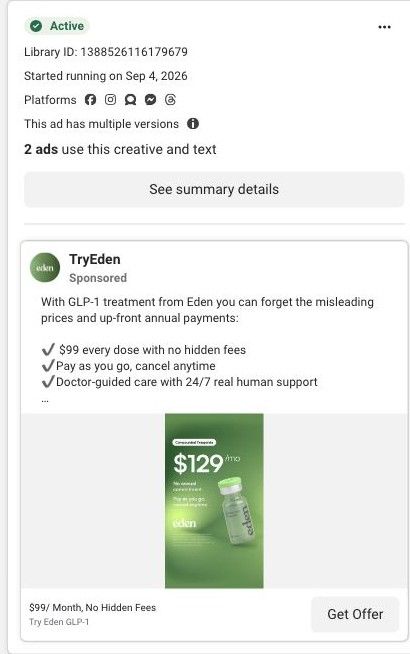
- Most ad headlines say $99, yet some of the creatives themselves show $129, and the hero lists both without saying which one a visitor is likely to get. Add one line under the two prices explaining that the assessment determines the medication, so the $99 expectation doesn't turn into a surprise.
Read the full breakdown of this page
Three hooks you could test
- Call out the habit you're replacing. “Every ad in your feed says the same price. Here's what they actually charge.”
- Turn the benefit into a picture people get in a second. “Four price tags on theirs. One on ours.”
- Lead with the uncomfortable problem. “Signed up for one price, billed another?”
What to borrow for your brand
- Open on the claim your whole category makes and question it, so your ad starts on the viewer's side of the skepticism.
- Show the hidden cost as a row of real items with real price tags rather than describing it, so the viewer sees the problem in one glance.
- Keep comparison charts to two columns on mobile and make your own number the largest thing on the card.
One of 16 Eden ads in the Fluid Inspiration Library, captured from the Meta Ad Library on Oct 22, 2026. We record that an ad ran publicly, not how it performed.