How Brello's handwritten apology ad speaks to former GLP-1 skeptics
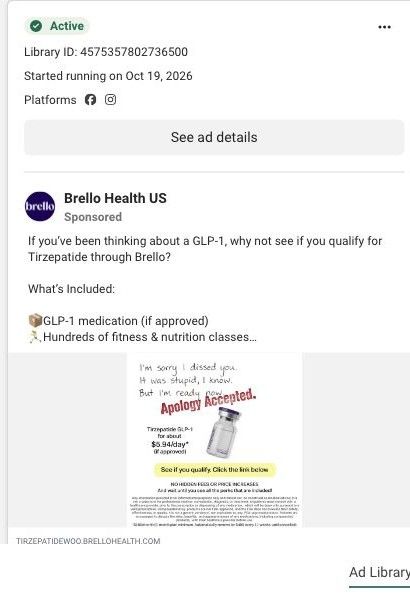
A static image ad with a handwritten note apologizing for having dissed it and saying the writer is ready now, stamped Apology Accepted in red. Beside a Tirzepatide vial, it offers the GLP-1 at about $5.94 a day if approved and teases the included perks. It sends people to Brello's dedicated Tirzepatide offer page.

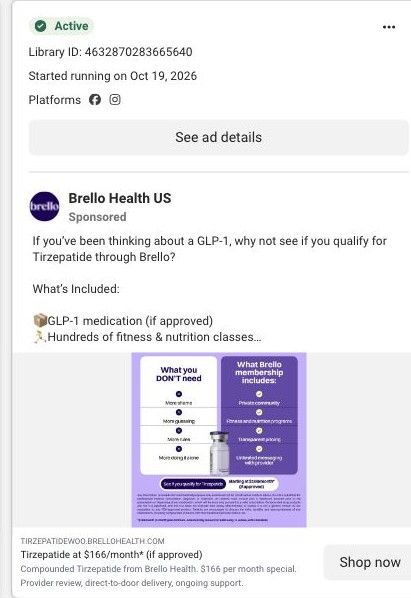
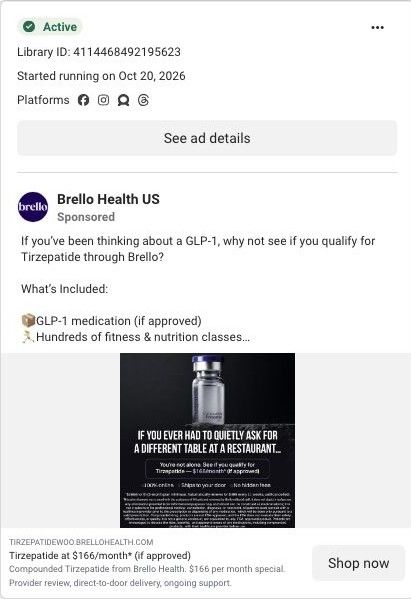
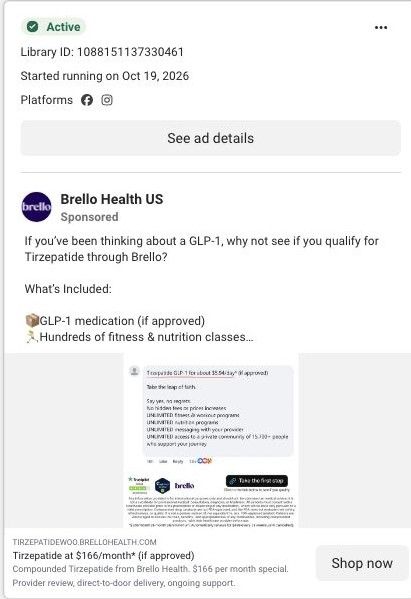
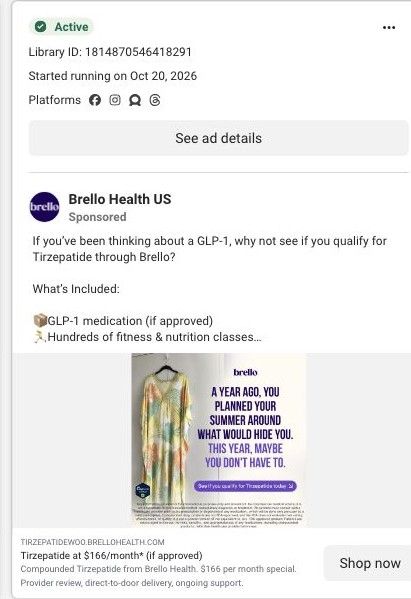
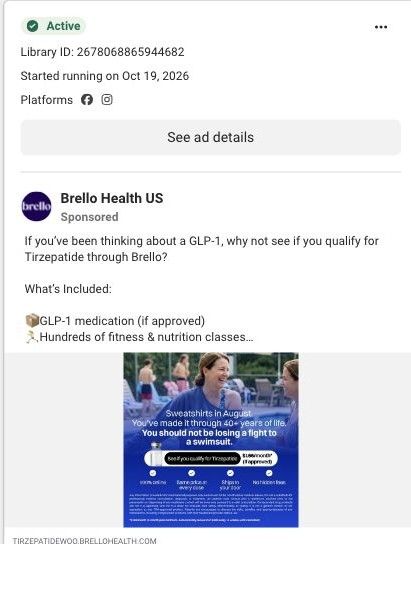
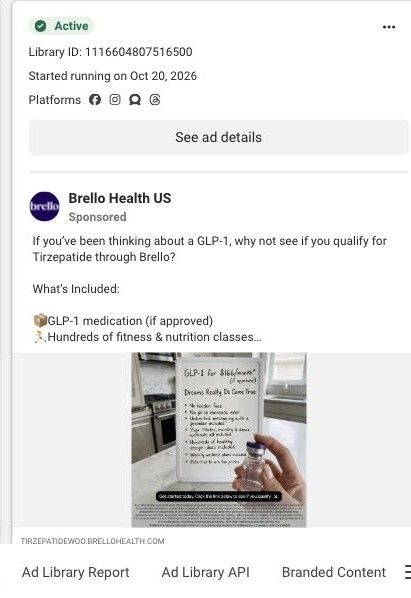
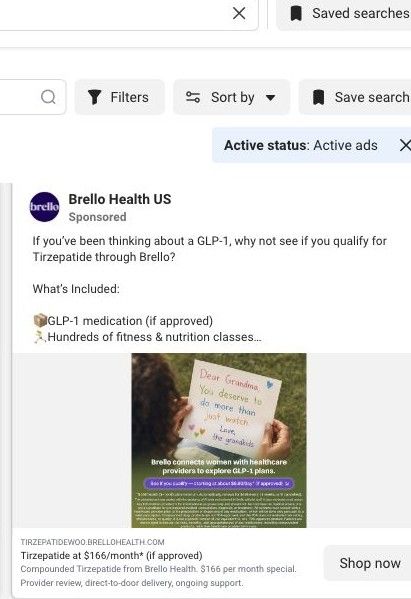
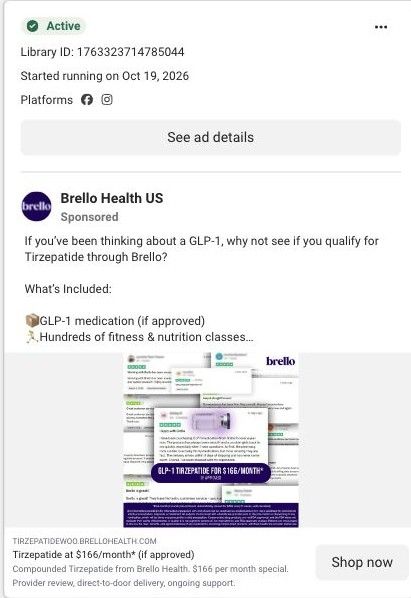
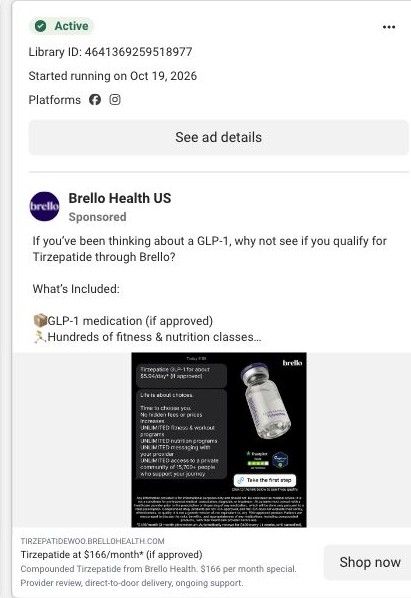
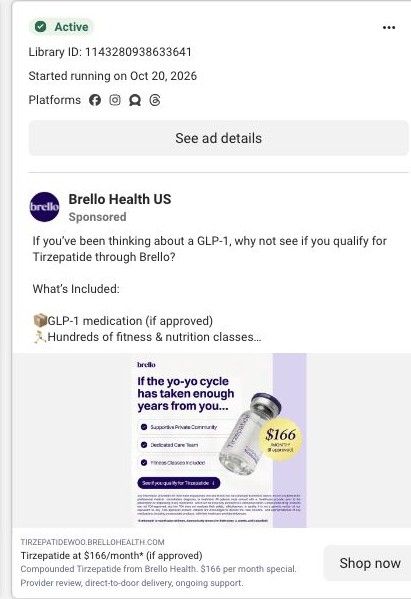
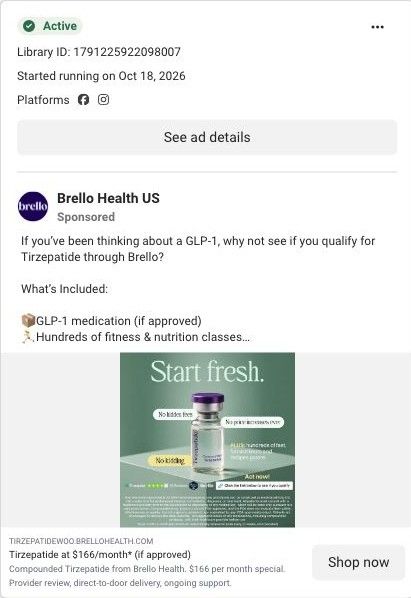
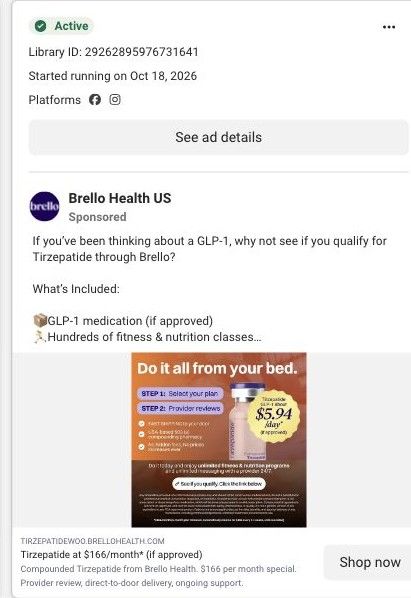
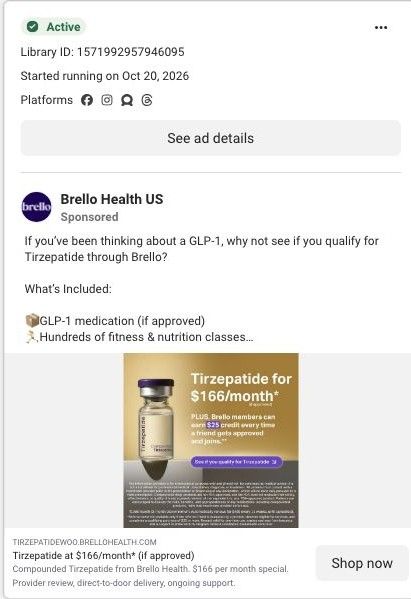
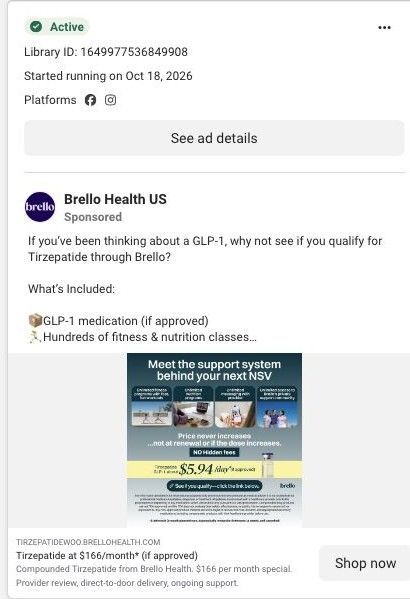
Native Meta creative and exact outbound link observed October 22, 2026. Redirects were followed to the captured public destination. Advertiser claims are source material; activity does not establish performance. No personal, health or payment details were entered.
Tirzepatide at $166/month* (if approved)
A treatment offer develops through customer stories, product education, the care process and a clear purchase entry. Compare the creative with the destination and explore the other ads sharing this route.
- Brand
- Brello Health
- Observed offer
- Tirzepatide at $166/month* (if approved)
- Creative angle
- Pattern interrupt
- Page type
- Dedicated offer
- Ad format
- Image
- Listed start date
- Oct 19, 2026
- Captured
- Oct 22, 2026
- Library ID
- 4575357802736500
- Destination
- tirzepatidewoo.brellohealth.com
Selected for its design and offer structure. Ad performance isn’t available in this collection.
What this ad does well
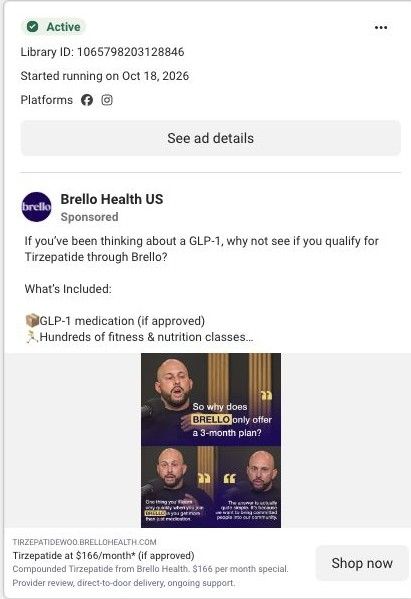
The handwriting and the red stamp make a funny, unexpected scene in a category that's usually earnest, which earns a second look. More importantly, it speaks to a specific person: someone who used to dismiss GLP-1s and has changed their mind, the same skeptic Brello's creator video addresses. The ad also gives that person a graceful way back in, since the brand accepts the apology instead of saying I told you so.
What's missing
The ad teases the perks instead of naming them, with a line asking viewers to wait until they see all the perks that are included. That pushes the most persuasive information behind the click, so a viewer still on the fence has nothing to weigh except the per-day price. The per-day figure also doesn't appear on the landing page, which leads with $166 a month and $499. Name two perks in the ad (provider messaging and the community are in the caption already) and carry the daily price onto the page.
Beat by beat
- ImageA handwritten note in black marker: “I'm sorry I dissed you. It was stupid, I know.”
The personal tone and humor stop the scroll in a serious category.
- StampA red Apology Accepted stamp across the note.
It answers the skeptic warmly and makes the brand the one forgiving, not judging.
- OfferTirzepatide GLP-1 for about $5.94/day (if approved) next to the vial, with a yellow See if you qualify bar.
A daily price keeps the cost feeling small right after the emotional beat.
- TeaserNo hidden fees or price increases, and a promise of more perks to see.
It tries to create curiosity, though it holds back the details that would persuade.
The offer
Tirzepatide at about $5.94 a day (if approved), with fine print restating it as $166 a month on a three-month minimum that renews for $499 every 11 weeks.
Where it sends people
The ad sends people to tirzepatidewoo.brellohealth.com, a dedicated Tirzepatide offer page rather than the homepage or a quiz, and it's one of 18 Brello ads in the library that point there. The perks the ad teases are all on the page: the plan and purchase entry under What makes Brello different lists classes, community, provider review, the delivery kit, the app and the pharmacy, so the curiosity pays off if people scroll. The price changes shape on arrival, though, from $5.94 a day to $166 a month and a $499 plan. The skeptic angle doesn't continue either, and a short line in the hero for people who are new to GLP-1s or changed their mind would keep the story going.
The page it sends people to: How Brello's Tirzepatide offer page catches traffic from 18 ads
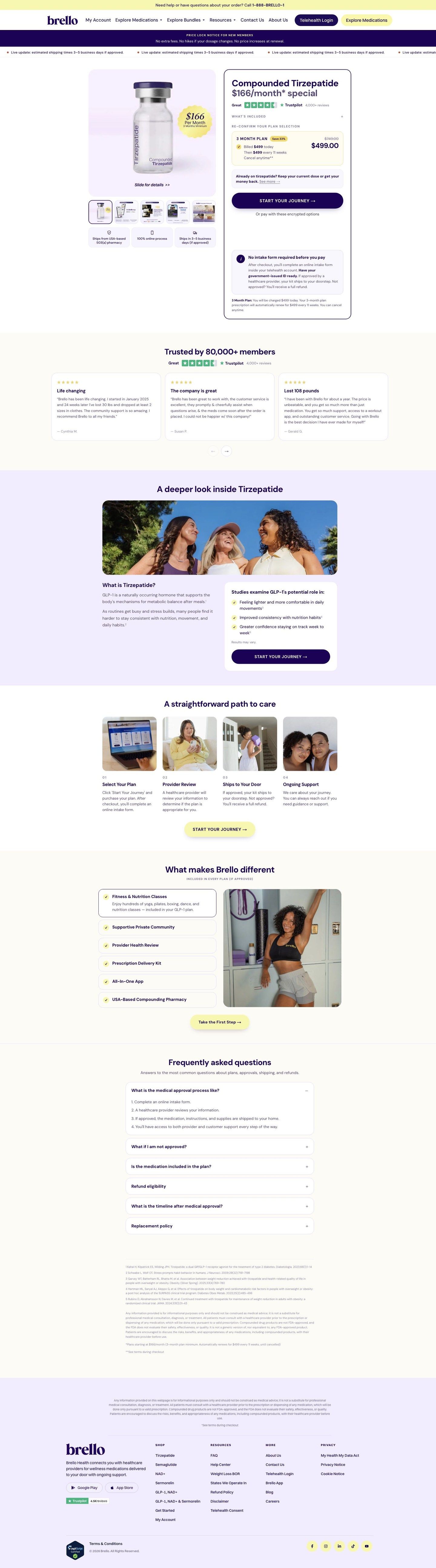
Brello's dedicated Tirzepatide offer page opens on a $166 a month special with the three-month plan box, then moves through reviews, treatment education, a four-step care path, inclusions and FAQs. It's where 18 Brello ads in the library land, all static image ads, built on emotional moments, native-style text posts and offer or inclusion lists.
How the page is built
- 01Treatment offer hero
A price lock banner, the vial with a $166 badge, and a plan box with the $499 three-month plan, Trustpilot rating, transfer note and intake explanation, answering what it costs and what happens when you pay.
- 02Customer stories
Trusted by 80,000+ members with a Trustpilot rating and review cards about community, customer service and members' own results, answering whether people like you have done this.
- 03Treatment education
A deeper look inside Tirzepatide, with a short explanation, a list of what studies examine, footnoted sources and a results-may-vary note, answering what the medication is.
- 04Care process
A straightforward path to care in four photo steps (select your plan, provider review, ships to your door, ongoing support), answering how the process works.
- 05Plan and purchase entry
What makes Brello different, with six inclusions beside a photo and a Take the First Step button, answering what you get beyond the medication.
- 06FAQs and supporting information
Six questions on approval, refunds, timelines and replacements, then the study references, disclaimers and plan terms, answering the last practical doubts.
The first fixes we would make
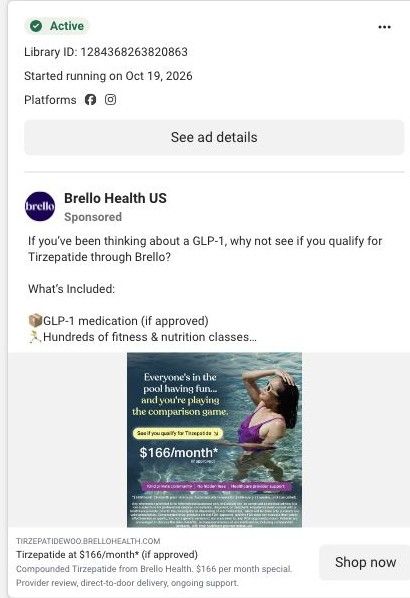
- The hero is all price, while most of the ads that land here open on a feeling (the pool, the restaurant table, sweatshirts in August, the yo-yo cycle). Add a hero line and image that speak to that moment, so the emotional promise that earned the click carries onto the page.
- Several ads sell Tirzepatide at about $5.94 a day (and one at about $5.90), but the page only shows $166 a month and $499. Add the daily figure under the hero price and use one number everywhere.
Read the full breakdown of this page
Three hooks you could test
- Call out the habit you're replacing. “Used to roll your eyes at this? So did half our members.”
- Lead with the uncomfortable problem. “Said you'd never try it? We're not keeping score.”
- Make the product the whole scene. “A handwritten note to the product, and the product's reply.”
What to borrow for your brand
- Write to the skeptic who has changed their mind, and let your brand accept them warmly instead of saying I told you so.
- Use a handwritten note and a stamp to turn an offer into a small scene with a beginning and a reply.
- Name your strongest inclusions in the ad itself instead of teasing them, so a viewer on the fence has something to weigh.
One of 22 Brello Health ads in the Fluid Inspiration Library, captured from the Meta Ad Library on Oct 22, 2026. We record that an ad ran publicly, not how it performed.