How The Absorption Company sold a sleep drink as a nightly ritual
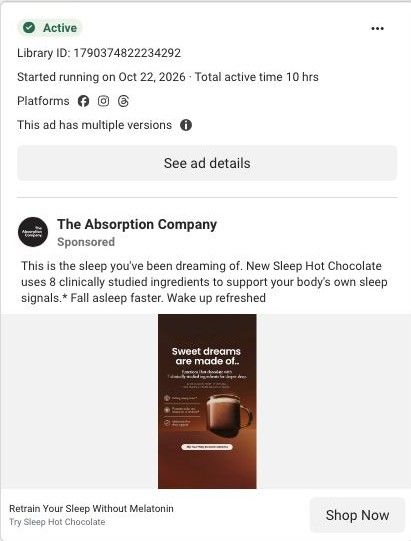
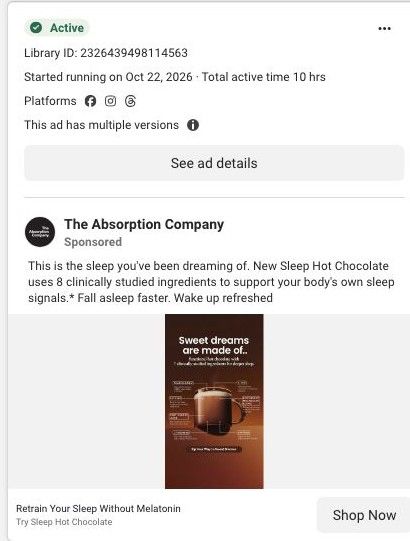
A static launch ad for The Absorption Company's Sleep Hot Chocolate. A glass mug sits on a warm brown background under the headline Sweet dreams are made of.., with a line calling it functional hot chocolate, a few benefit rows and a Sip Your Way to Sweet Dreams button. There's no offer, and it links to the Sleep product page.
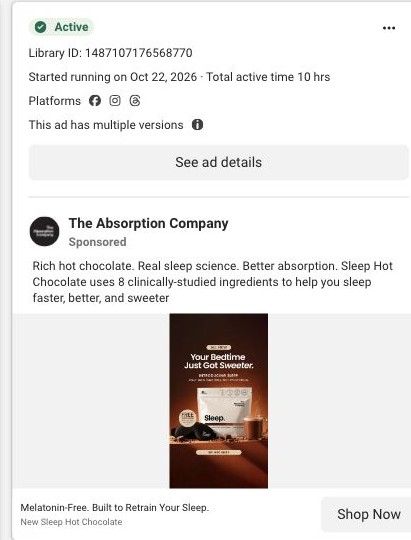
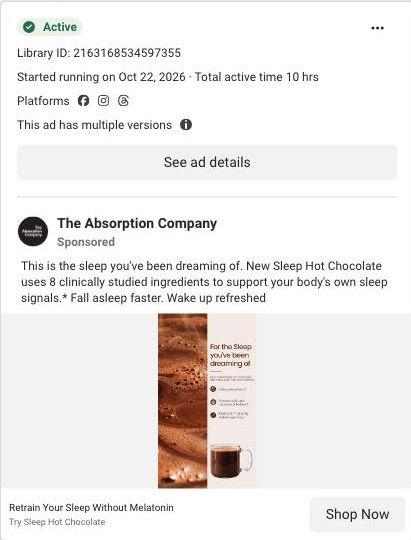
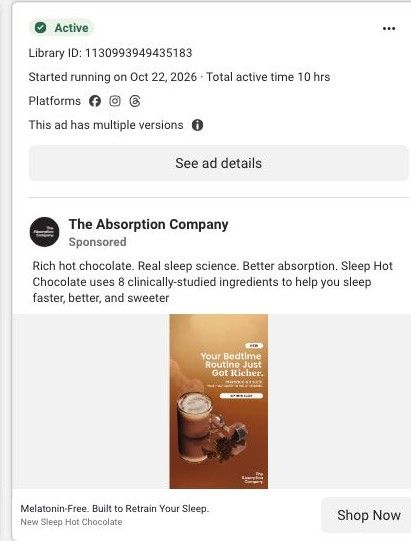
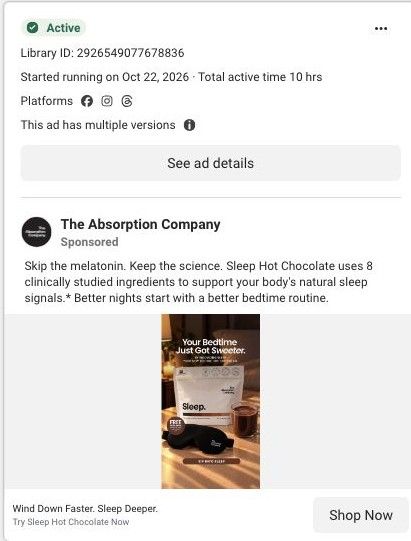
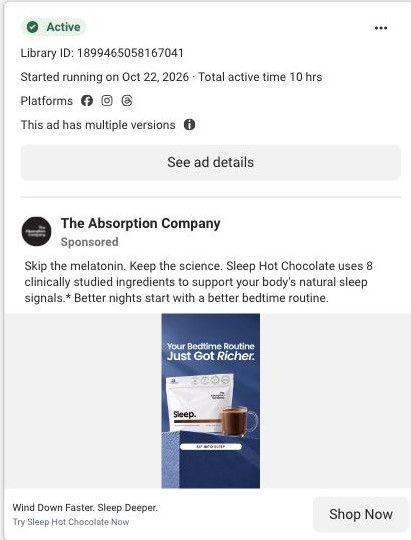
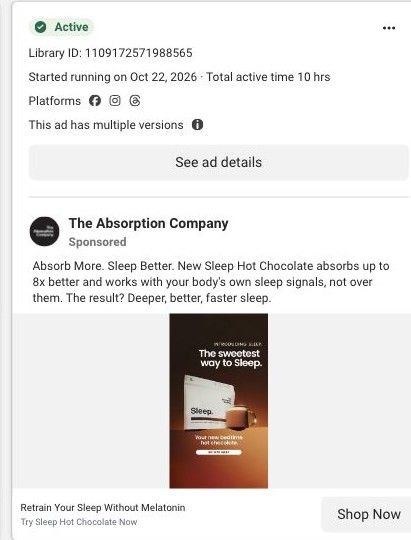
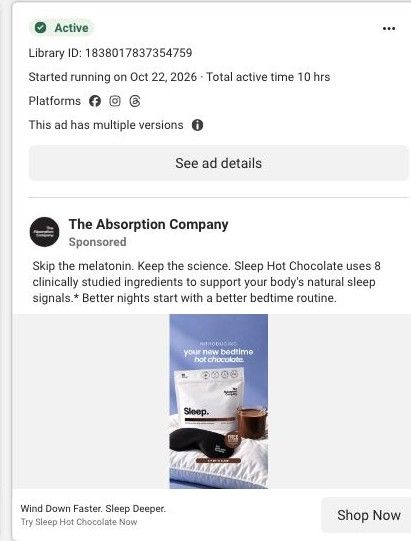
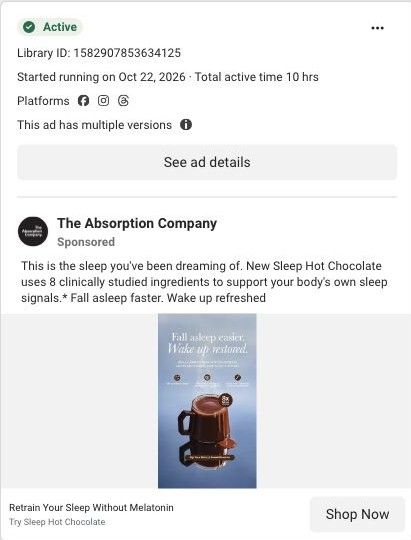
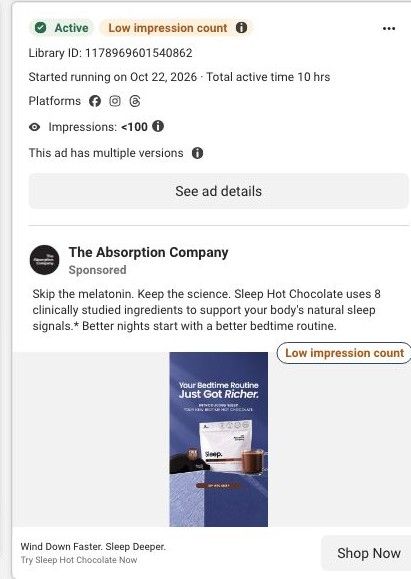
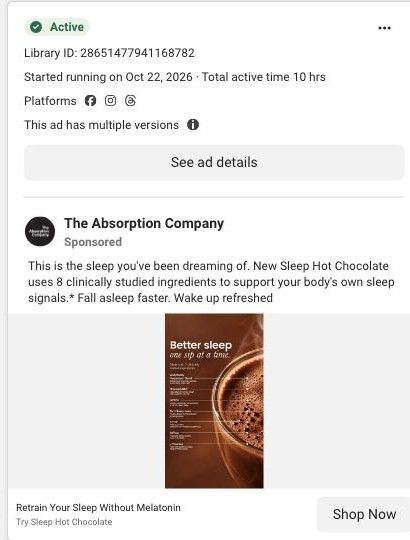
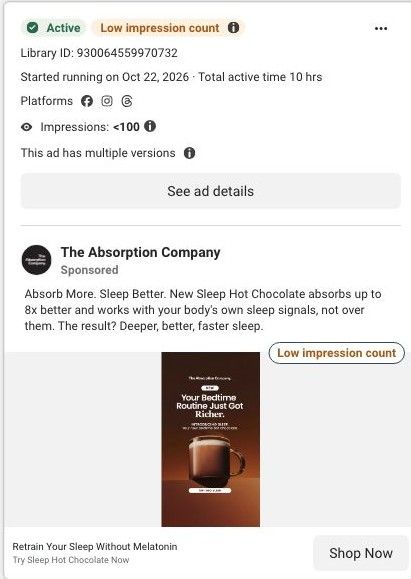
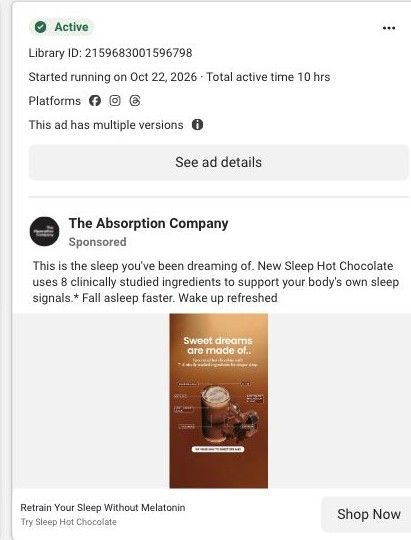
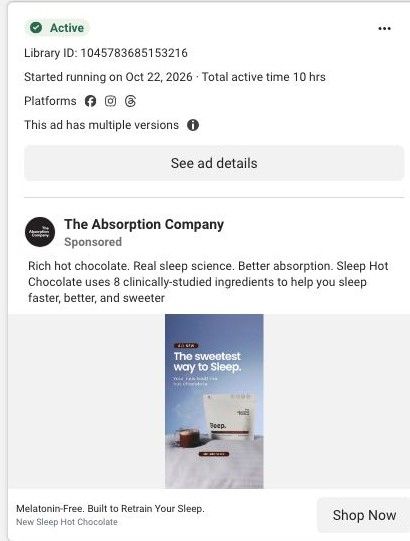
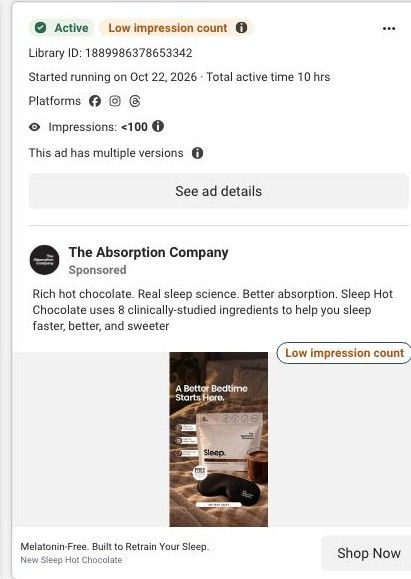
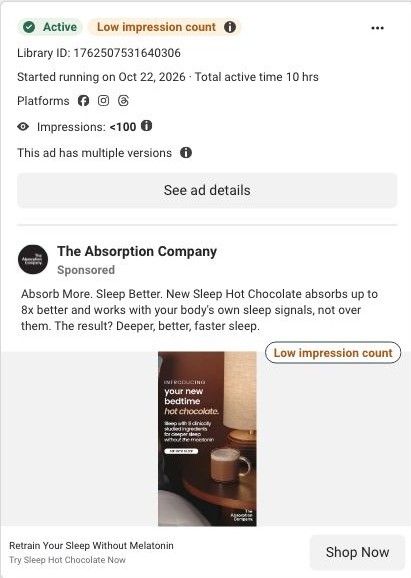
Active ad and exact outbound link observed in Meta Ad Library on October 22, 2026. This destination was captured with its public layout and styles on October 22. Offers and product selections may change. Selection reflects creative and page structure; performance is not available.

Retrain Your Sleep Without Melatonin
Sweet dreams are made of… · Sleep mug and ingredients. A product gallery introduces Sleep alongside flavor and plan choices, gift details, benefits, a three-pathway explanation and a routine timeline. Compare the creative with the destination and explore the other ads sharing this route.
- Brand
- The Absorption Company
- Observed offer
- Retrain Your Sleep Without Melatonin
- Creative angle
- Product education
- Page type
- Product page
- Ad format
- Image
- Listed start date
- Oct 22, 2026
- Captured
- Oct 22, 2026
- Library ID
- 1790374822234292
- Destination
- absorbmore.com
Selected for its design and offer structure. Ad performance isn’t available in this collection.
What this ad does well
The mug is the whole scene, lit warmly on a dark background, which makes the product look like something you'd want to drink rather than another bottle of capsules. The subhead does the translating, calling it functional hot chocolate built for deeper sleep, so the viewer understands the category in one line. The benefit rows stay close to what a sleep shopper wants to hear (falling asleep faster, calm at bedtime, melatonin-free) and each claim is marked with an asterisk. The tagline about a delicious nightly ritual sells the habit, which is the part that brings someone back for a second bag.
What's missing
Like the other Sleep ads, the image says 7 clinically studied ingredients while the copy says 8, and that mismatch is the first thing to fix. Beyond that, the ad doesn't give the viewer a problem to recognize or a reason to buy today, so it leans entirely on the mug looking good. Opening on a specific night (wired at 11pm, scrolling in bed) and adding a first-order or subscription cue from the product page would give someone a reason to click now rather than later.
Beat by beat
- ImageA glass mug of hot chocolate sits on a brown surface with steam, next to benefit rows for falling asleep faster, calm at bedtime and melatonin-free support.
It makes the drink feel like a treat and lists the bedtime outcomes beside it.
- HeadlineSweet dreams are made of.., followed by functional hot chocolate with 7 clinically studied ingredients for deeper sleep.
The playful headline gets attention and the subhead explains what the product actually is.
- CopyThe copy says the drink uses 8 clinically studied ingredients to support the body's own sleep signals, so you fall asleep faster and wake refreshed.
It restates the outcome in plain words and positions the product as working with the body.
Where it sends people
The ad goes to the Sleep product page. It's a product page rather than a focused landing page, though it carries more explanation than most: plan choices from a 3 Months Supply down to 2 Weeks or Buy Once, a Make Sleep More Powerful with Magnesium cross-sell, Why Sleep Works Better, the Three pathways to faster, more restorative sleep section, a How Sleep Transforms Your Wellness Over Time timeline, and an Absorption That Actually Delivers Results section. The ritual idea in the ad lines up with that routine timeline, so a viewer who liked the mug gets a picture of what nightly use looks like. Moving that timeline closer to the top would make the ad's promise feel answered faster. It's one of 17 ads in the Fluid library that land on this page.
The page it sends people to: How The Absorption Company launched Sleep with a gift-led product page
The Absorption Company's product page for Sleep, a melatonin-free drink mix launched in a new hot chocolate flavor. It offers bag or stick formats, flavor choices, five plan options with free gifts, a three-pathway explanation, an over-time section and absorption claims. 17 Absorption Company ads in the Fluid library link here, mostly launch statics about retraining sleep without melatonin.
How the page is built
- 01Gallery and claims
Shows the new hot chocolate bag with a frother and mask beside the rating and claimed sleep benefits, answering what this is and why it's new.
- 02Flavor, format and plans
Offers bag or sticks, two flavors and plans from three months down to buy once, with free gifts, answering what it costs and what to choose.
- 03Magnesium cross-sell
Suggests adding magnesium, answering what else to pair and raising order size.
- 04Why Sleep works better
Explains the brand's ingredient claims, answering why this over another sleep product.
- 05Three sleep pathways
Breaks the formula into calming, rebuilding the sleep signal and deeper sleep, answering how it's supposed to work.
- 06Over-time section
Describes what the brand says changes over time, answering when to expect anything.
- 07Absorption claims
Shows 5x and 8x absorption figures, answering whether the ingredients reach the body.
- 08Expert proof and pairings
Shows expert backing and complementary products, answering who vouches for it and what to add.
The first fixes we would make
- The page shows a star rating at the top, but there's no customer review section in what we captured. Add reviews near the plan picker, ideally ones that mention the flavors and the first week, so the launch has proof from buyers.
- Two formats, two flavors, five plan lengths and a flavor choice for each bag add up to a lot of decisions before add to cart. Preselect the recommended format, plan and flavor so a visitor can buy in one tap and adjust only if they want to.
Read the full breakdown of this page
Three hooks you could test
- Make the product the whole scene. “One warm mug on a dark background, and nothing else competing for attention.”
- Show a specific moment of use. “The mug I make right after I brush my teeth.”
- Sell the outcome. “Fall asleep before the second episode starts.”
What to borrow for your brand
- Shoot the product in the form people actually consume it (a full mug, not just the bag) so the ad sells the experience.
- Use a subhead to name the category in plain words when the headline is playful.
- Sell the nightly ritual, not just the result, so the ad sets up a habit that fits a subscription.
One of 188 The Absorption Company ads in the Fluid Inspiration Library, captured from the Meta Ad Library on Oct 22, 2026. We record that an ad ran publicly, not how it performed.