

RitualSponsored
Esc
How Ritual frames its Daily Health starter set as a habit to build
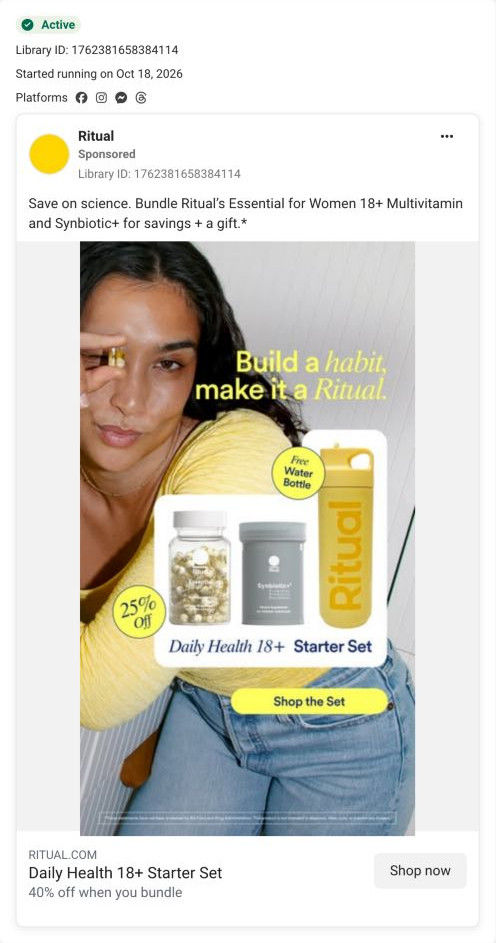
A Ritual static of a woman holding a capsule up to her eye beside “Build a habit, make it a Ritual.” A card shows the Daily Health 18+ Starter Set (multivitamin, Synbiotic+ and a free water bottle) with a 25% Off sticker, while the link text says 40% off when you bundle. It links to the starter set page.
Ritual
3 creatives lead here1 / 3
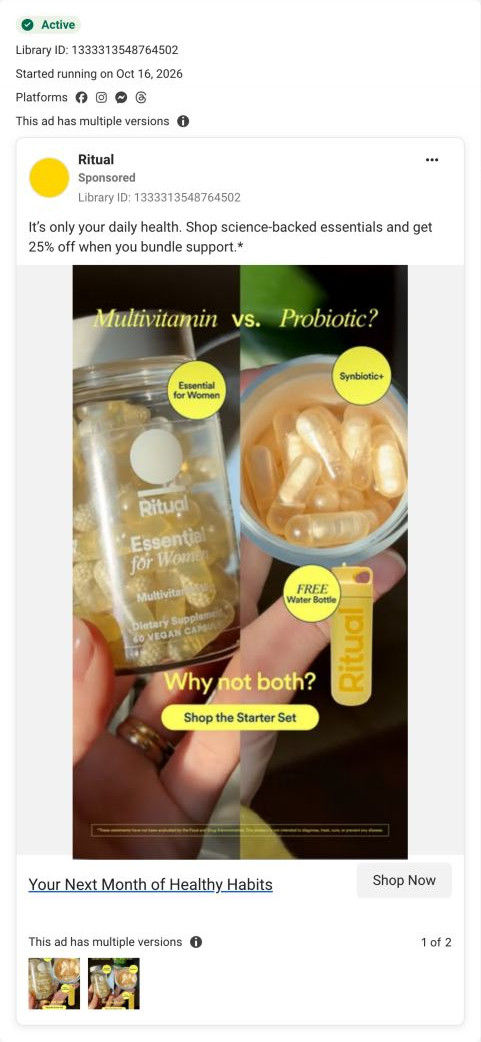
Ritual · Daily Health 18+ Starter Set
Page captured October 20, 2026. The current offer may differ from the original ad.
Build a habit, make it a Ritual
A portrait and the two-product Daily Health starter set turn the bundle into a daily-habit message; the CTA advertises 40% off when bundled. Compare the creative with the destination and explore the other ads sharing this route.
- Brand
- Ritual
- Observed offer
- 40% off when bundled; savings plus gift advertised
- Creative angle
- Starter kits
- Page type
- Bundle landing
- Ad format
- Image
- Listed start date
- Oct 18, 2026
- Captured
- Oct 20, 2026
- Library ID
- 1762381658384114
- Destination
- ritual.com
Selected for its design and offer structure. Ad performance isn’t available in this collection.
What this ad does well
The ad turns a bundle into a habit story. The headline puns on the brand name, and the product card underneath lays out exactly what the set includes: two jars and the gift bottle, each visible, with the set's name in plain type below. The person holding a capsule to her eye adds a playful human touch that a lot of supplement statics skip, and the yellow of her top matches the bottle and the brand color, so the frame reads as Ritual before you see the logo. The Shop the Set button names the next step.
What's missing
The offer isn't consistent. The image sticker says 25% off, the link text under the image says 40% off when you bundle, and the page the ad opens prices the set against its total value instead. A viewer who notices both numbers has to work out which one is real, and that hesitation can cost you the click. If you make one like this, pick one number and use it everywhere (image, copy, link text and the first screen of the page). The habit headline also needs a reason: say what changes when the routine sticks, in your own attributed claims.
Beat by beat
- ImageA woman in a yellow top holds a single capsule up to her eye, looking straight at the camera.
A person and a playful pose stop the scroll better than a product on white.
- Headline“Build a habit, make it a Ritual.” in yellow type with habit and Ritual in italics.
The pun ties the brand name to the idea of a daily routine.
- ImageA white card shows the multivitamin, Synbiotic+ and a large yellow water bottle, with Free Water Bottle and 25% Off stickers and a Shop the Set button.
It shows every item in the set and the two reasons to buy it now in one block.
- CopyThe caption promises savings plus a gift, and the link text says 40% off when you bundle.
It repeats the offer, though with a different percentage from the sticker.
The offer
The image shows a 25% Off sticker and a free water bottle; the copy promises savings plus a gift, and the link text says 40% off when you bundle. The gift is consistent, but the ad carries two different percentages for one deal.
Where it sends people
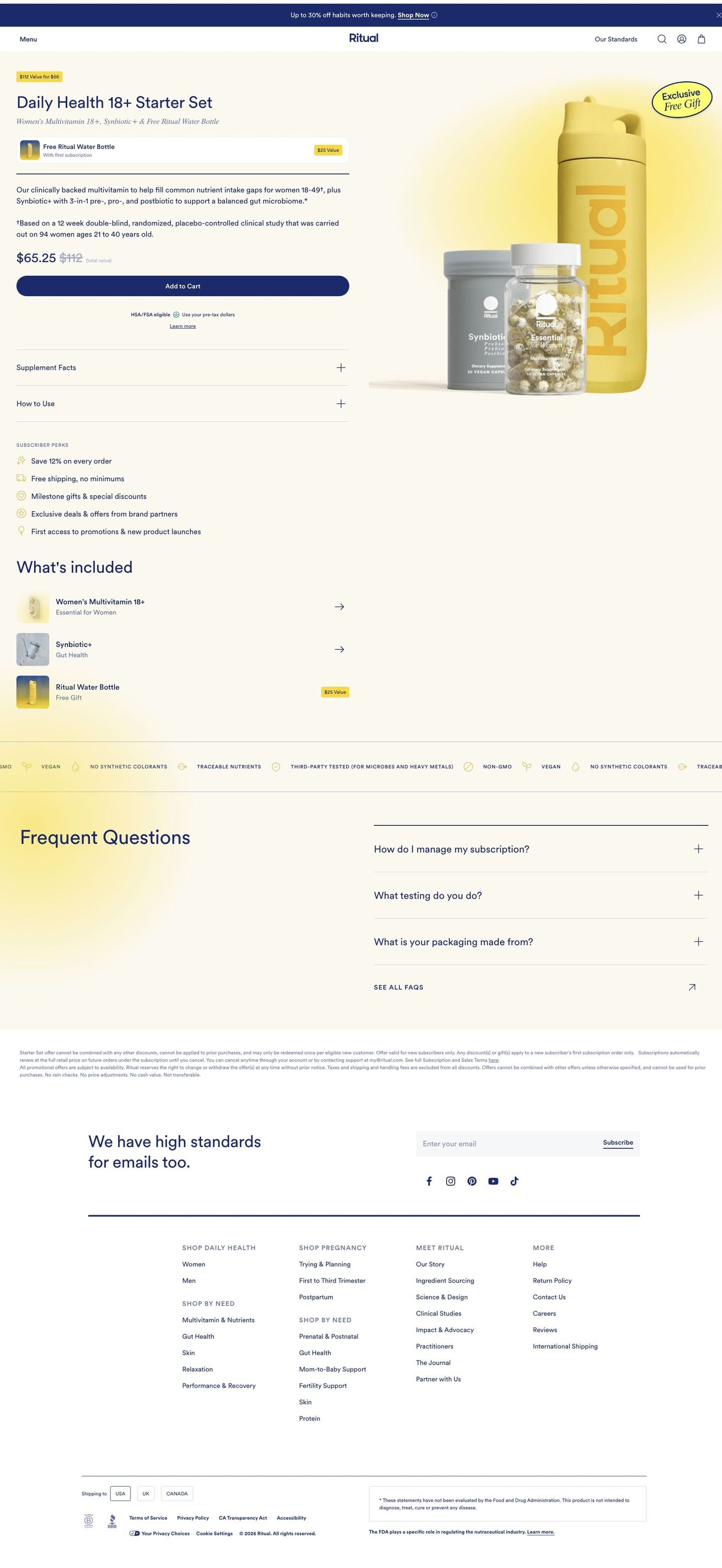
The ad links to the Daily Health 18+ Starter Set page, a focused bundle page and a close visual match: the hero photo shows the same two bottles in front of the gift bottle with an Exclusive Free Gift sticker, much like the ad's product card. The buy column picks up the set name, a gift row with a value tag and the sale price against the summed value, and a What's included list lets the visitor check each item. Subscriber perks sit just under Add to Cart. What the page doesn't settle is the percentage, since it shows a price against total value rather than either number in the ad. 3 ads in the library send people here.
The page it sends people to: How Ritual turns its Daily Health starter set into one decision screen
Ritual's Daily Health 18+ Starter Set page is a short bundle page: one buy column holds the set's value, the free gift, price, subscriber perks and an itemized contents list, beside one photo of the products and gift bottle. 3 ads in the library send people here: an either-or static, a habit-building static and an itemized video.
How the page is built
- 01Announcement bar and header
A navy sale line with a Shop Now link sits above a centered-logo header, answering whether there's a deal on.
- 02Buy column
A value tag, the set name, a components line, a free-gift row, a description with a study footnote, the sale price against the struck total value, Add to Cart and an HSA/FSA line answer what's in the set and what it costs.
- 03Hero photo
Two bottles in front of the large gift water bottle with an Exclusive Free Gift sticker show exactly what arrives.
- 04Accordions and perks
Supplement Facts and How to Use rows, then a five-line Subscriber perks list, answer how to take it and what the subscription earns.
- 05What's included
Three rows with a thumbnail, name, purpose and arrow link (the gift carries a value tag instead) let the buyer check each item.
- 06Trust ticker
A scrolling strip of standards and certifications answers how the products are made.
- 07FAQ
Three questions about subscription, testing and packaging, with a See all FAQs link, handle the last practical doubts.
- 08Fine print and footer
Offer terms, a newsletter signup, link columns by audience and need, shipping-country toggles and the supplement disclaimer close the page.
The first fixes we would make
- The ads that land here quote different discounts (25% off on some, 40% off in link text), while the page shows a price against total value. State the saving as the same percentage the ads use, right beside the price, so a visitor can confirm the deal she clicked for in one glance.
- There's no customer proof on the page: no rating, no review and no quote between the buy column and the FAQ. Add the set's average rating under the title and one short review near the price, since a bundle asks people to trust two products at once.
Read the full breakdown of this page
Three hooks you could test
- Turn the benefit into a picture people get in a second. “Your whole morning routine, in one box.”
- Call out the habit you're replacing. “You buy vitamins every month. You just forget to take them.”
- Show a specific moment of use. “The capsule I take before my first coffee.”
What to borrow for your brand
- Put the whole bundle on one clean card inside a lifestyle photo, so the viewer sees every item and the person in the same frame.
- Match your model's styling to the brand color, so the frame reads as yours before the logo registers.
- Use one discount number across the image, copy, link text and landing page, so nobody has to work out which deal is real.
One of 20 Ritual ads in the Fluid Inspiration Library, captured from the Meta Ad Library on Oct 20, 2026. We record that an ad ran publicly, not how it performed.