How Blueland used a search bar mockup to sell dishwasher tablets
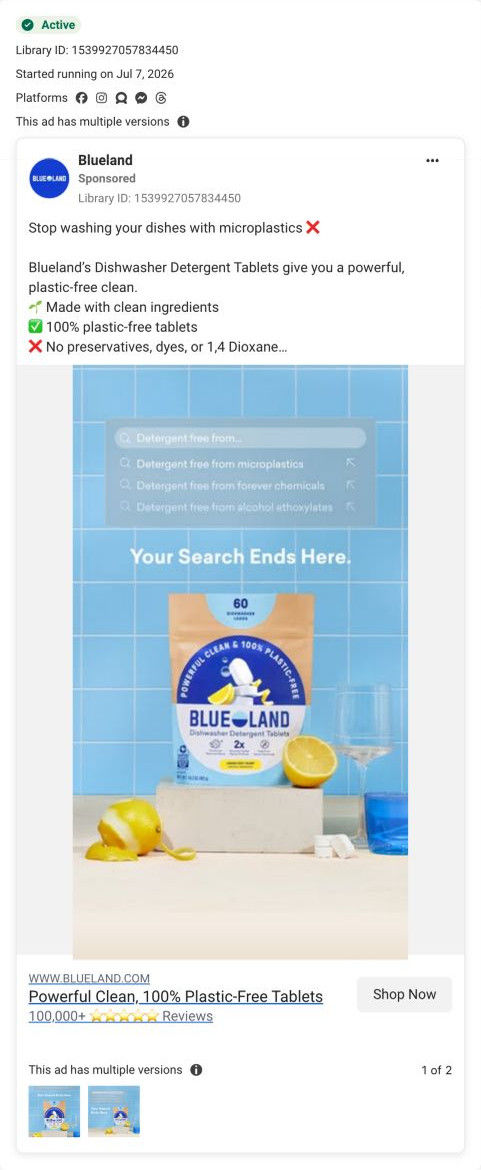
A Blueland static on Meta from Jul 7, 2026. A search box shows autocomplete suggestions for detergent free from microplastics, forever chemicals and alcohol ethoxylates, then “Your Search Ends Here” sits above a lemon-scented dishwasher tablet pouch. The copy opens with “Stop washing your dishes with microplastics,” and the ad links to a dedicated microplastics campaign page.

A problem-led dishwasher switch
A microplastics hook leads to its own campaign page, giving the problem more room before the buying decision. Compare the creative with the destination and explore the other ads sharing this route.
- Brand
- Blueland
- Observed offer
- Plastic-free dishwasher detergent tablets
- Creative angle
- Problem / solution
- Page type
- Dedicated offer
- Ad format
- Image
- Listed start date
- Jul 7, 2026
- Captured
- Oct 19, 2026
- Library ID
- 1539927057834450
- Destination
- blueland.com
Selected for its design and offer structure. Ad performance isn’t available in this collection.
What this ad does well
The search bar mockup is a clever way to show demand without claiming it. Autocomplete suggestions imply that people are already looking for detergent free from these things, so the viewer feels like part of a group asking the same question. “Your Search Ends Here” then lands as the answer, with the pouch right under it. The copy opens on the problem in plain words (washing dishes with microplastics), and that's a sharper start than most of Blueland's offer ads, which lead with the deal.
What's missing
The ad raises a worry but doesn't explain it, so a viewer who didn't know detergents could contain microplastics doesn't learn why it matters. There's also no offer or price in the image, so a curious viewer has no reason to buy today. If you make one like this, add one plain line on why the problem matters (with a source if you cite a number), and put a first-order offer or price in the link card so the answer comes with a next step.
Beat by beat
- ImageA translucent search box over blue tile reads “Detergent free from...” with suggestions for microplastics, forever chemicals and alcohol ethoxylates.
It frames the viewer's concern as something many people are already searching for.
- Headline“Your Search Ends Here.” above a lemon-scented dishwasher tablet pouch, a halved lemon and a wine glass.
It turns the product into the answer to the search in the same frame.
- Copy“Stop washing your dishes with microplastics” opens the copy, followed by clean ingredients, plastic-free tablets and a no preservatives or dyes line.
The copy names the problem directly before listing what the tablets leave out.
- Link card“Powerful Clean, 100% Plastic-Free Tablets” over the 100,000+ five-star reviews line.
It answers the doubt that a plastic-free tablet might not clean as well.
Where it sends people
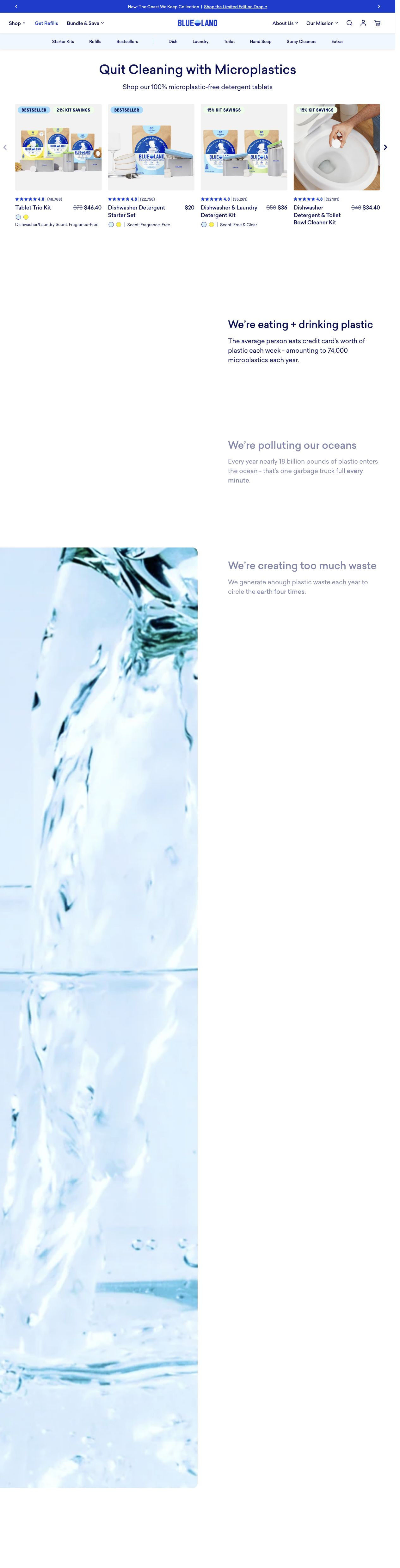
The ad links to a dedicated microplastics campaign page, so it lands on a page built for this one angle, a strong rung on the ladder. The hero tells shoppers to quit the problem and shows four product cards with Bestseller and kit-savings tags, star ratings and struck-through prices, so the offer this ad left out appears immediately. Below that, a scroll-driven problem story darkens one statement at a time (eating and drinking plastic, polluting oceans, too much waste) beside a tall water image, which gives the ad's worry the explanation it didn't have room for. The capture is cut off after that problem section, so we can't say what follows.
The page it sends people to: How Blueland built a problem-first page for microplastic-free cleaning
Blueland's microplastic-free campaign page is a short problem-and-solution page. A headline telling shoppers to quit the problem sits over a carousel of four product cards with prices and tags, then a scroll-driven story darkens one problem statement at a time beside a water image. One ad in the Fluid library sends people here, a search-bar static about detergent free from microplastics.
How the page is built
- 01Announcement bar
A rotating line announcing a limited-edition drop signals there's something new to see.
- 02Header
Shop, refills and bundle menus plus a row of category links answer what else Blueland sells.
- 03Hero carousel
A headline telling shoppers to quit the problem above four product cards with tags, ratings and sale prices answers what do I buy to fix this.
- 04Problem story
Three statements on plastic eating, ocean pollution and waste, revealed one at a time beside a water image, answer why does this matter.
The first fixes we would make
- The capture is cut off after the problem story, so the page we saw has no proof that the tablets clean well. Add a before and after or review band after the problem section, so the visitor sees that the plastic-free option still does the job.
- The problem story makes the case but doesn't send the visitor back to the products. Put a shop button or the product row again right after the last statement, so someone convinced by the story can act there.
Read the full breakdown of this page
Three hooks you could test
- Lead with the uncomfortable problem. “Is your dishwasher detergent wrapped in plastic film?”
- Call out the habit you're replacing. “Stop googling what's in your detergent. Here's one that tells you.”
- Turn the benefit into a picture people get in a second. “A search bar full of worries, one pouch that answers all of them.”
What to borrow for your brand
- Mock up a search bar with autocomplete suggestions that name your customers' worries, then put your product right under it as the answer.
- Open the copy on the problem in plain words before any product claims.
- Send a problem-led ad to its own campaign page that explains the problem, so the ad can stay short.
One of 9 Blueland ads in the Fluid Inspiration Library, captured from the Meta Ad Library on Oct 19, 2026. We record that an ad ran publicly, not how it performed.